

Marc Keane on the Ukiyo Floating World Garden
Even for a Tsubo garden, the small pockets of nature within Japanese townhouses and teahouses, the Floating World Garden (Ukiyo no Niwa) in the Genji Machiya is likely amongst the smallest ones. But not only is it a gem of a contemporary Japanese Zen garden, it is also one with a large-scale message that belies its size.
The visuals tell a story. Under a camellia tree, small stones are set upright to augment the vitality of the flowing river they represent. On this river of stones sits an orb, with moss growing on it, that appears to be floating.

An Engawa veranda connects Ukiyo Floating World Garden to the Wa living room in Genji Machiya.
When sunlight streams in, shadows on the engawa veranda contrast vividly with the intricate patterns of the stones. The natural growth of tiny plants that found their way onto the orb adds an organic texture to a garden that is traditionally ornamented with inorganic objects such as water basins and stone lanterns.


Marc Peter Keane, the designer of this garden as well as all the gardens in Genji Kyoto, had hand built the orb and planted field collected mosses on it. He named the garden Ukiyo no Niwa due to 2 connections that the Genji Machiya has with the word Ukiyo.
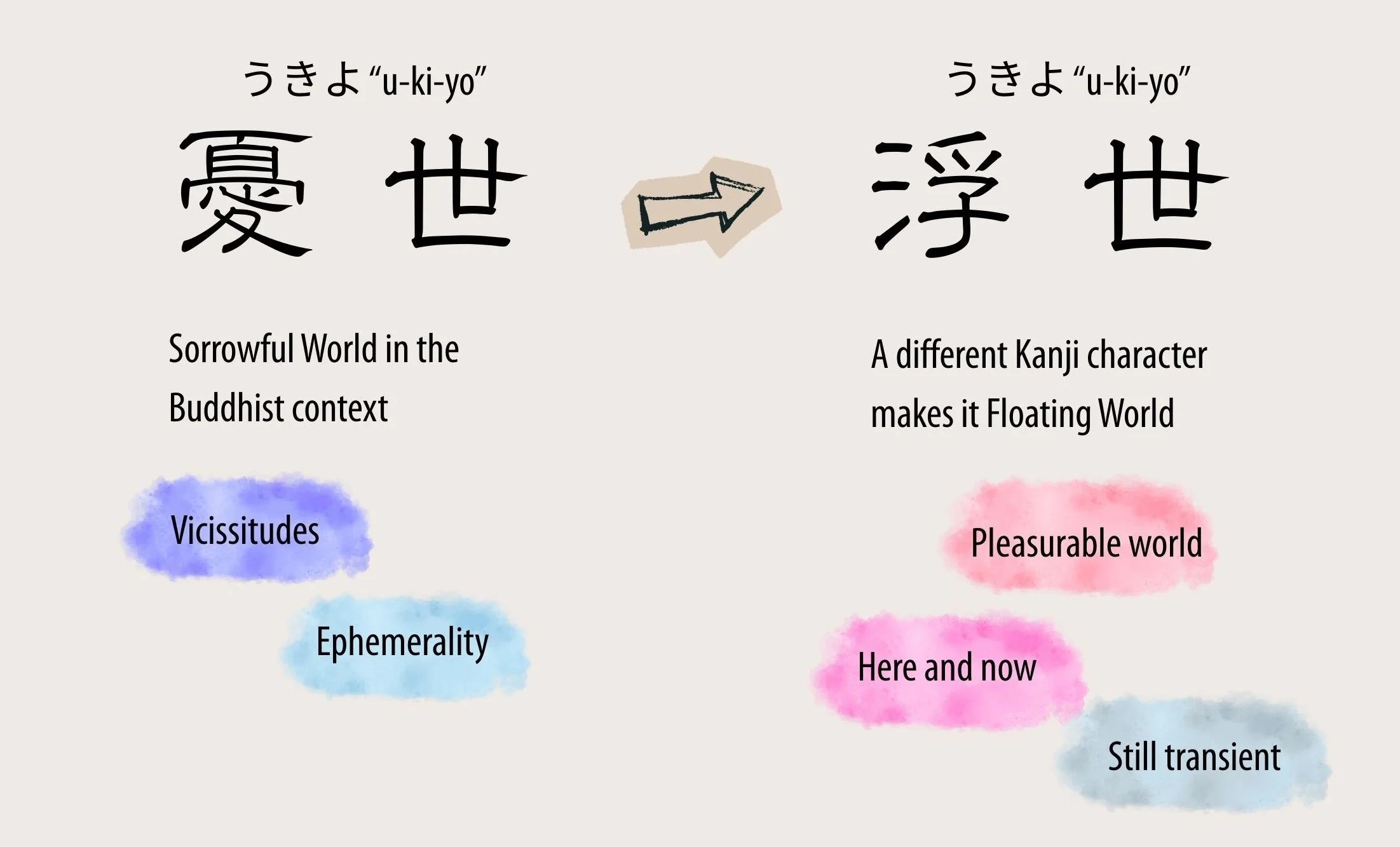
"Ukiyo is a word that goes far back in Buddhism, meaning the sorrowful world, the mortal world of vicissitudes and ephemerality," says Marc, referring to the Kanji character ukiyo written in a certin way earlier in Japan's history.
"Later on that same word, written differently in Kanji but still pronounced ukiyo, came to mean Floating World. It changed from Sorrowful World to floating world, and Floating World referred to the "pleasurable world", or the red light districts.
"This is the world where the courtesans, the Kabuki actors and the Sumo wrestlers would gather. The people who made woodblock prints about those famous individuals turned them into what were called Ukiyo-e, the Floating World paintings.
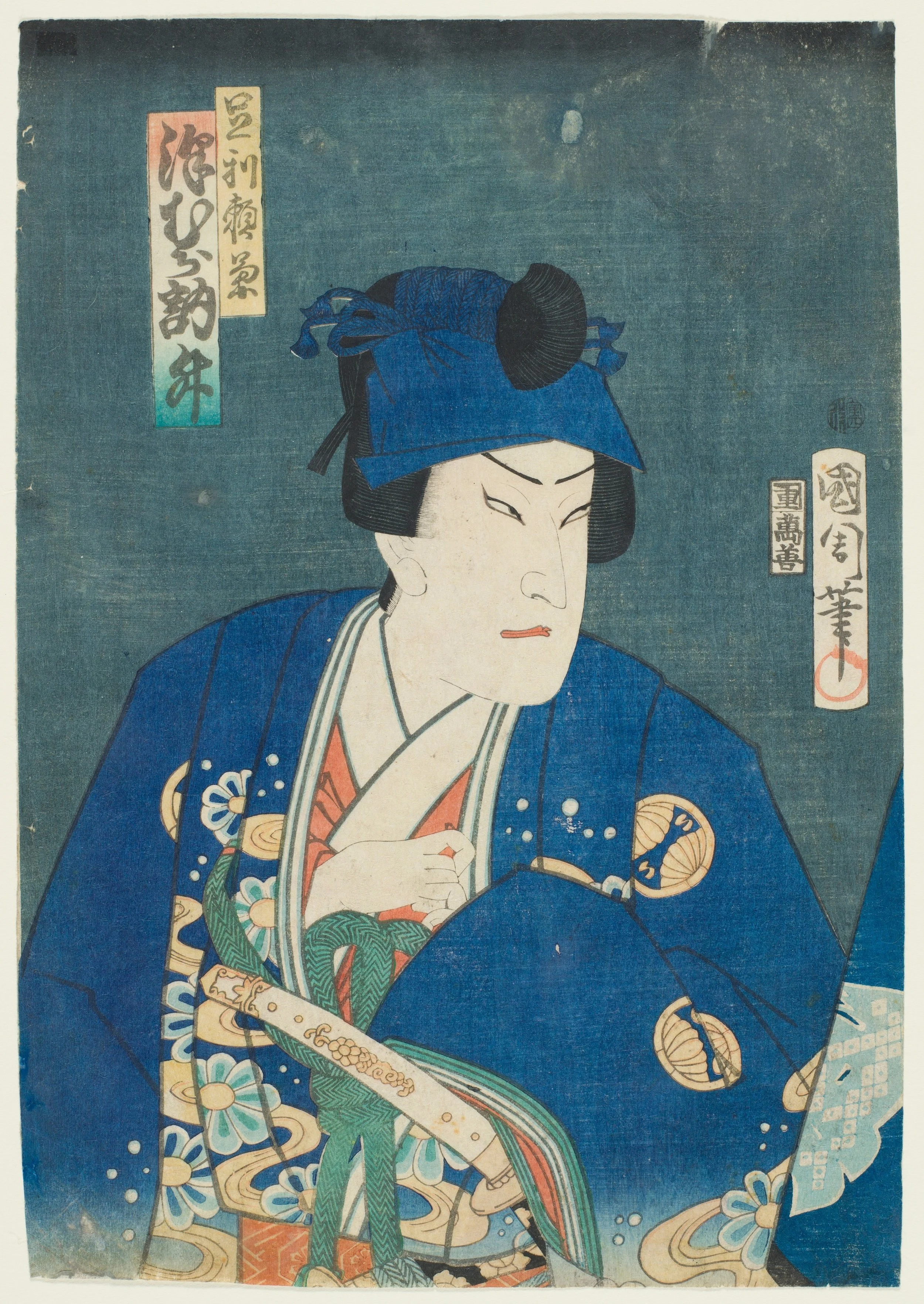
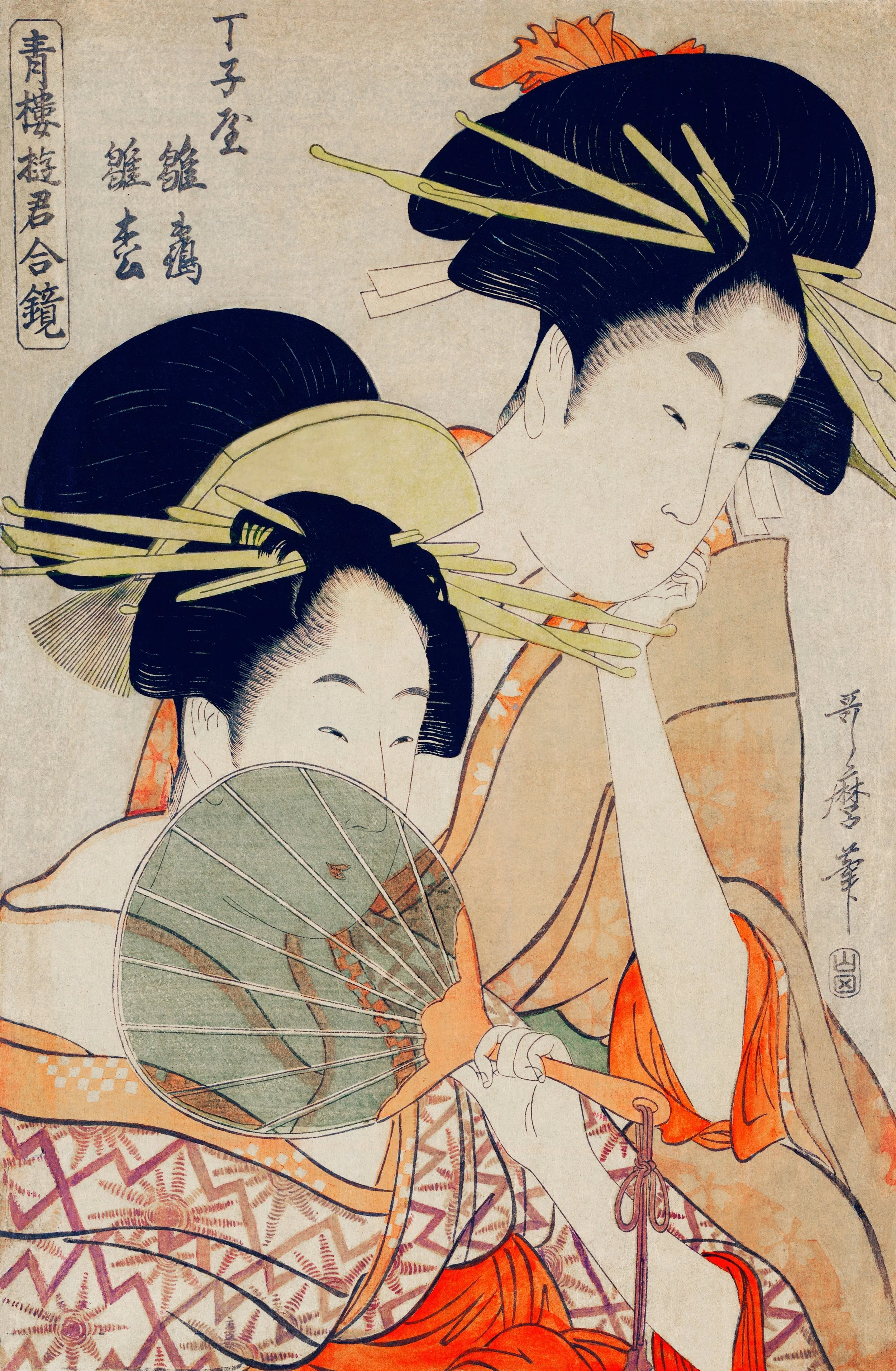
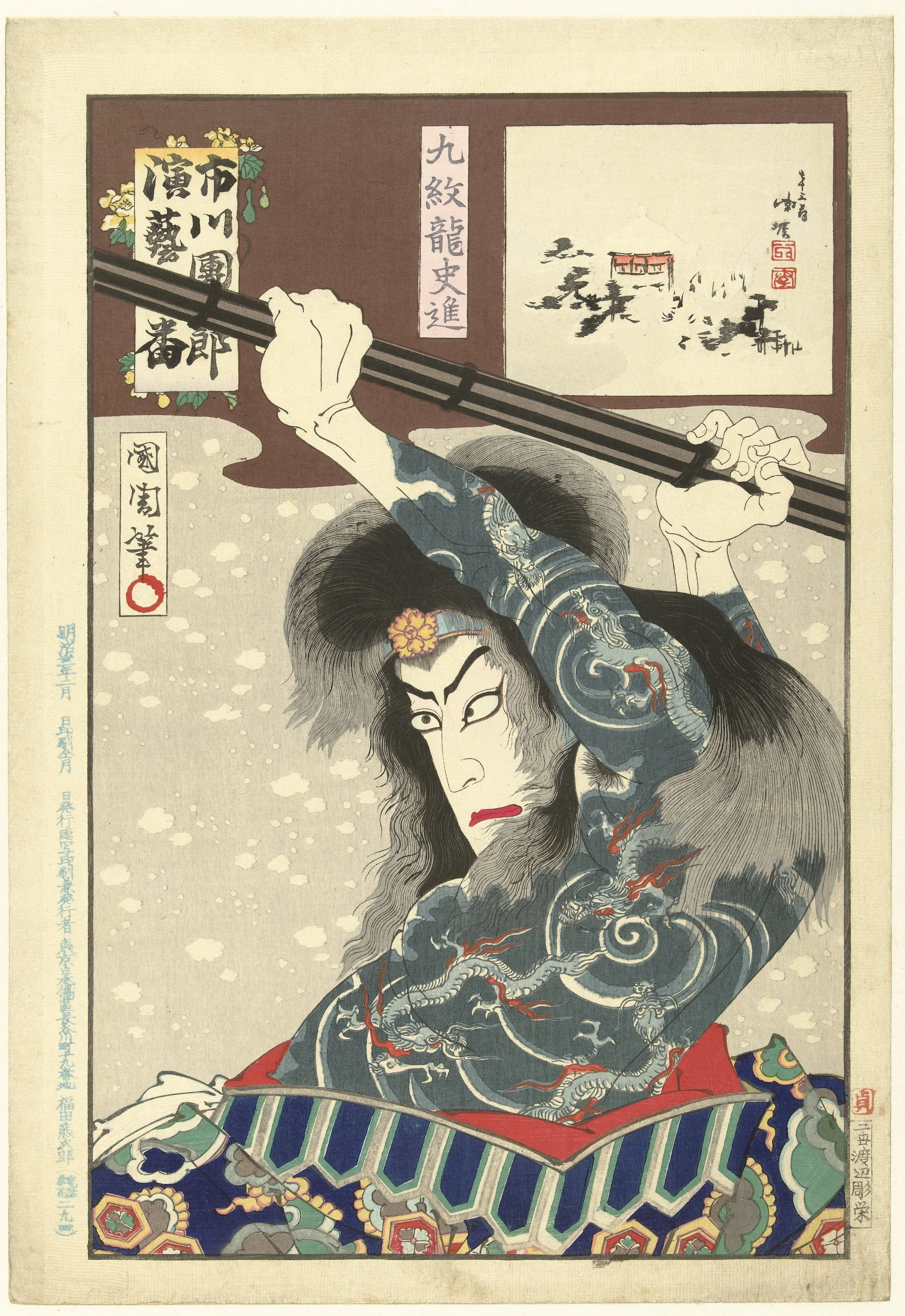
"So the first connection of this garden and the word Ukiyo is that this area around the Machiya used to be a red light district. It isn't anymore, and hasn't been for a while, but that was the first connection."
"The second is that our plant earth could be considered an Ukiyo, a Floating World. It carries this very ephemeral layer of nature, and floats with the galaxy through the universe.
The orb-shaped piece, which I built out of a kind of mortar material and planted moss on it, can represent the Ukiyo, a Floating World within this garden."
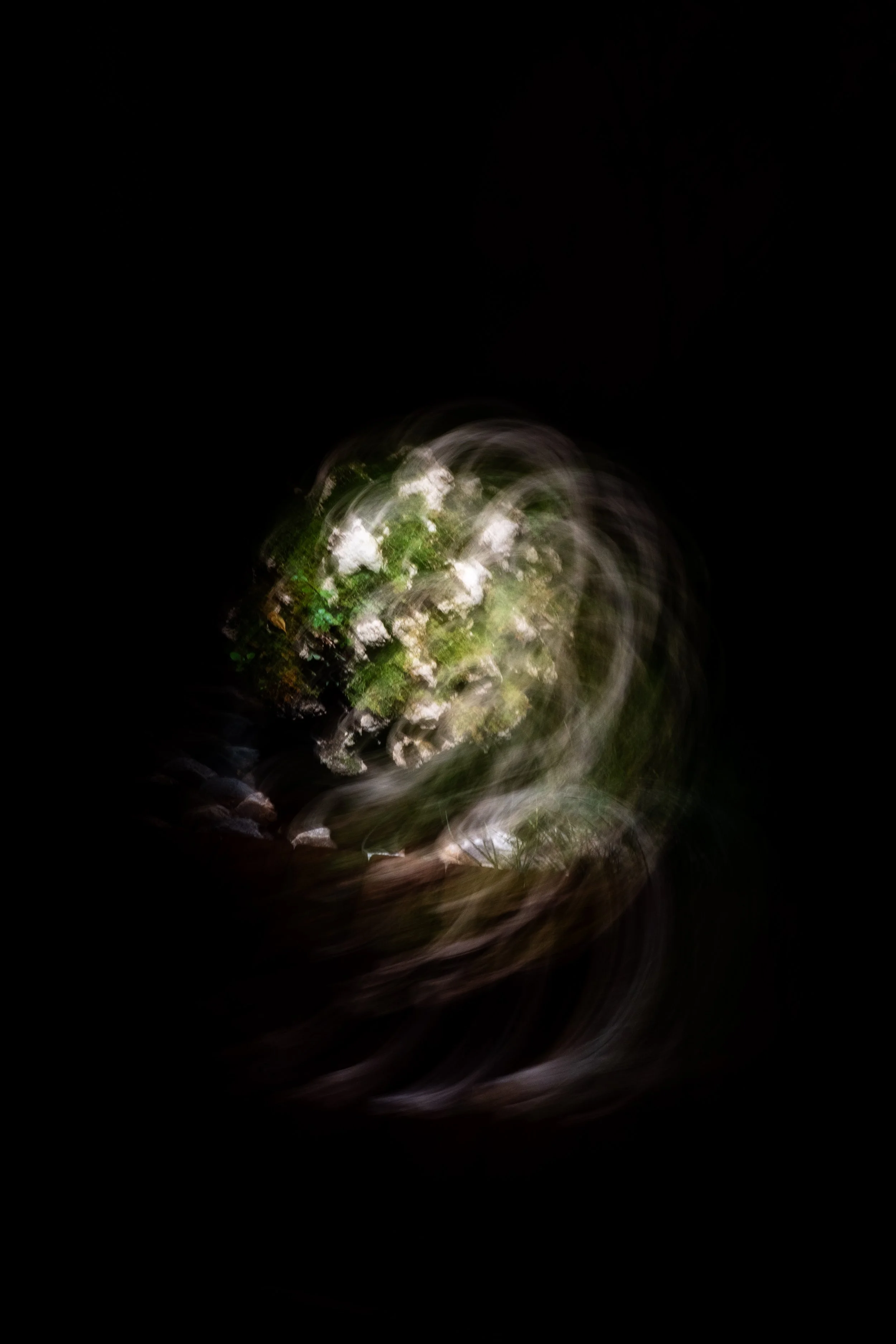
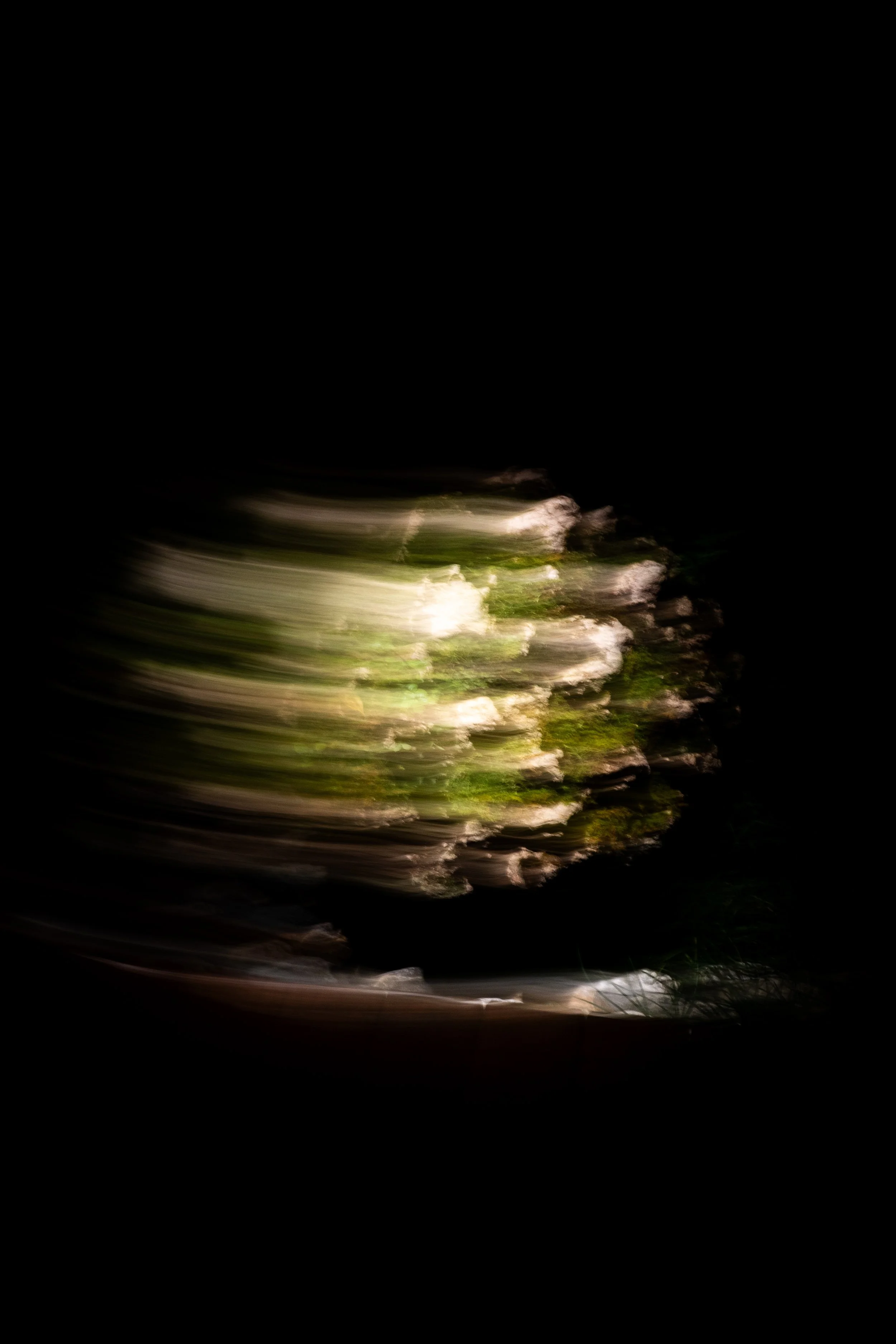
Perhaps our guests are also "floating" in their travels as they immerse themselves in different cultures, exploring the past while enjoying what the present has to offer.
Ukiyo Floating World Garden can be a wistful look at the past and a symbol of growth and renewal for the future.
It is certainly an essential feature of the Machiya that not only brings in sunlight and fresh circulation, but also creates a seamless connection between inside and outside based on Japan's age old principle of Teioku Ichinyo (庭屋一如), or garden and building becoming one.
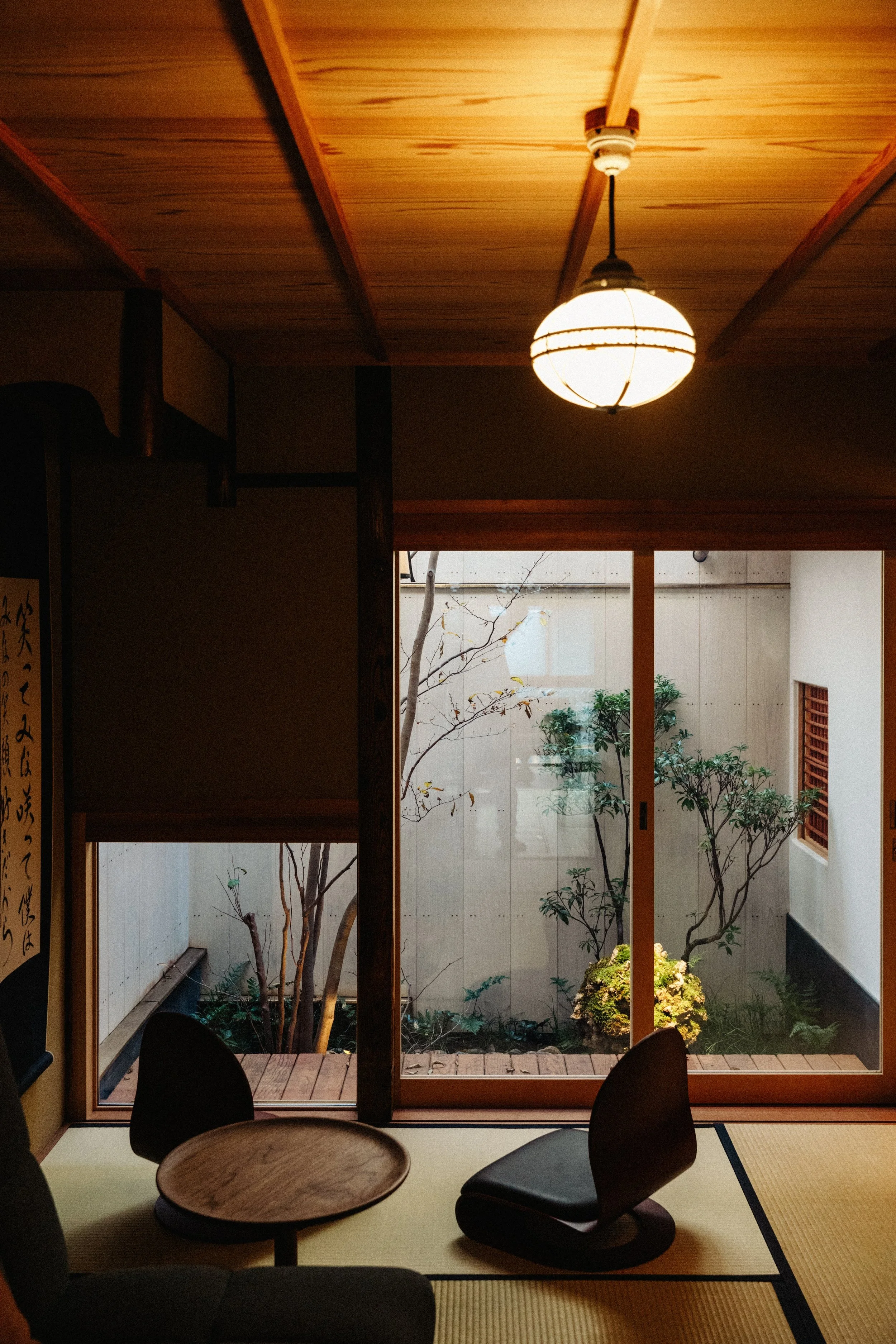
Ukiyo Garden designed by Marc Keane is in the Genji Machiya renovated by Geoffrey Moussas.
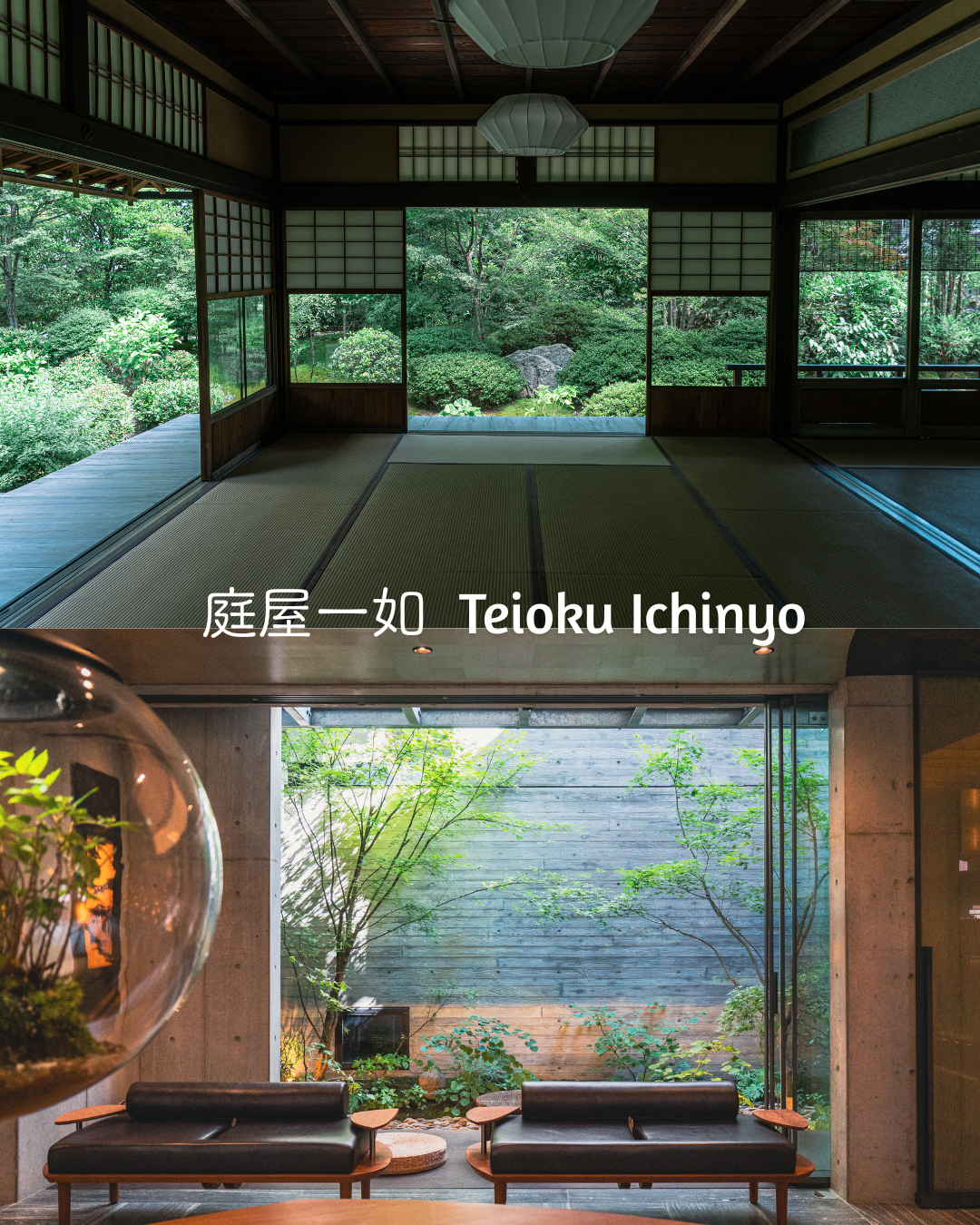
Upper image: Garden of Tenkyū-in, sub temple of Myōshin-ji.
Lower image: Ukifune Zen garden in lobby of Genji Kyoto.
