

Genji Machiya - Where the Mystery of Comfort Unfolds
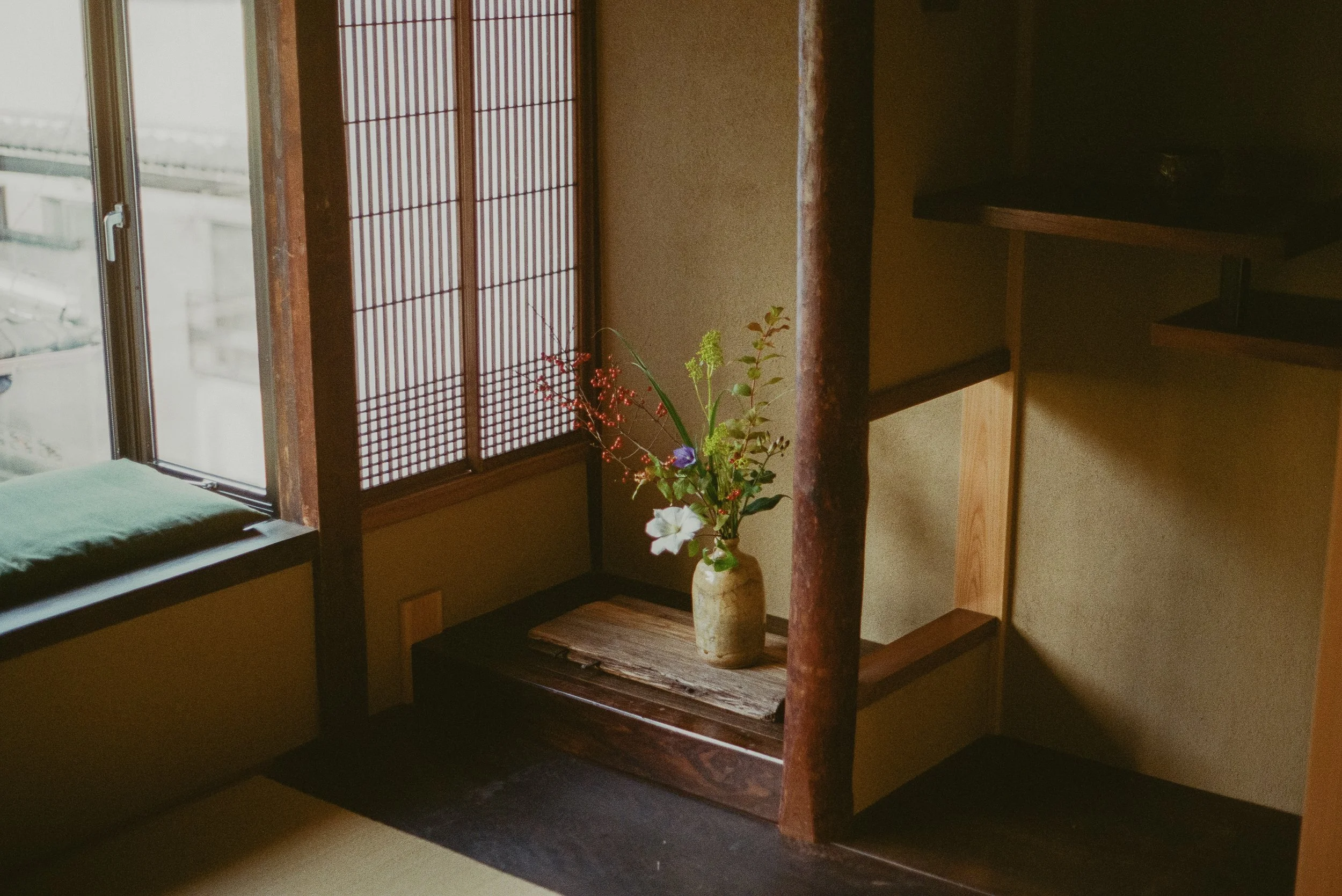
Welcome to Genji Machiya, a Meiji-era townhouse now open to Genji Kyoto guests for booking. In a peaceful neighborhood 2 blocks from the hotel, it has been lovingly renovated by our designer Geoffrey Moussas to reveal the elegance of Machiya living.
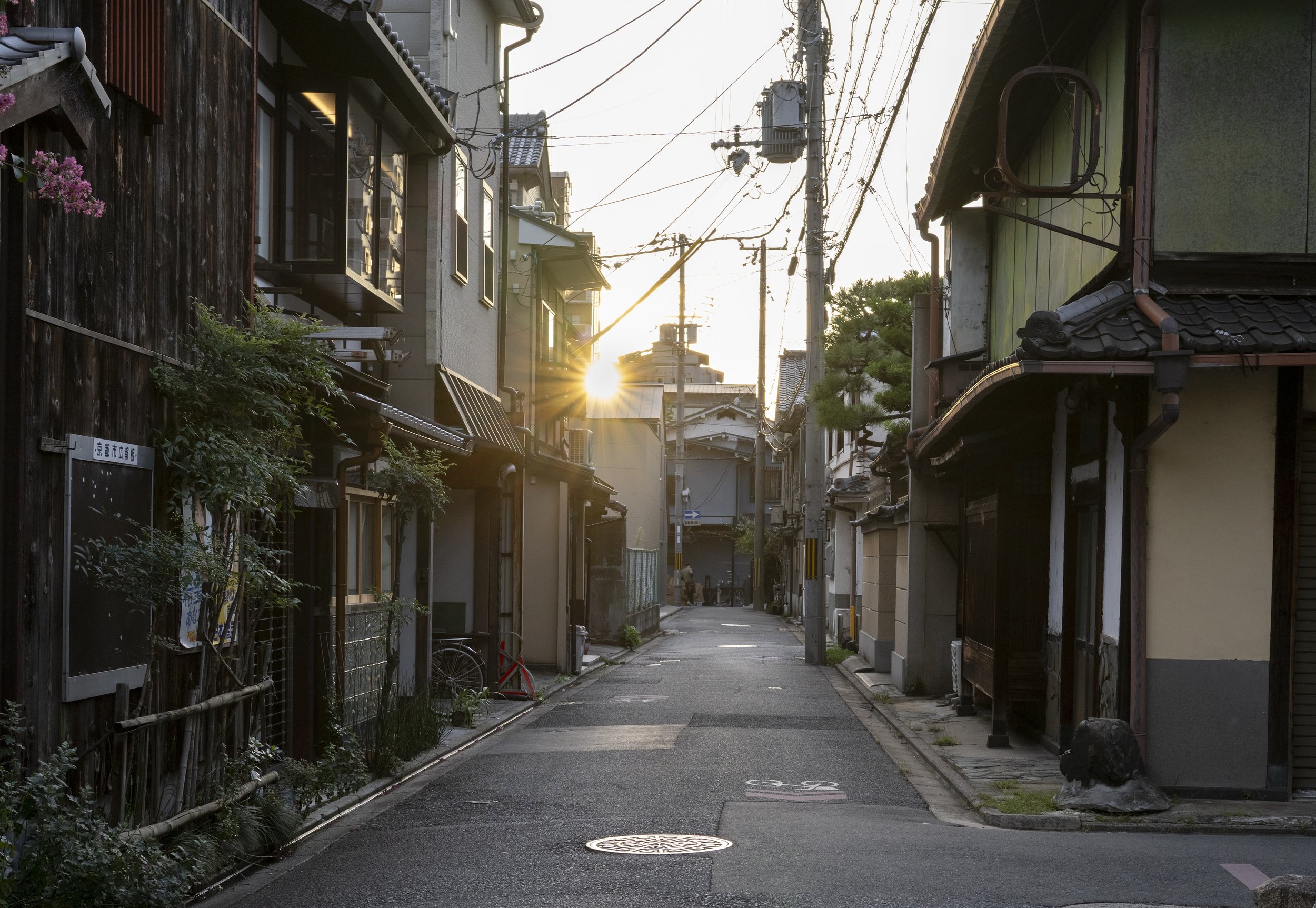
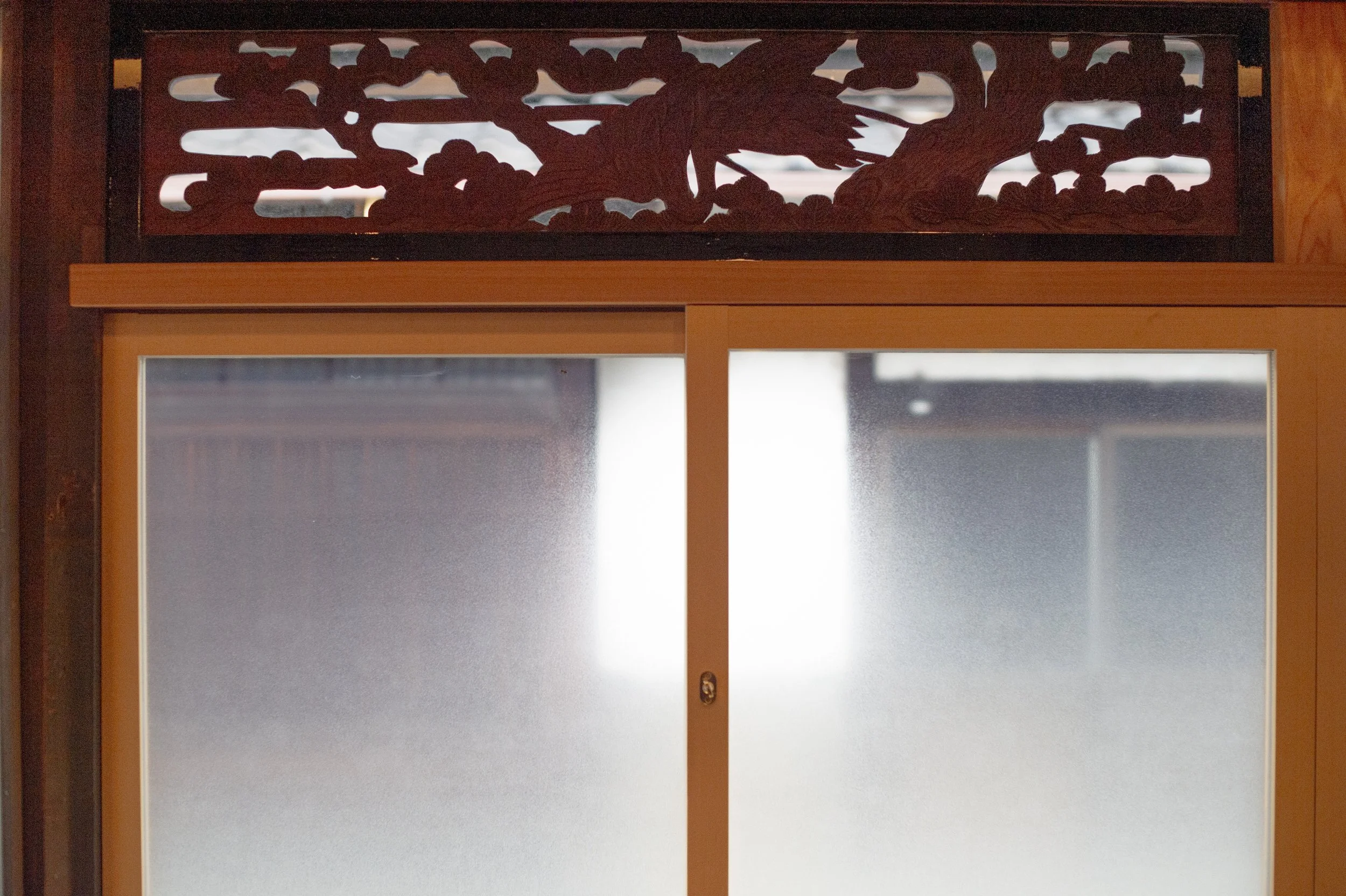
Nestled amongst several Machiya off a corner from Kamo River, our 2-storey annex has a glass blocks frontage, vintage door and lamp, frosted windows with a decorative panel below a characteristic eave, and a bay window on the upper level. The exterior hints at what will unfold inside.
Setting the Tone
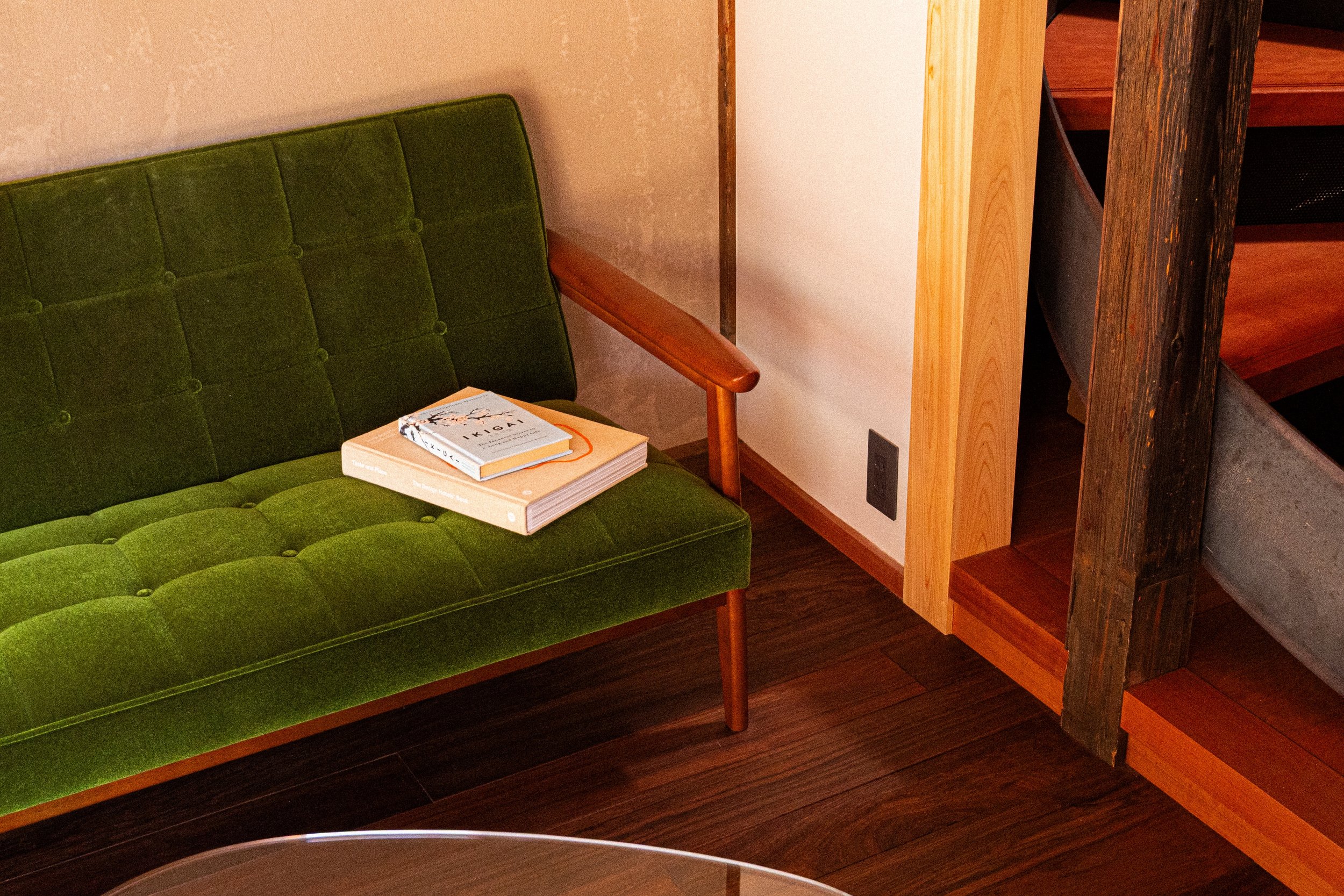
Step through the genkan entrance and you are in a sitting lounge that transports you to another era. Is it the Showa-era lamps, or the mid-century style furniture? Ambience is hard to nail, but the decor has already acquired a period character.
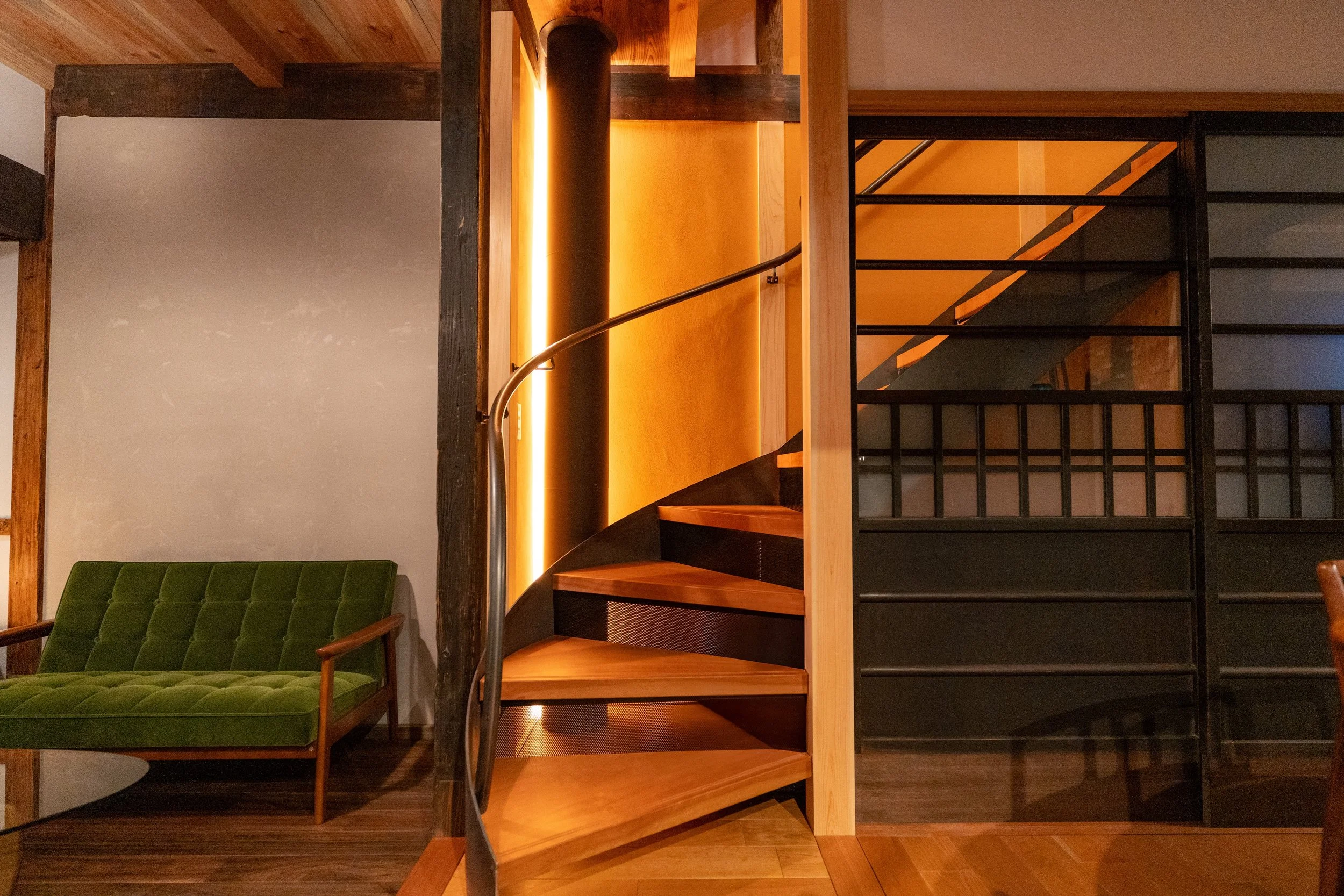
The settees with the all-wood frame were one of the first chairs designed for Western-style living in post-war homes and offices. The moquette green upholstery brings to mind seats on Japanese trains, another symbol of Japan forging into the modern era. The set-up here is for relaxed sitting, having drinks, reading or conversation.
Your Own Private Dining Room
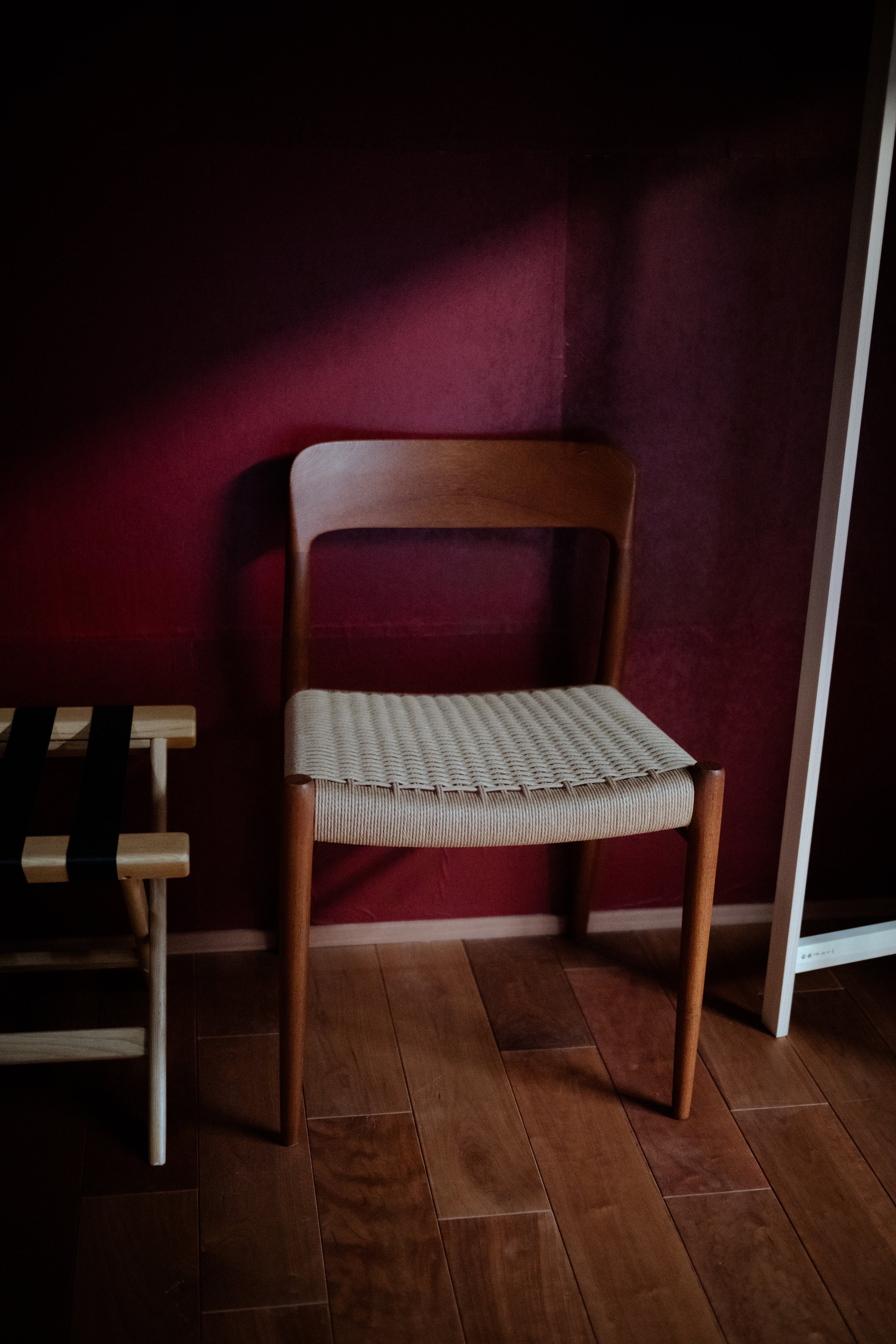
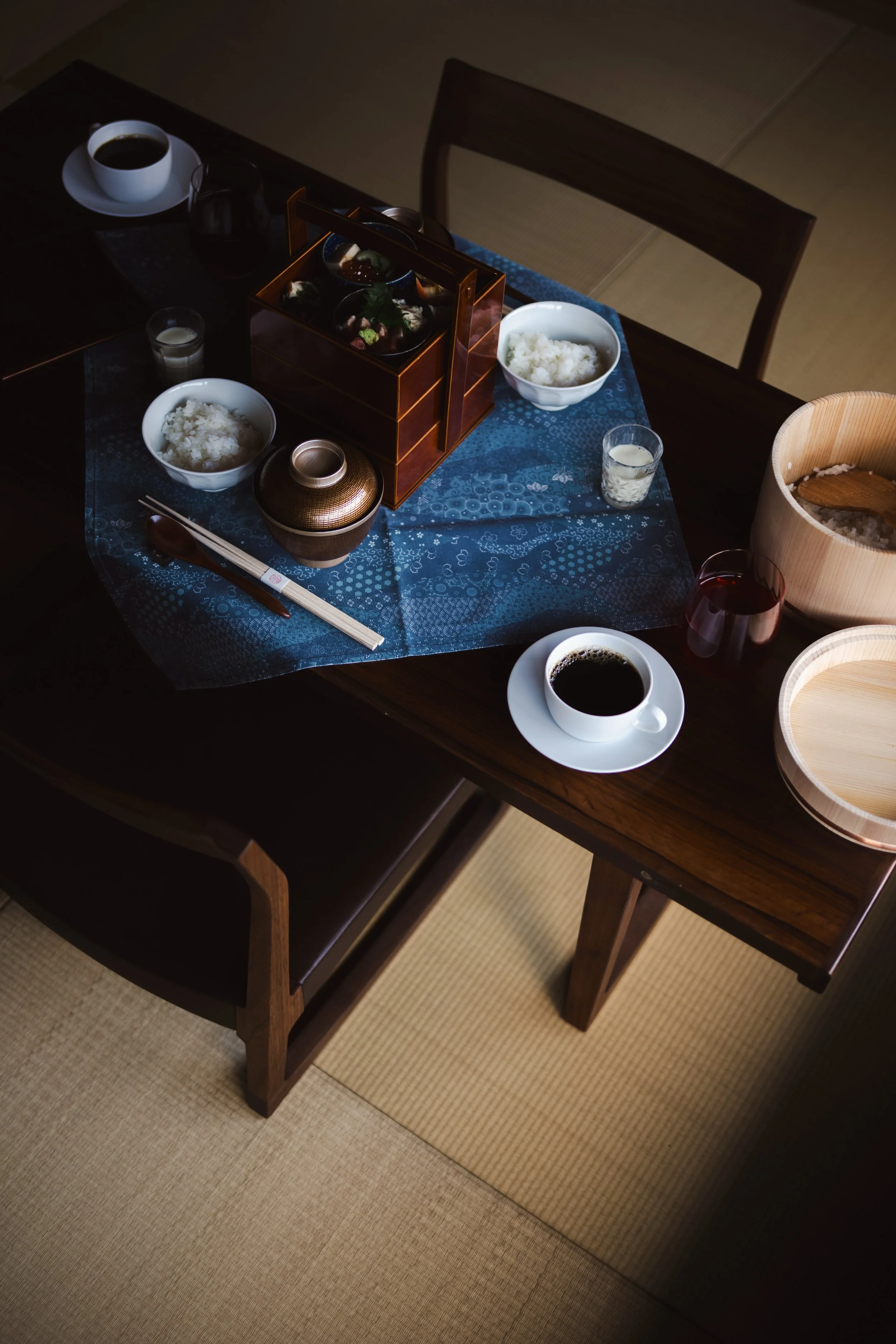
Dining is a comfortable affair at Genji Machiya. The rosewood dining table is smooth to the touch and large enough for a party of 4. The chairs, also in rosewood but not part of a set, just happen to match perfectly in terms of height, style and feel. They are mid-century pieces by Danish artisans who made Scandinavian design the era's signature style.
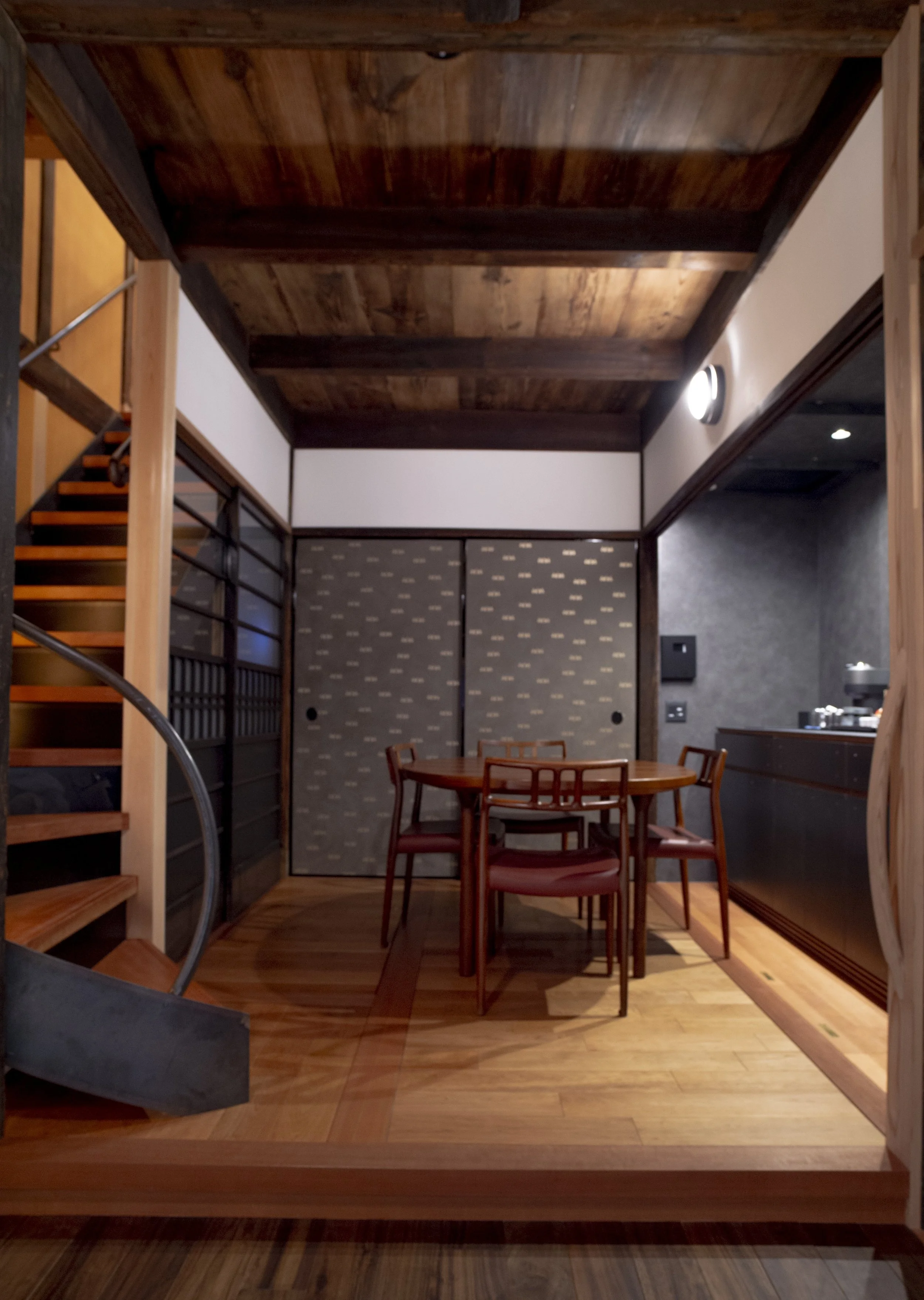
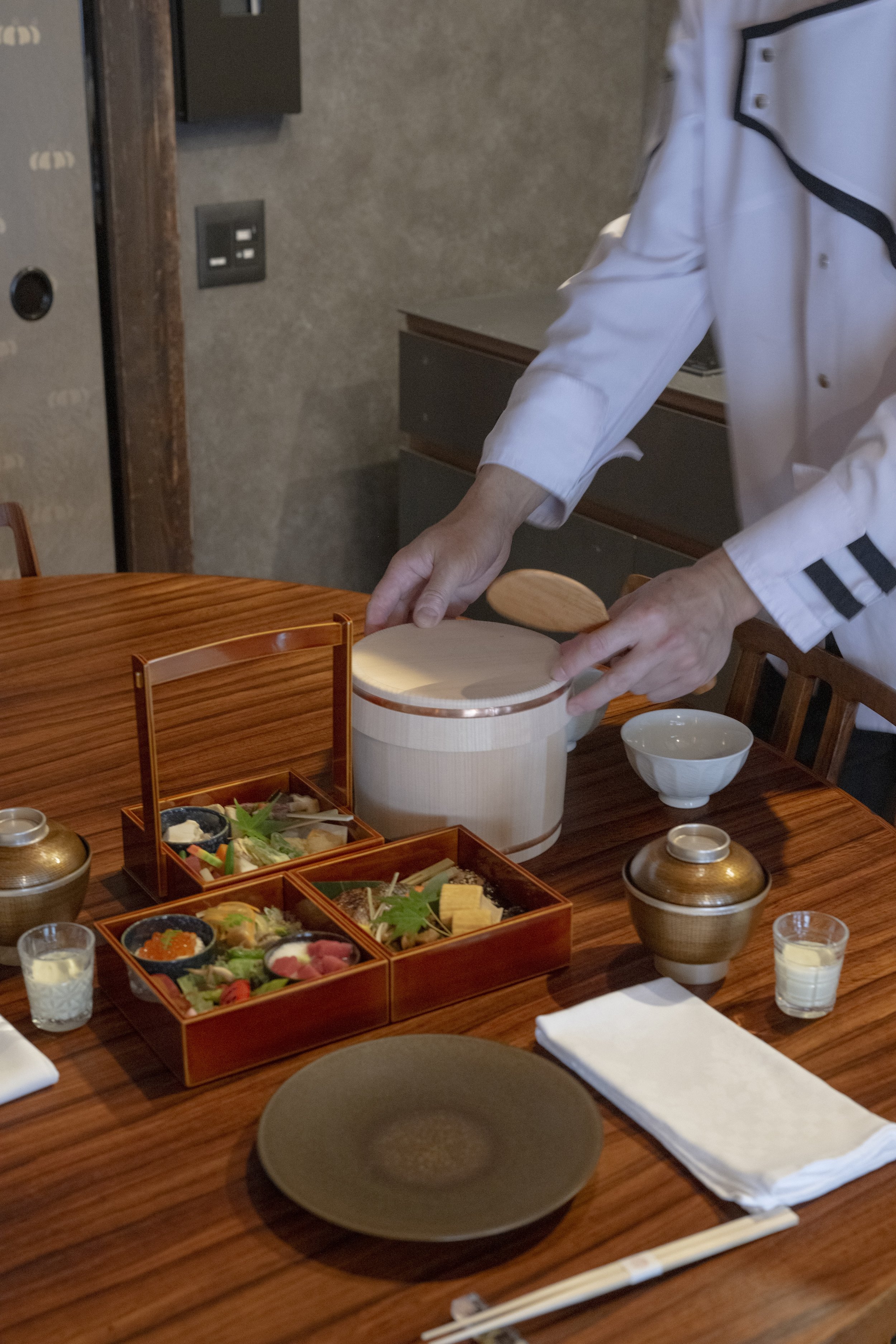
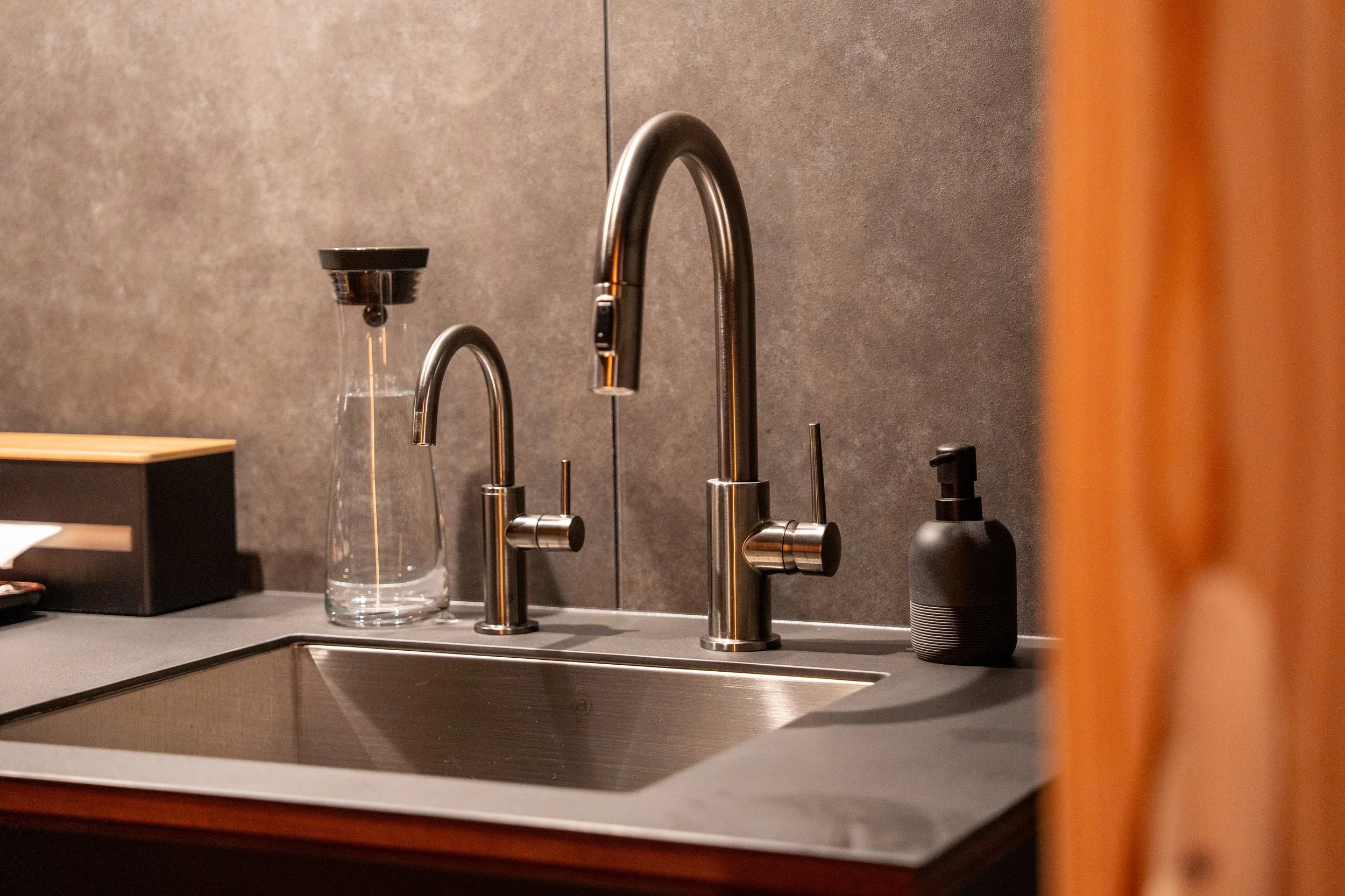
On this table (as well as the smaller low table in the tatami room upstairs) our chef or staff can serve a Machiya Special Breakfast which they will bring over in a 3-tier bento box. Guests can also prepare their own food on the sleek kitchen counter equipped with cooking utensils and a large sink. A tap for filtered water ensures an unlimited and eco supply of fresh drinking water.
Tatami Living Room
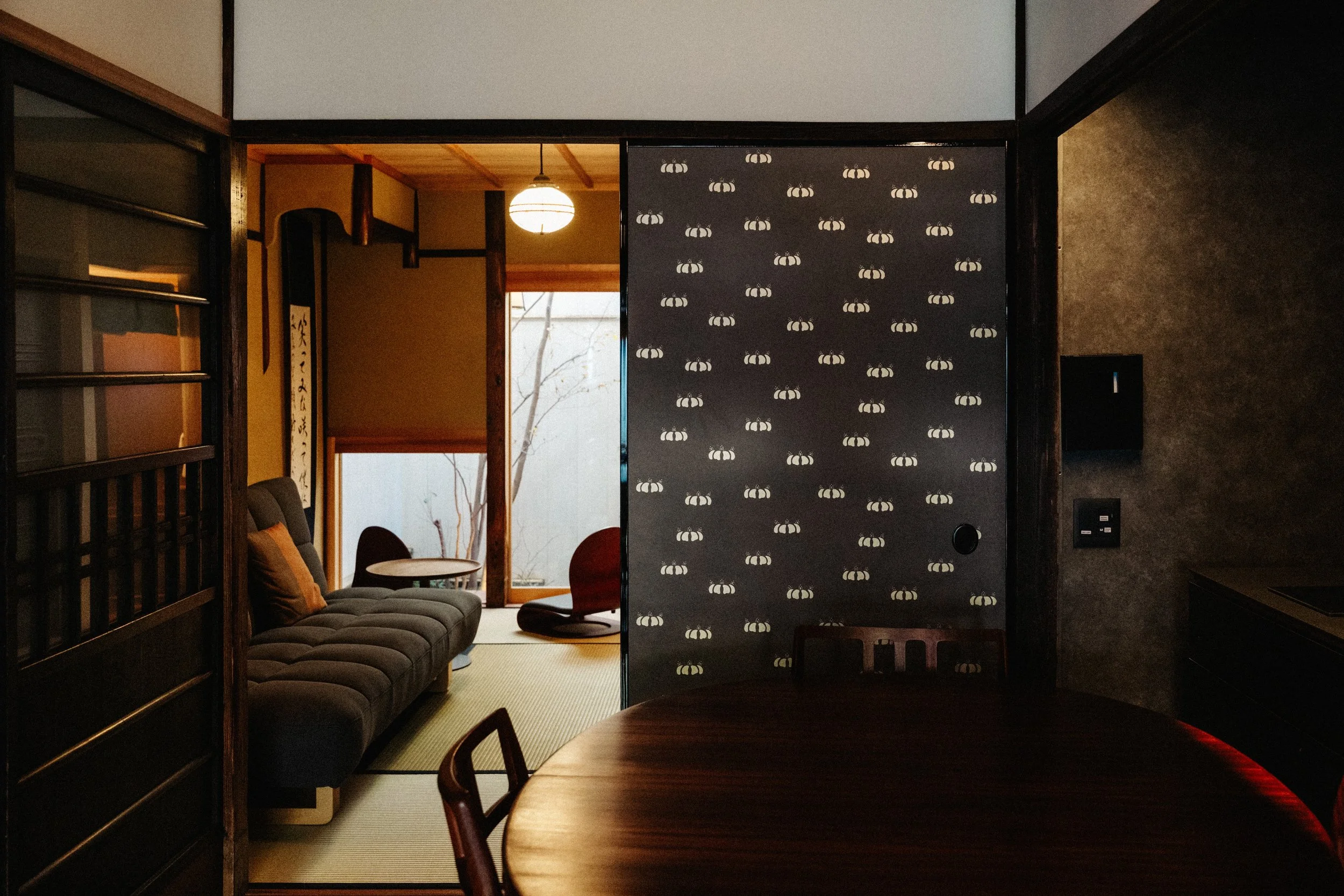
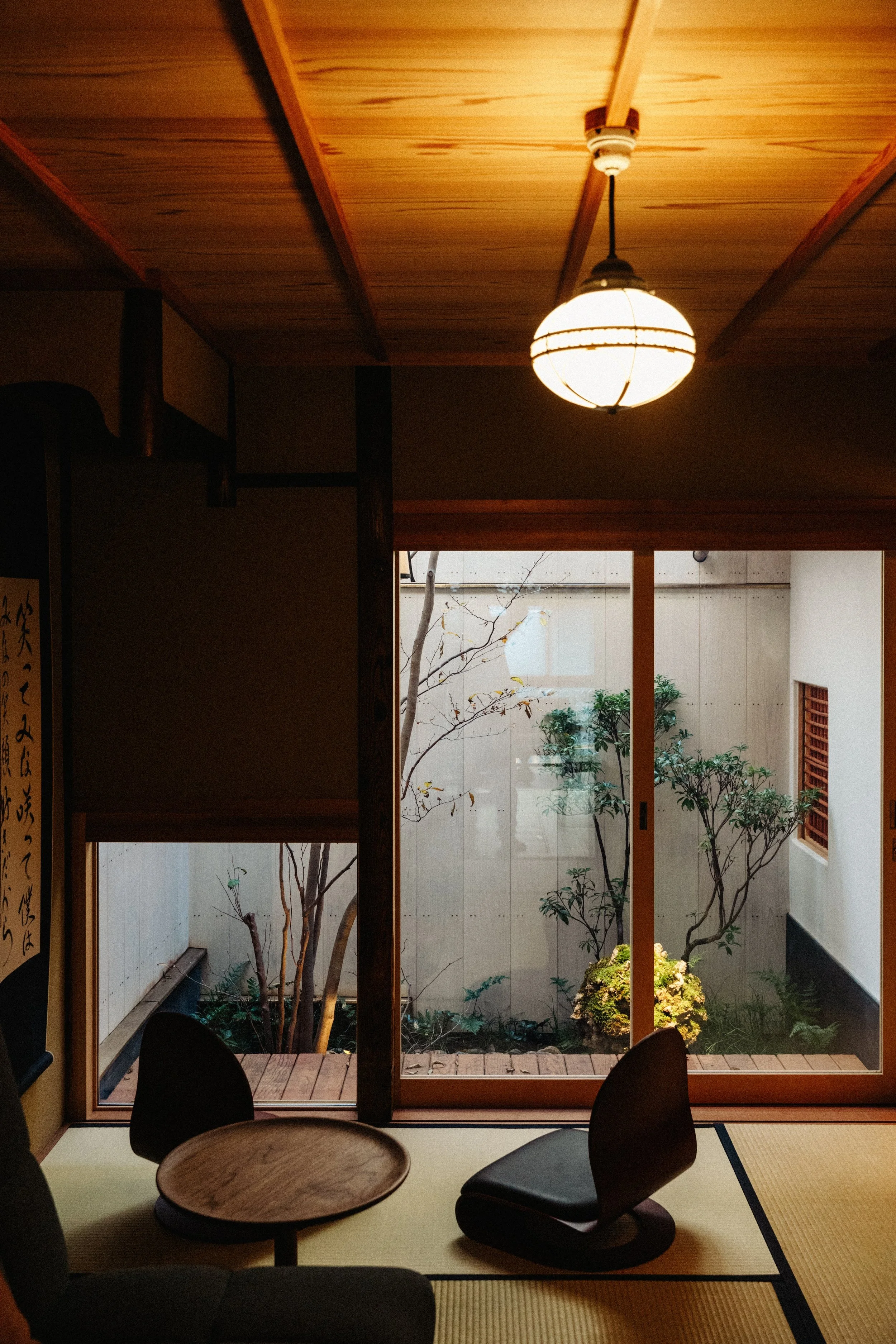
Go past the dining room and you are in the tatami living room, so called because it is purposed as a family room for gathering, lounging and enjoying views of a tsuboniwa pocket garden that is an essential component of a machiya.
For centuries, before there were Western-style rooms, all rooms in a Japanese residence were multi-functional, used as living/dining room by day and bedroom by night, and were also optimsed as guest room and study depending on space and needs.
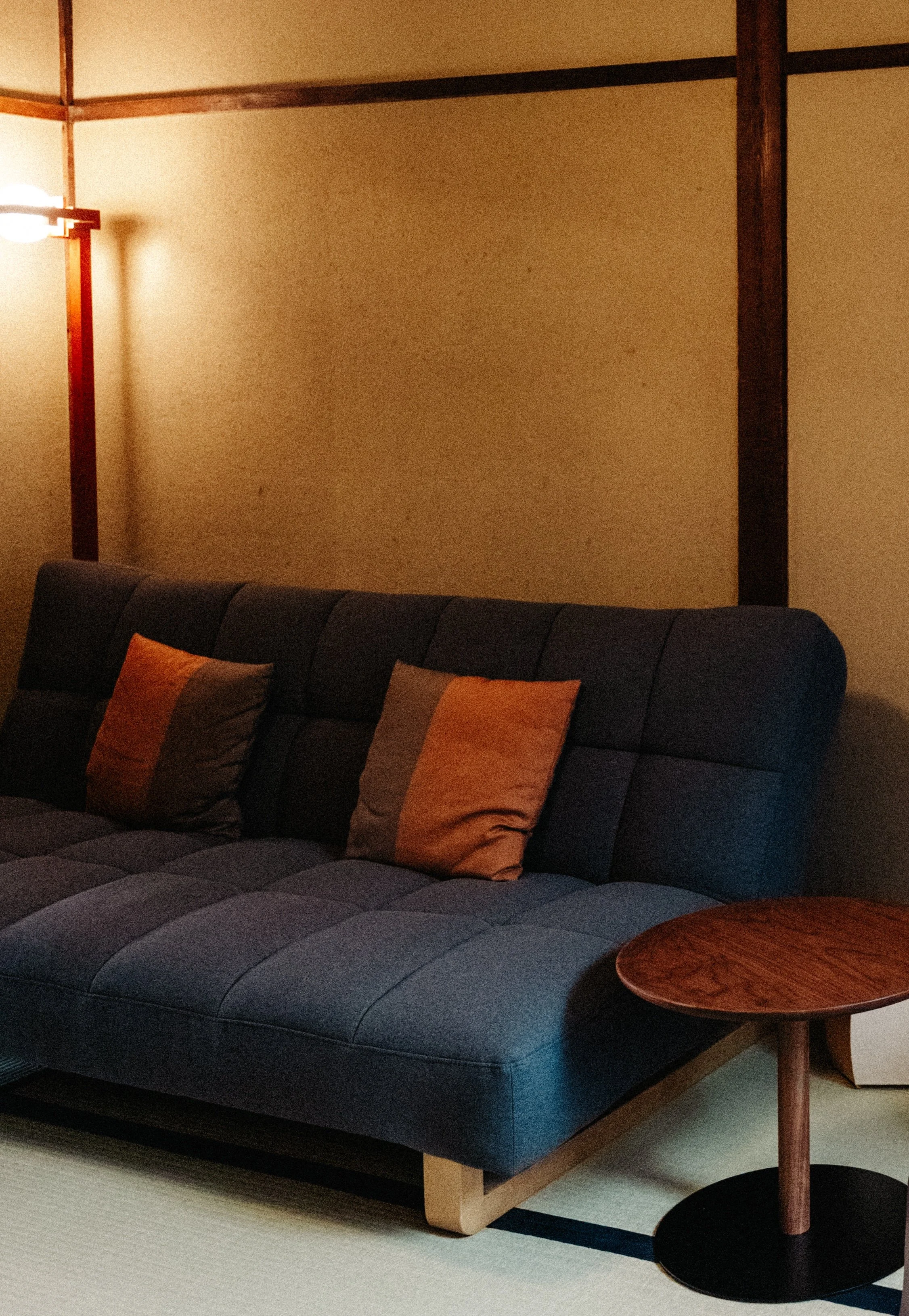
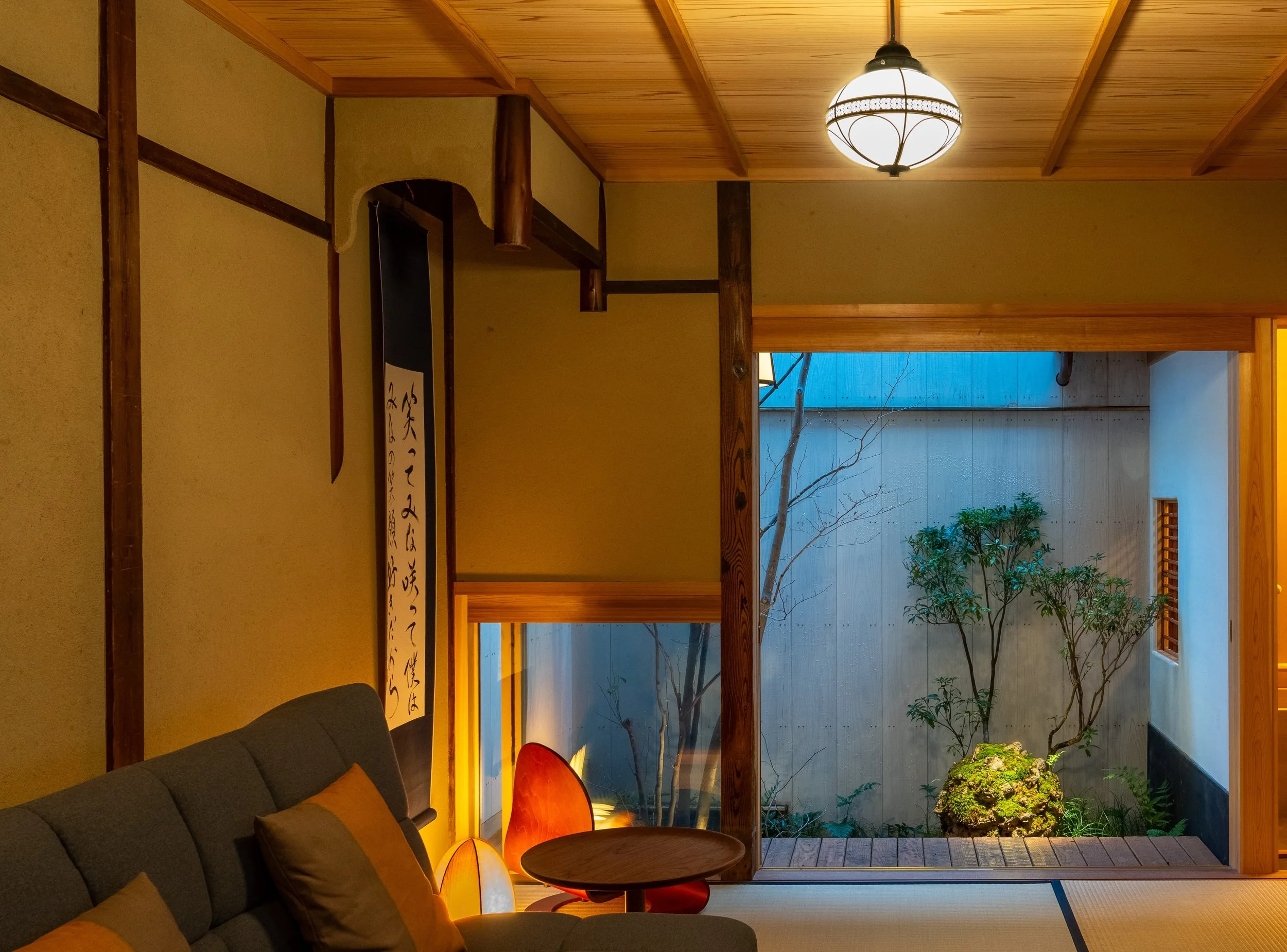
In this living room we have a comfy sofa that can be turned into a futon bed, a hanging tokonoma alcove, tatami chairs designed by Danish designer Verner Panton, and glass sliding doors that open onto the Ukiyo Floating World Garden, a karesansui (literally "dry-mountain-water") that not only brings in sunlight and nature, but also softens the lines of inside / outside.
Ukiyo Floating World Garden
As our landscape designer says:
“It is likely among the smallest gardens in Japan. But it has a very large-scale message that belies its size.”
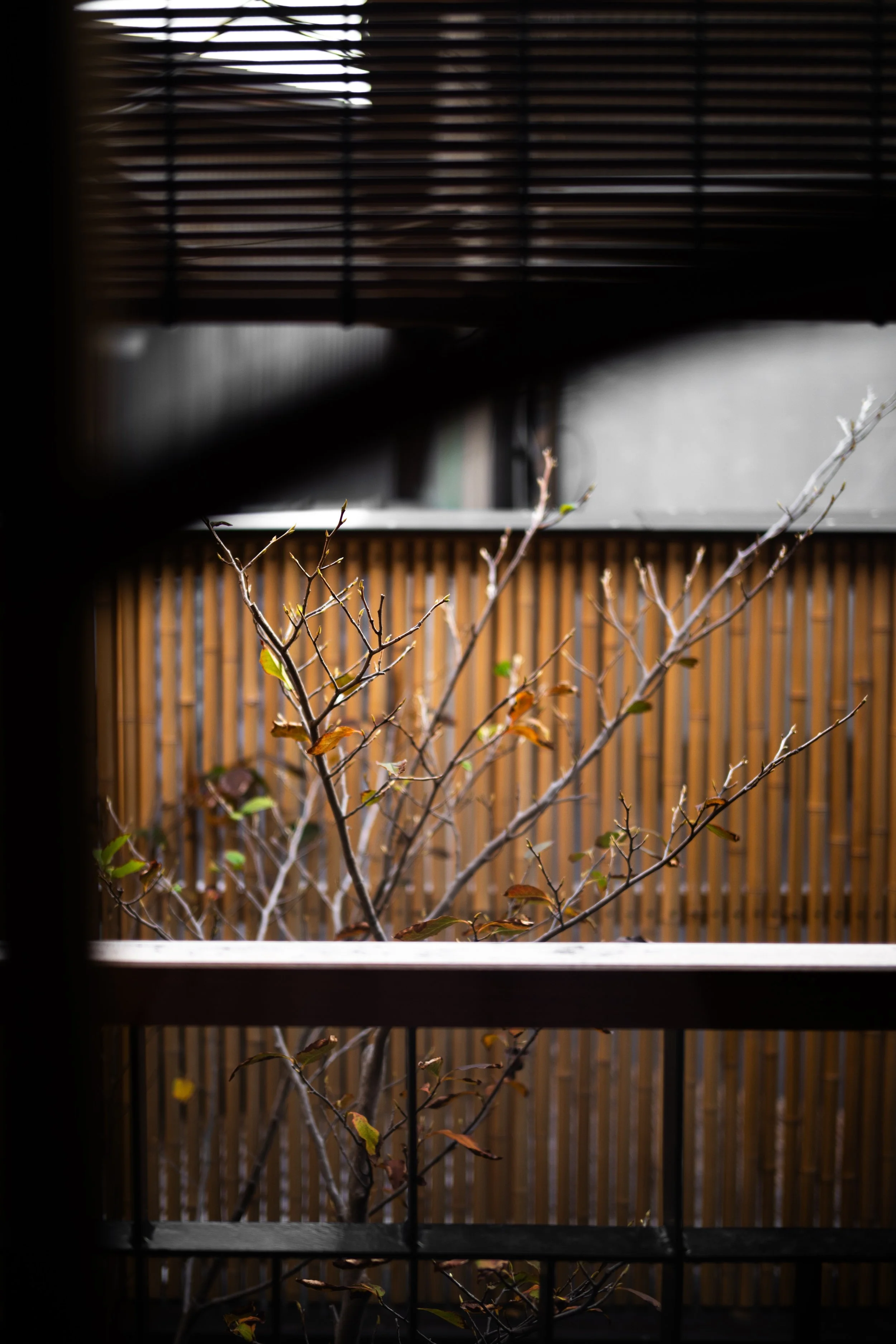
Under a camellia tree are small stones, set upright and in one direction, representing a flowing river. On this "river" floats an orb that Marc had hand-built with collected field mosses.
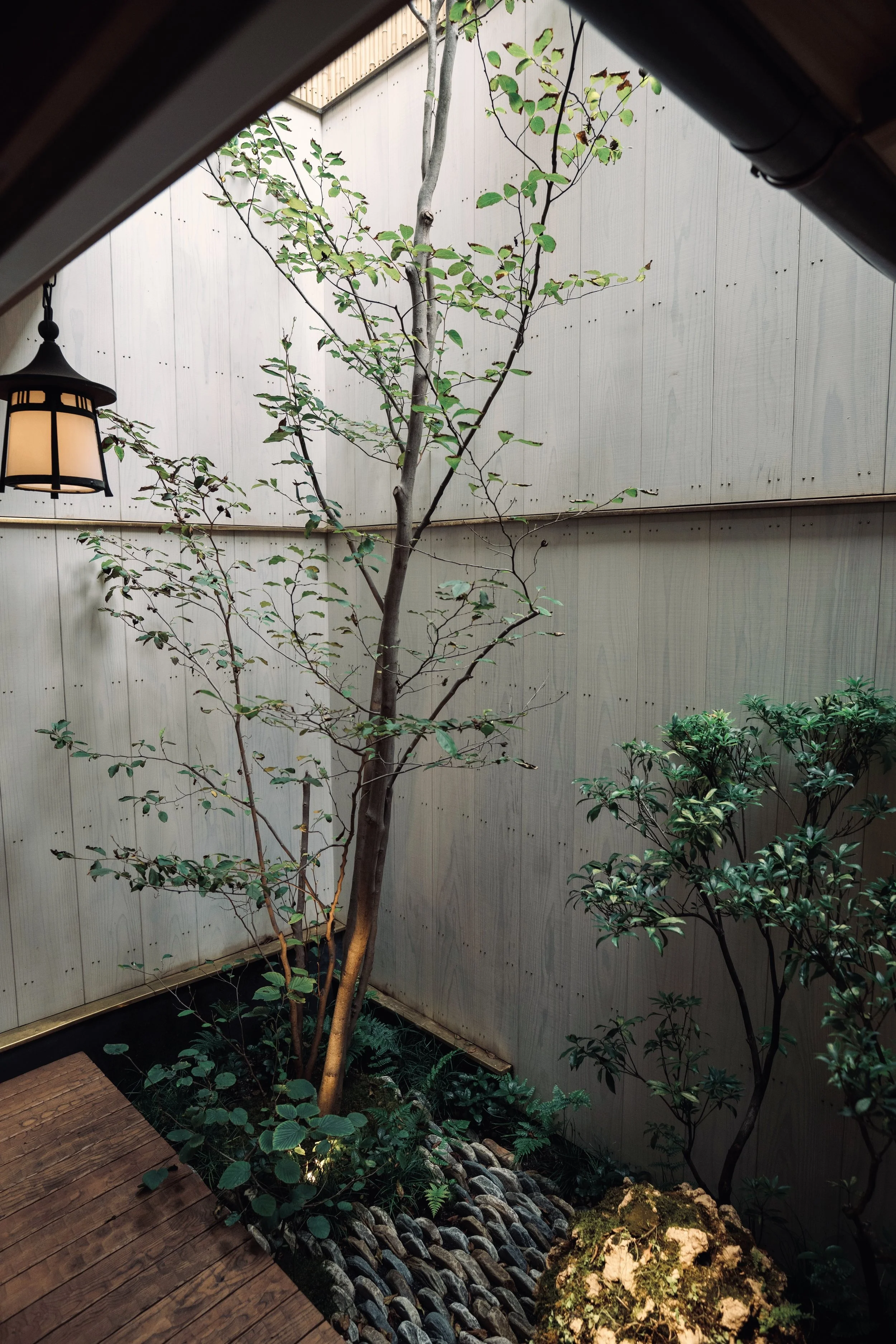
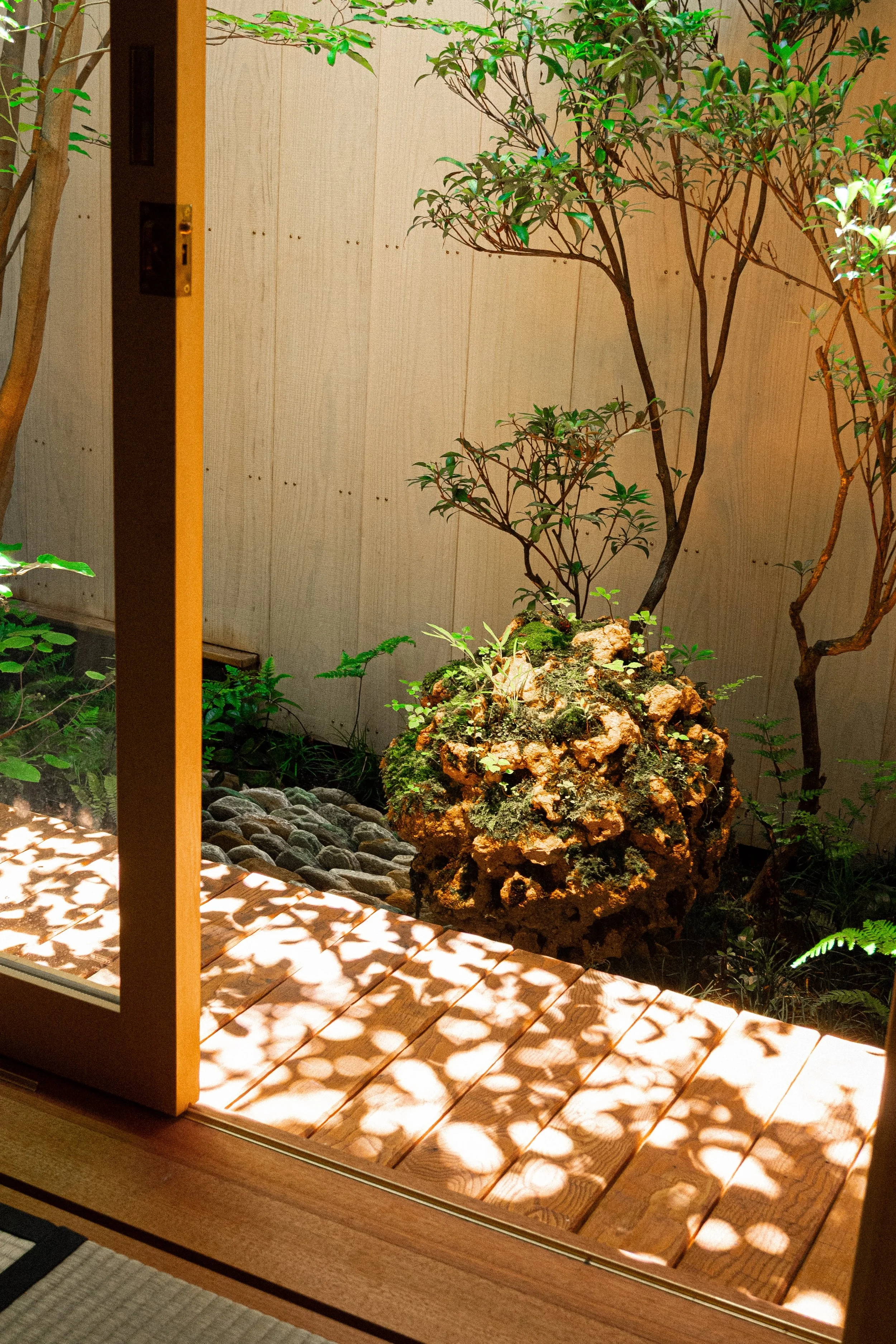
It can be thought of as our planet earth, floating in galaxy, carrying humanity across time and space in a transient realm.

The term ukiyo is also a reference to the ephemeral quality of all existence including that of the "pleasurable world". Given our neighborhood was once a red light district called Gojō Rakuen, where courtesans and kabuki actors hung out as depicted in the ukiyo-e woodblock prints, the metaphor seems both apt and prophetic.
"Hanging" Tokonoma and Bathroom
A scroll under the tsuri tokonoma hanging alcove says "Let's all have a laugh. I love seeing everybody's smiling faces." It exudes a joie de vivre that is also an expression of the Buddhist ideal of a blissful nature.
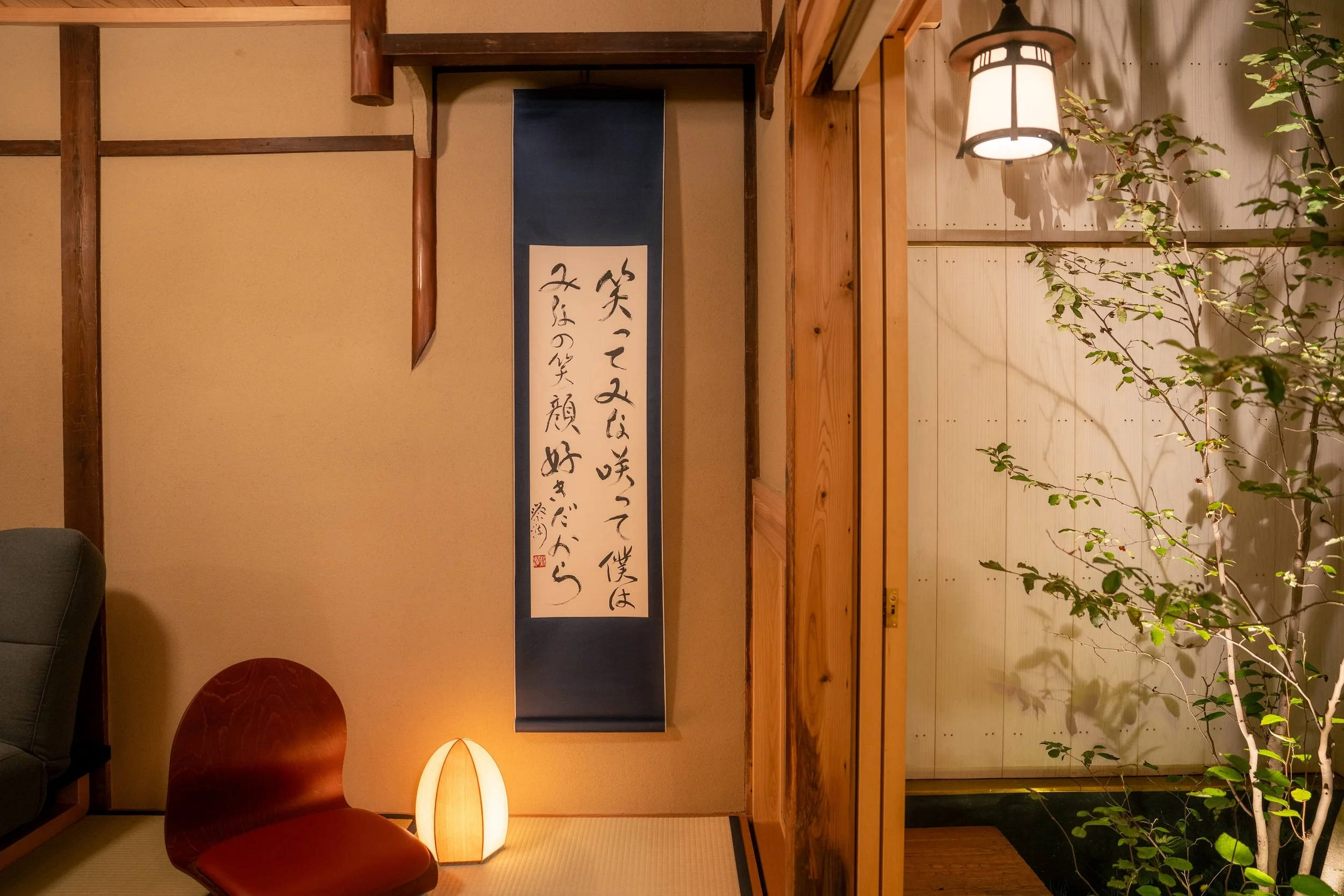
"Let's all have a laugh. I love seeing everybody's smiling faces."
~ Chua Lam

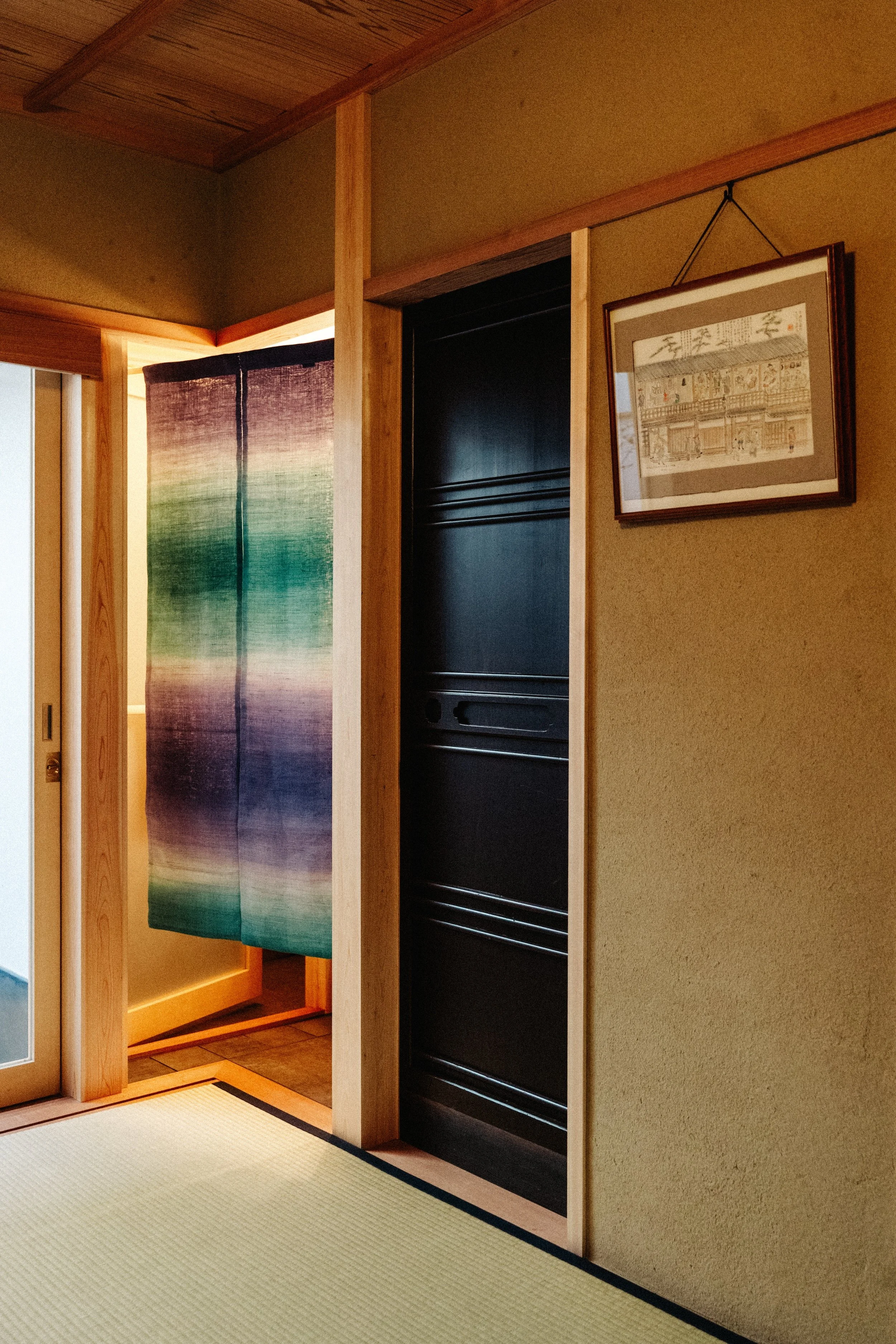
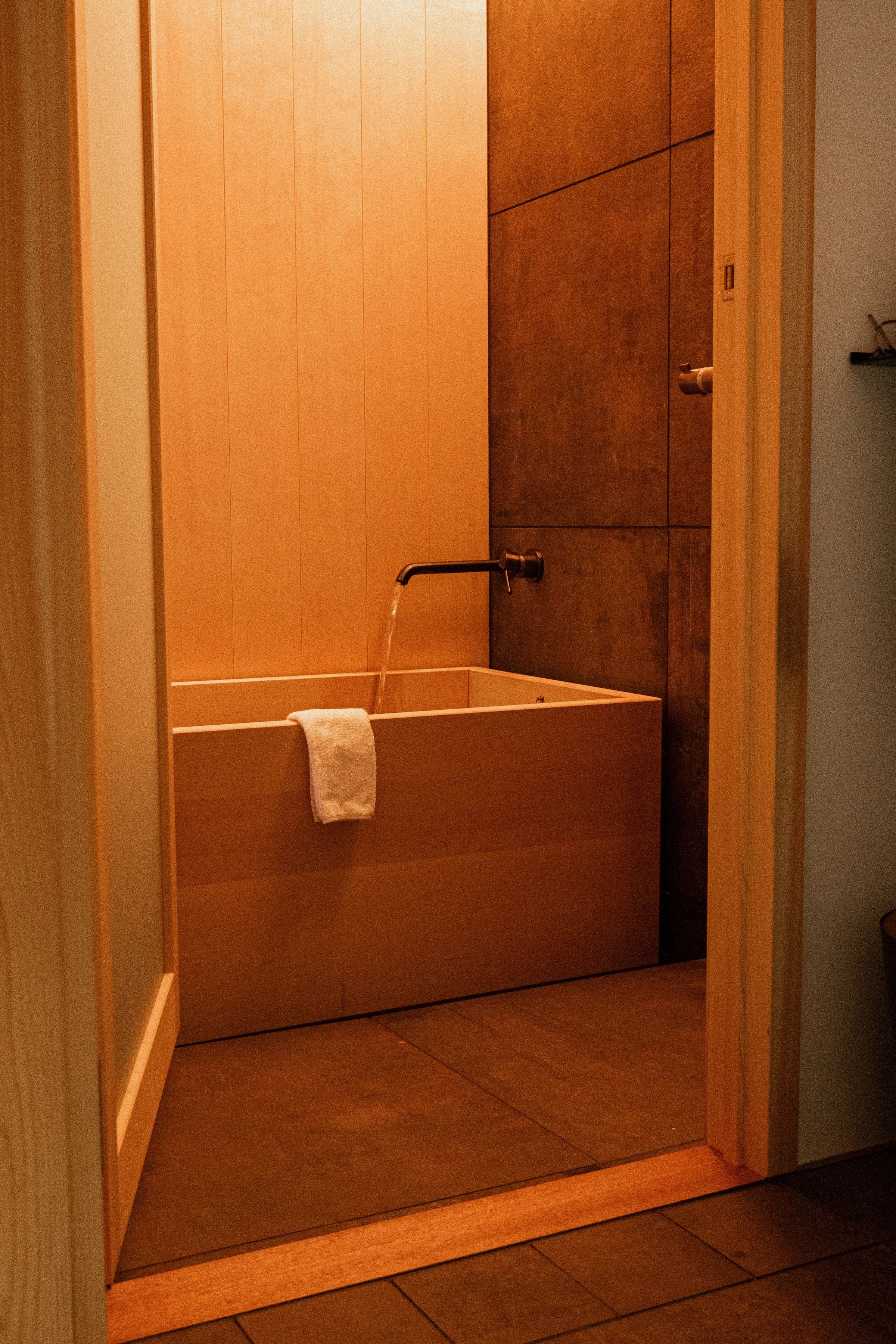
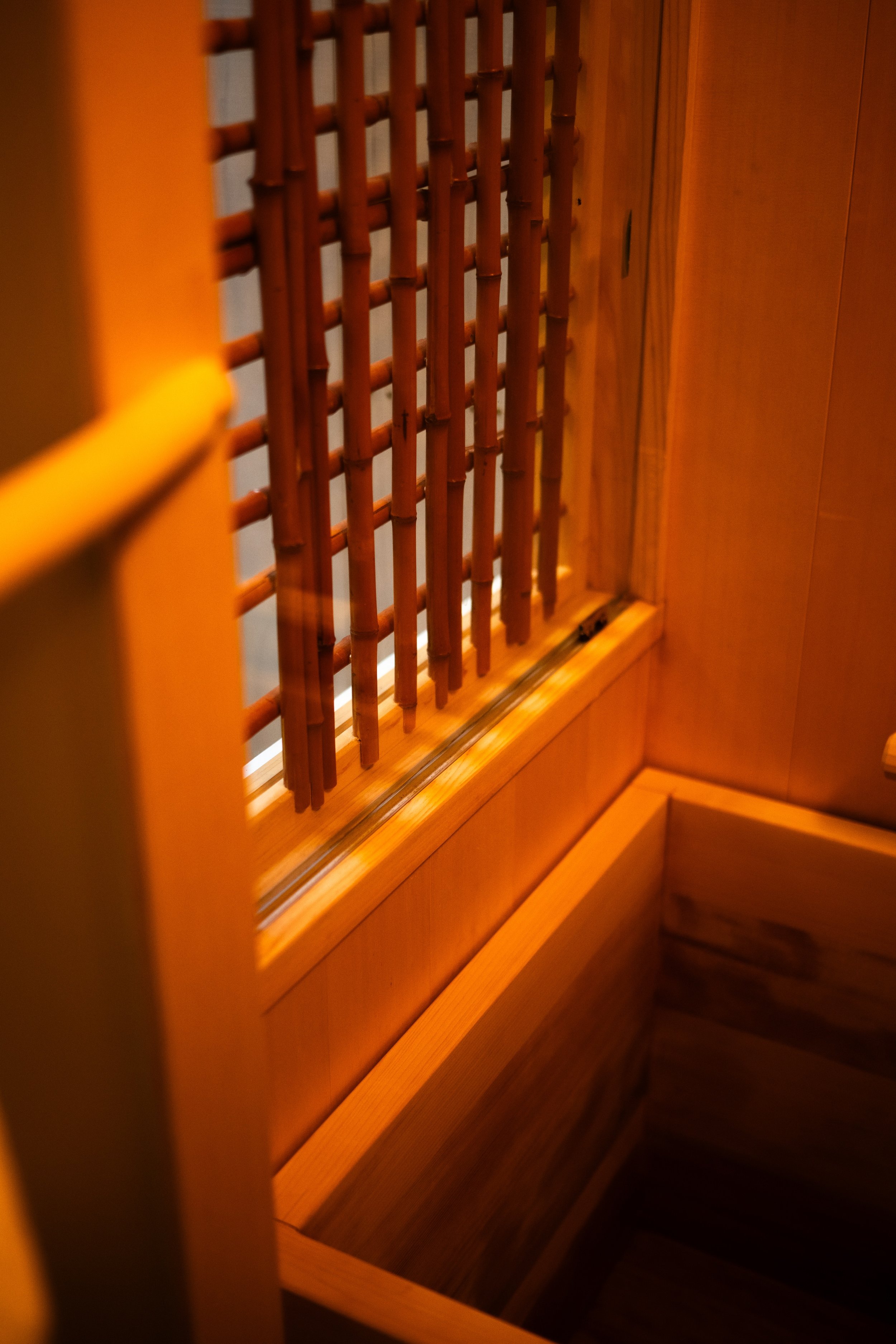
Behind the noren curtain is the bathroom with a wooden tub. Although Japanese tubs are generally referred to as hinoki tubs, this one is actually a hiba tub, made from the most durable cypress with antimicrobial properties and a strong clean scent. While soaking in the tub, you can see the garden and listen to the birds through the shitajimado, a traditional window woven with bamboo and reeds.
Handrails - an important Comfort Feature
Walk up the stairs and you will be struck by how smooth and easy-to-grip the handrails are - one of the reasons why this machiya offers great comfort and peace of mind for guests of all ages. Another such "comfort" feature is that there is a toilet on each floor. The convenience of not having to go up and down the stairs during the night is a luxury not to be under-estimated!
East-West Old-New
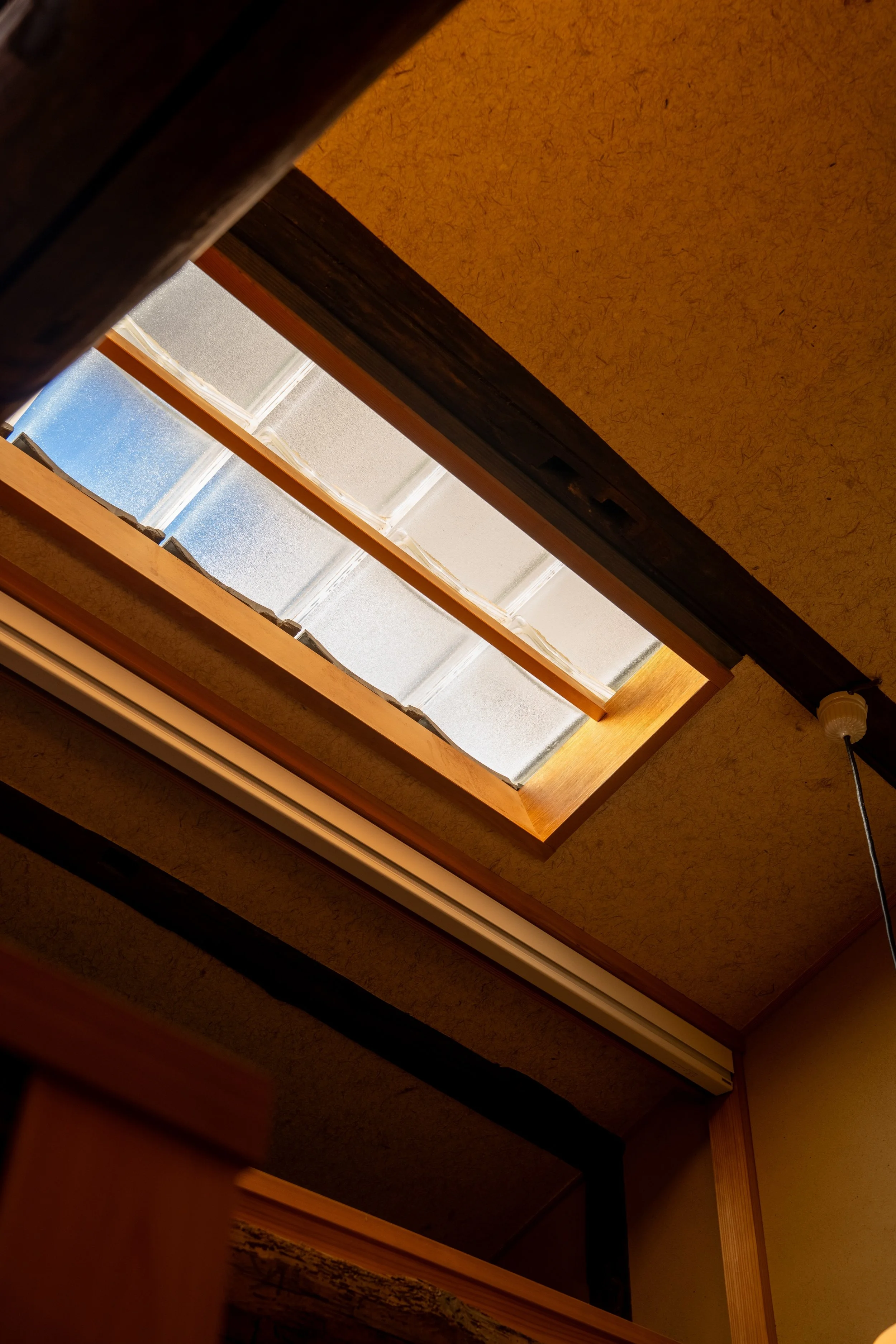
Once upstairs you will be pleasantly surprised by how bright and airy it is, and how two worlds - old and new, Western and Japanese, can co-exist so naturally in one home, as if it has always been so.
Sunlight streams in from a meticulously designed skylight, with glass tiles arranged in such a way that there is always natural light but no direct beaming that causes excess heat.
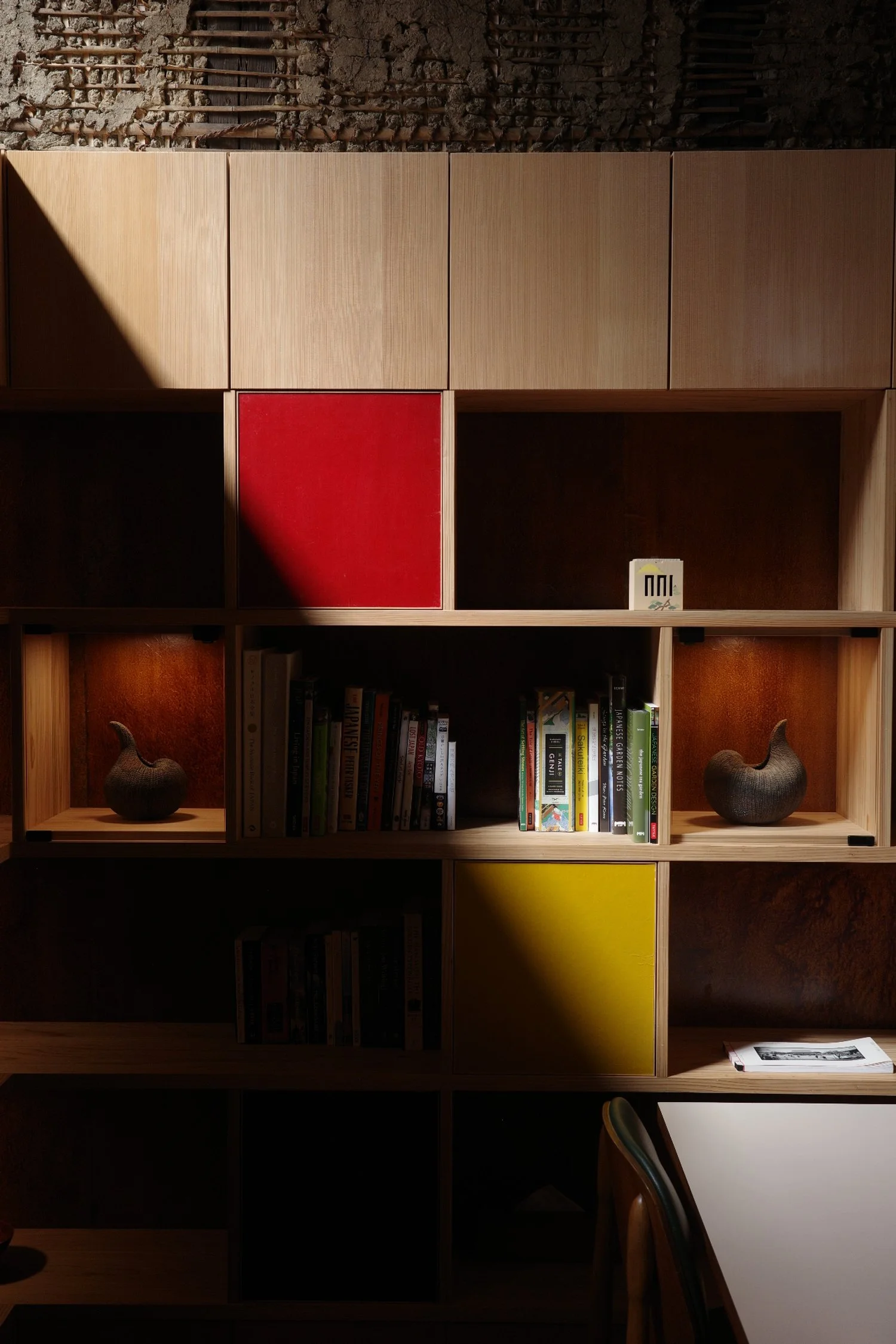
Against the original tsuchikabe earth wall is a built-in library that takes after the design of Genji Kyoto's bar and display cabinet in the lobby.
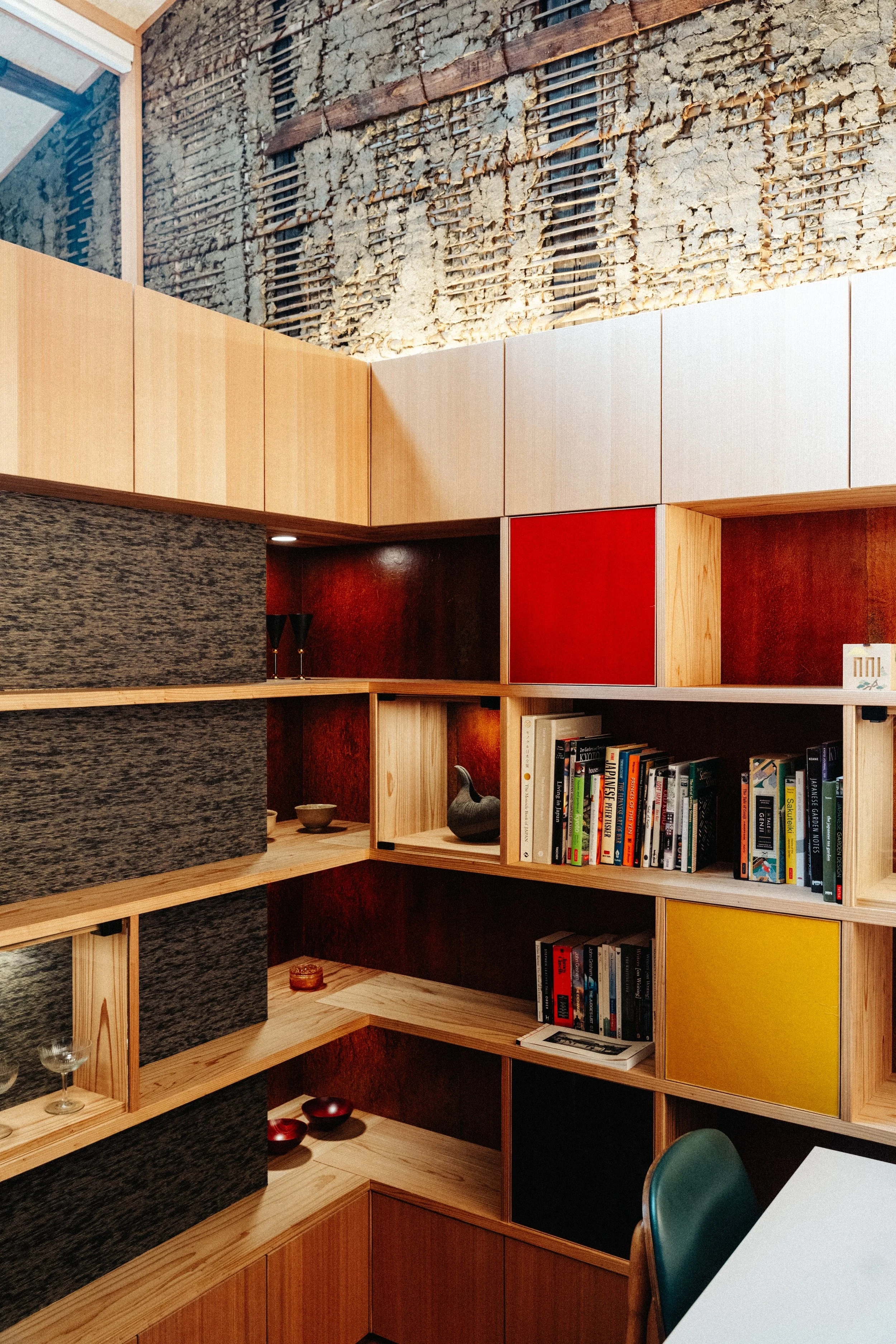
Library and curios cabinet for both hotel and guests.
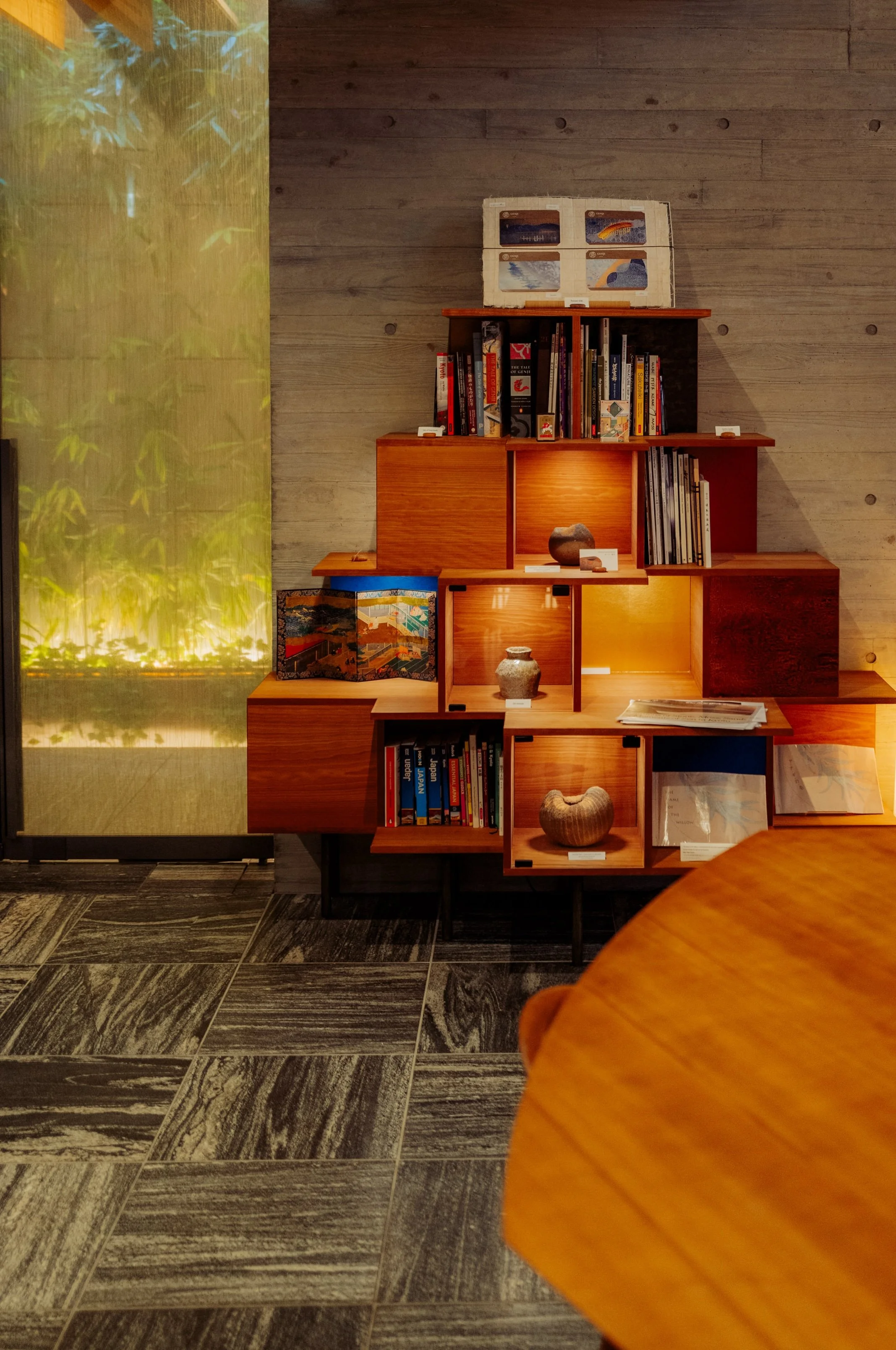
Library and display cabinet with cubicles motif in Genji Kyoto’s lobby.
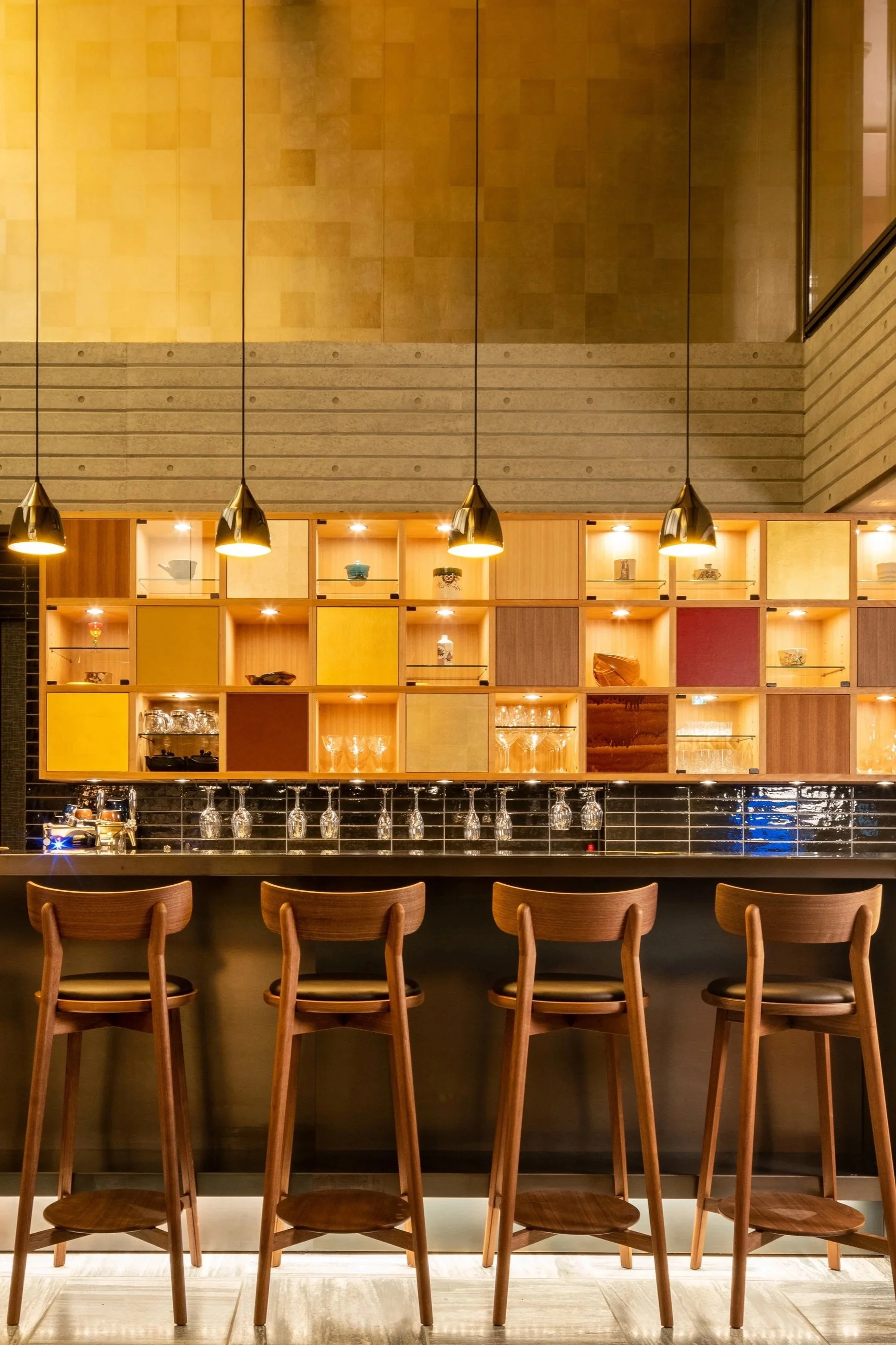
Genji Kyoto’s lobby bar with 33 cubicles.
The shelves and cubicles, warmly lit and accented by panels covered in urushi washi paper, are home to the readings and objects that we like to share with visitors. But more importantly, this is also an inviting space for guests to create their own library of books and curios. The desk and chair, vintage Italian from the 1960s, are of a playful, informal style. Read, write or browse your laptop here, and you will feel a sense of attachment growing inside. You are beginning to belong to this place.
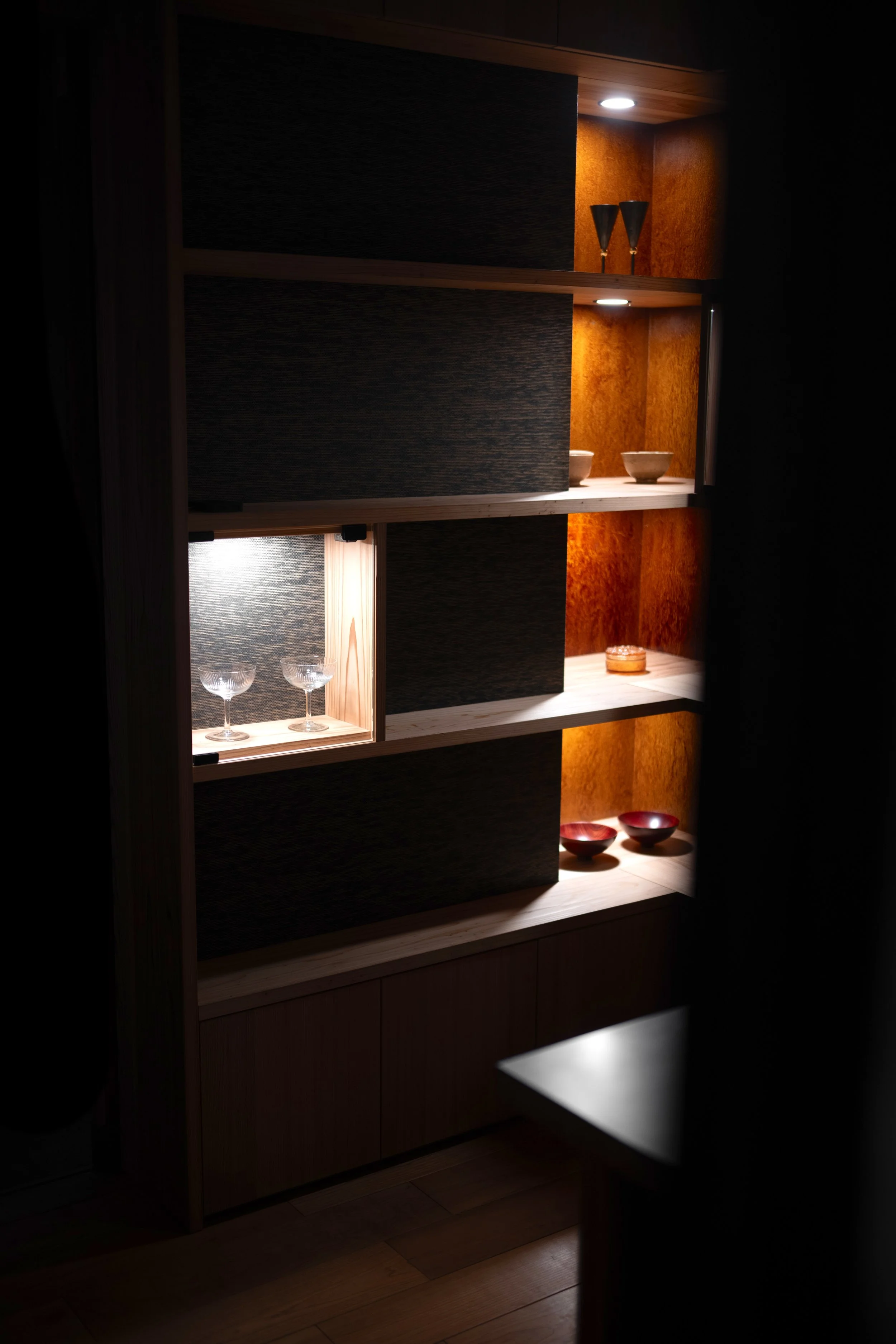
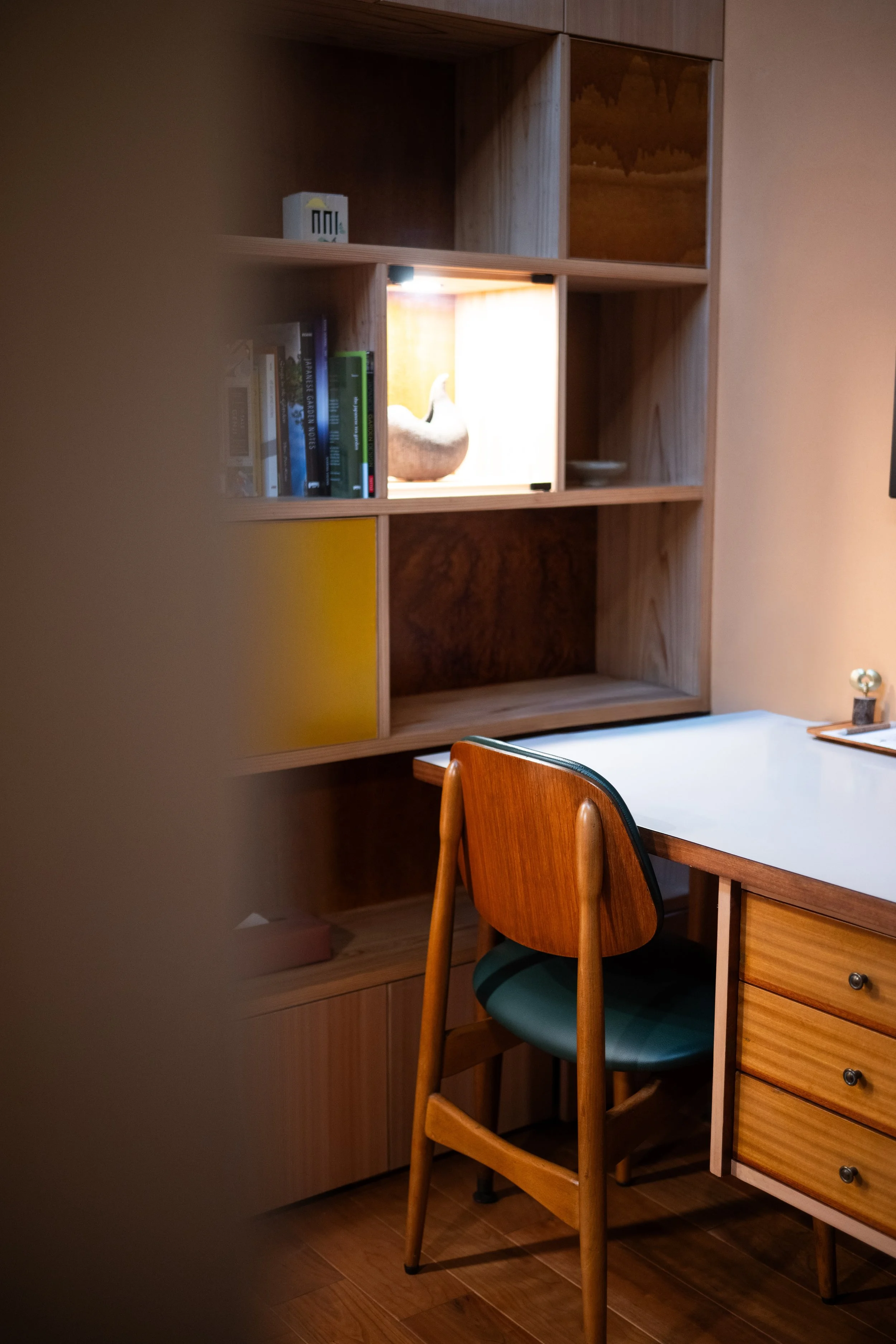
On either side of the study is the washitsu tatami room and the yōshitsu Western-style room, each with a different personality.
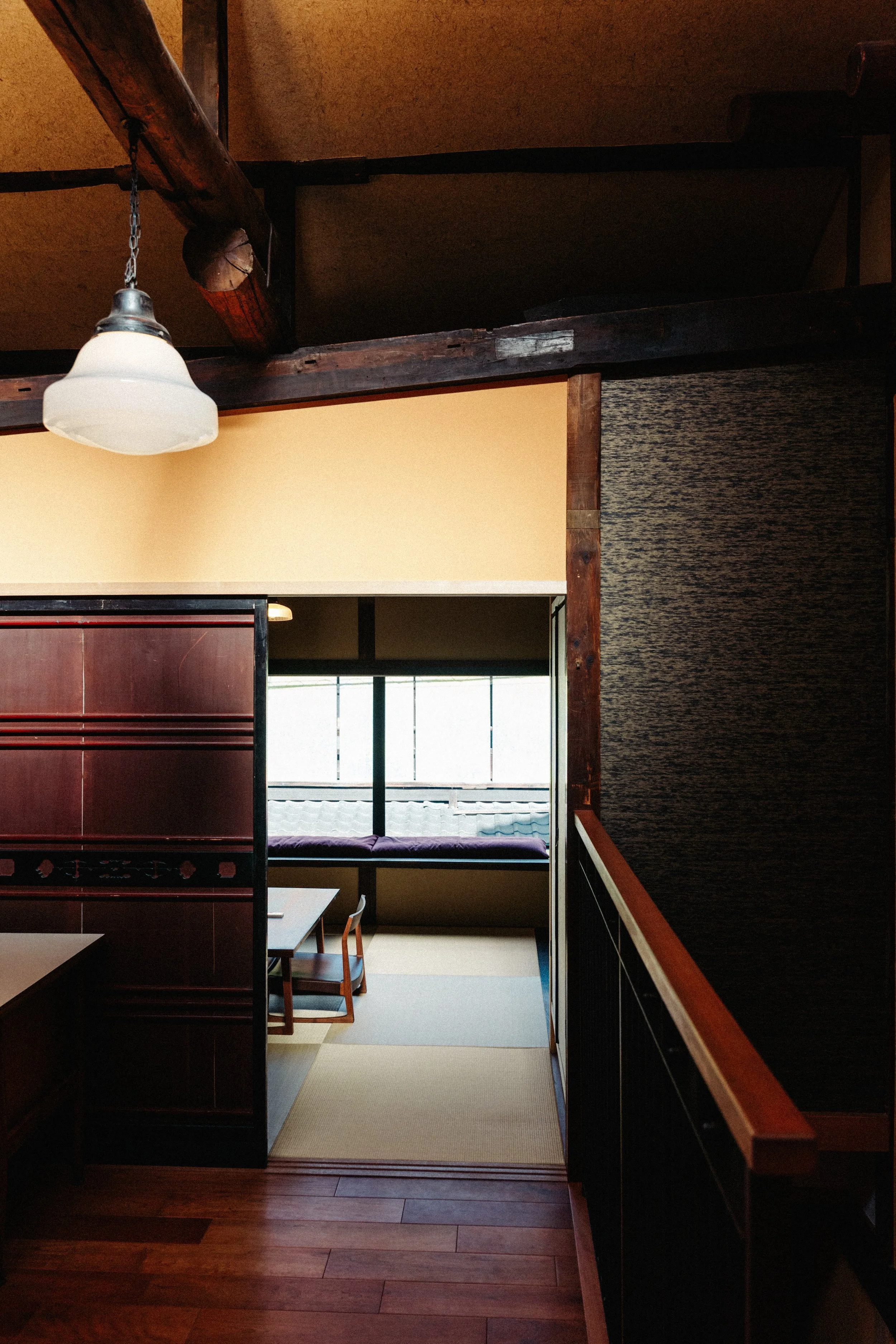
Japanese Sense of Beauty
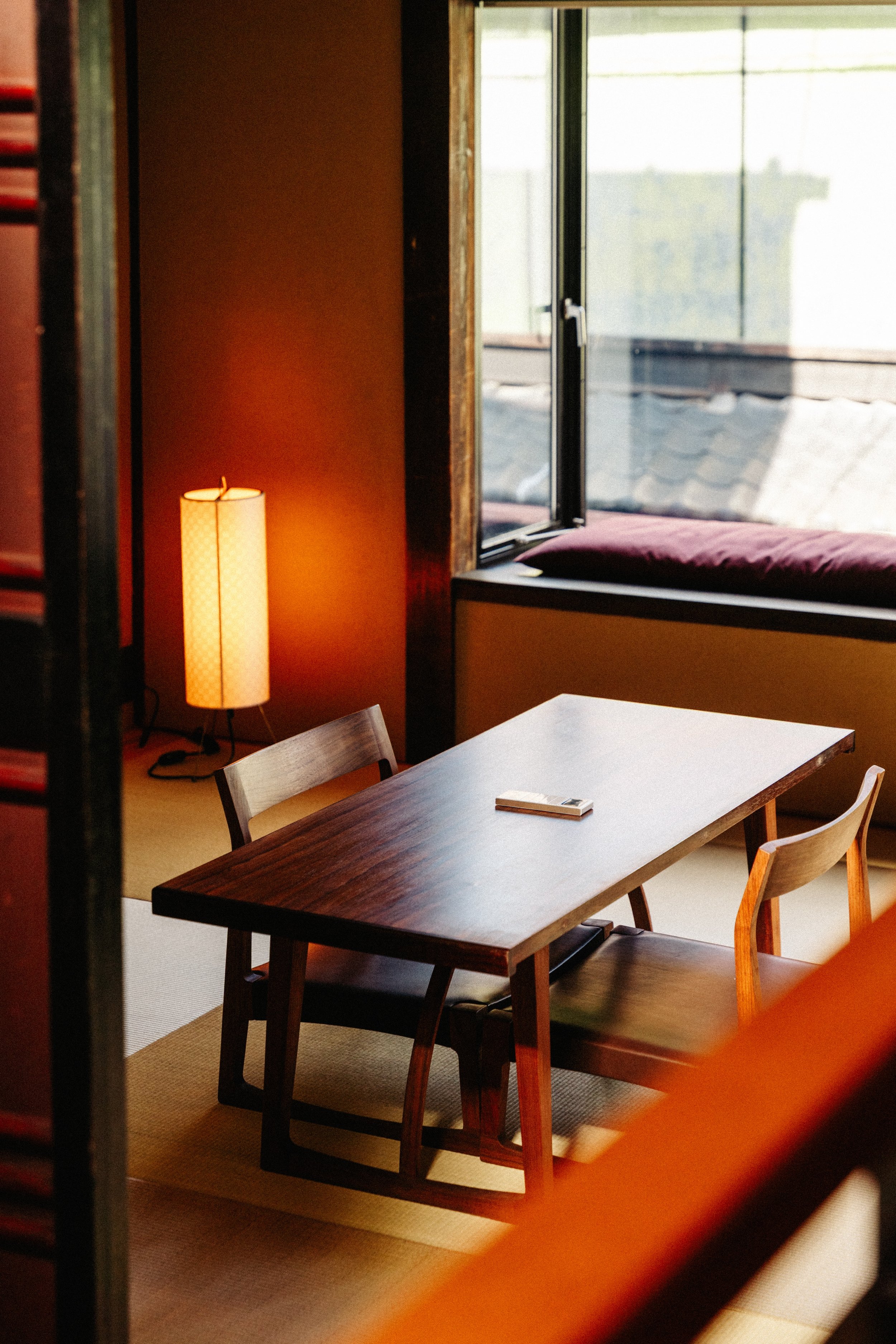
The tatami room, with rush mats covering the entire floor, a tokonoma alcove, and low table and chairs, is the quintessential Japanese room where the beauty of simplicity is most manifest. A seasonal flower arrangement, mementos on chigaidana staggered shelves, an andon lamp on the floor - it is enough to evoke calm and put one in a zen state of mind.
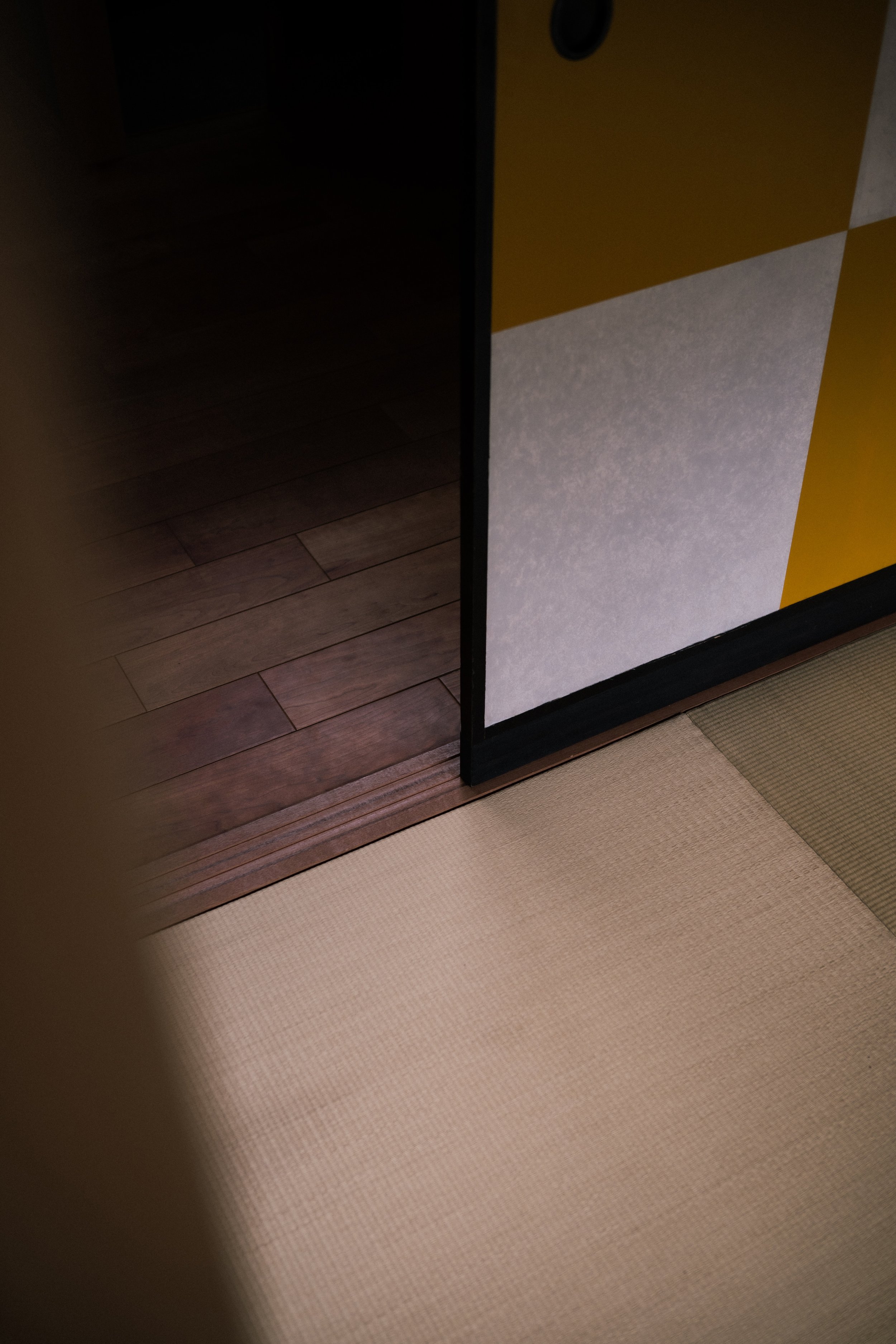
Tatami floor and Fusuma sliding doors
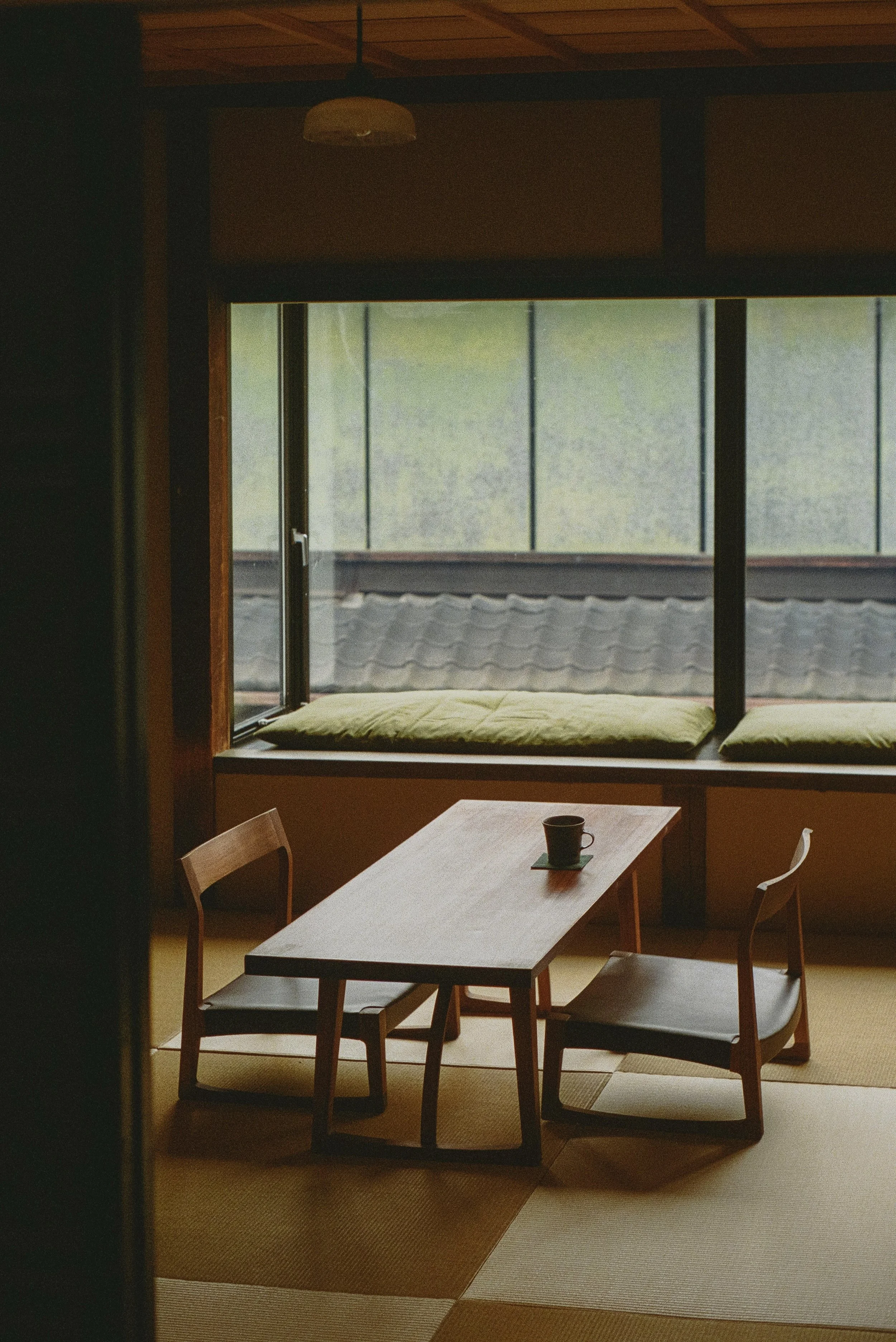
Custom-designed table and specially selected low chairs
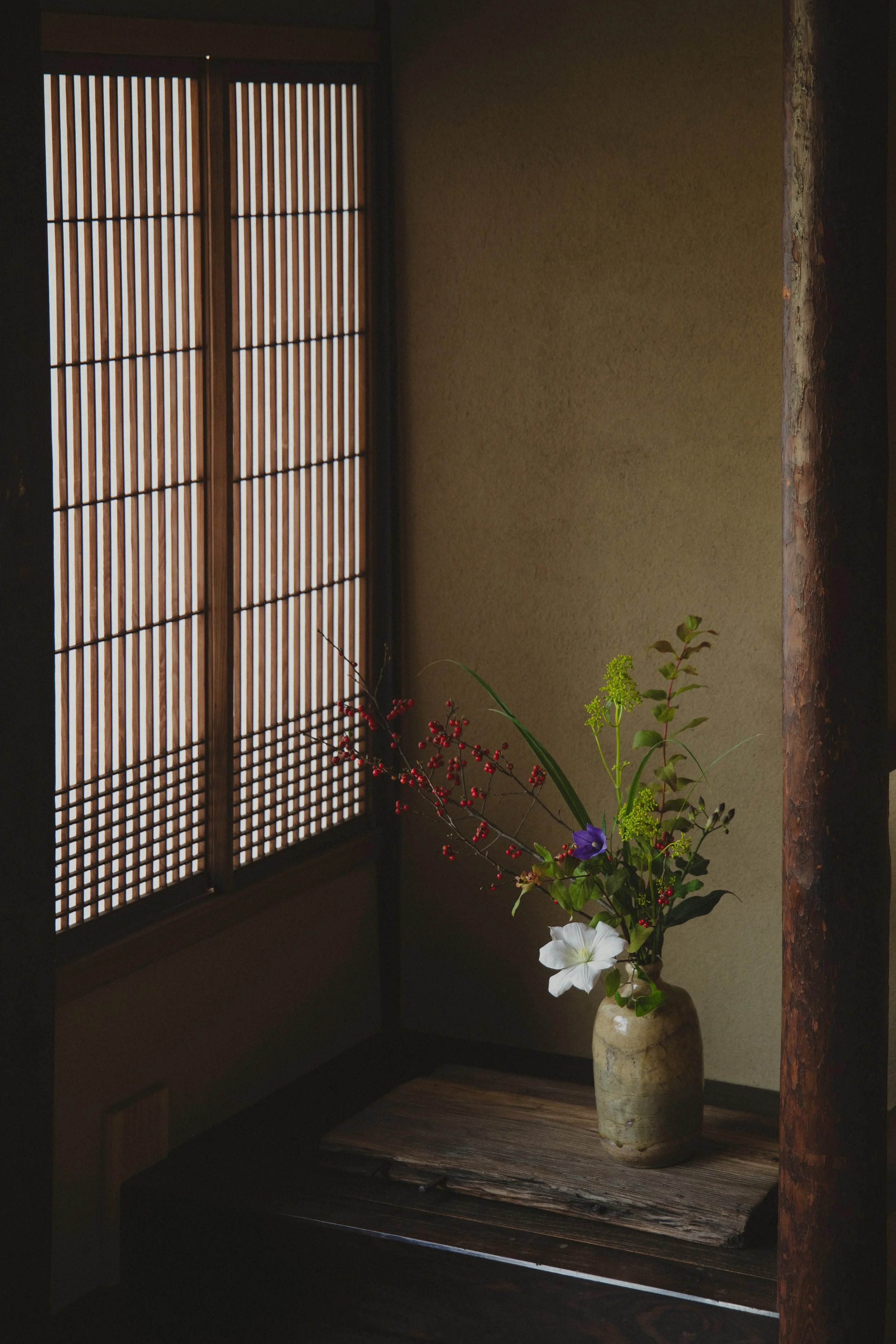
Tokonoma alcove with Kōshi window and Ikebana flower arrangement
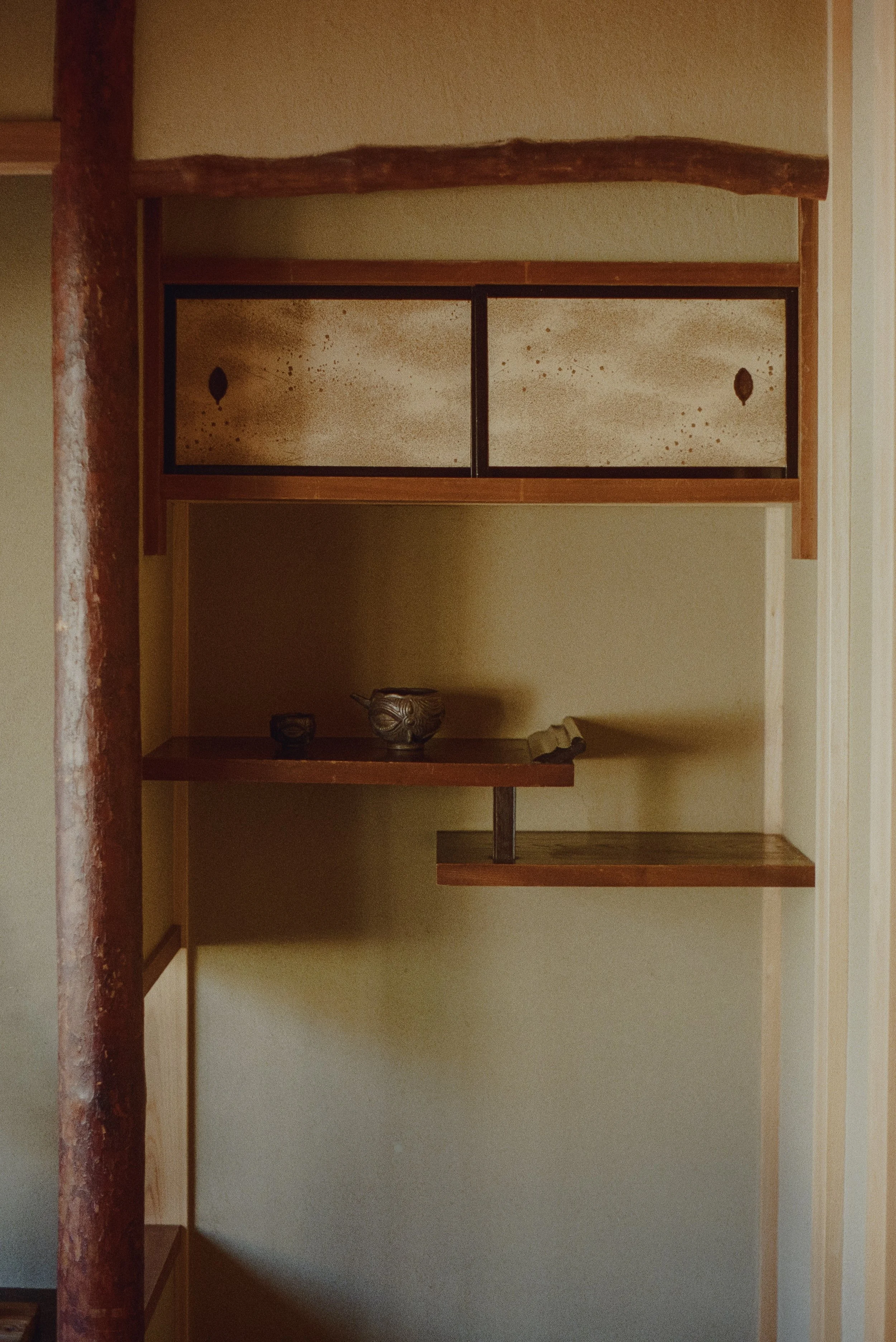
Chigaidana staggered shelves for small objects
While respecting the sense of shibumi, or nuanced elegance of the minimalist interior, we have added features that enhance the architecture and elevate comfort for staying guests. The original window was extended out to create a bay window alcove with views of Kamo River and the neighborhood skyline. Although such a glass portal is rare in machiyas, here it looks like an original part of the 135-year-old house.

Also befitting the space is the tatami furniture. The low table designed by Geoff was made out of the centre piece of our rosewood table in the dining room. The height of the table was customised for the chairs, which unlike typical tatami chairs, are slightly higher above the floor, making them very comfortable to sit on even for a long time! The table set is perfect for having tea or meals, and the window alcove is a cozy nook for reading and glimpsing at life on the river.
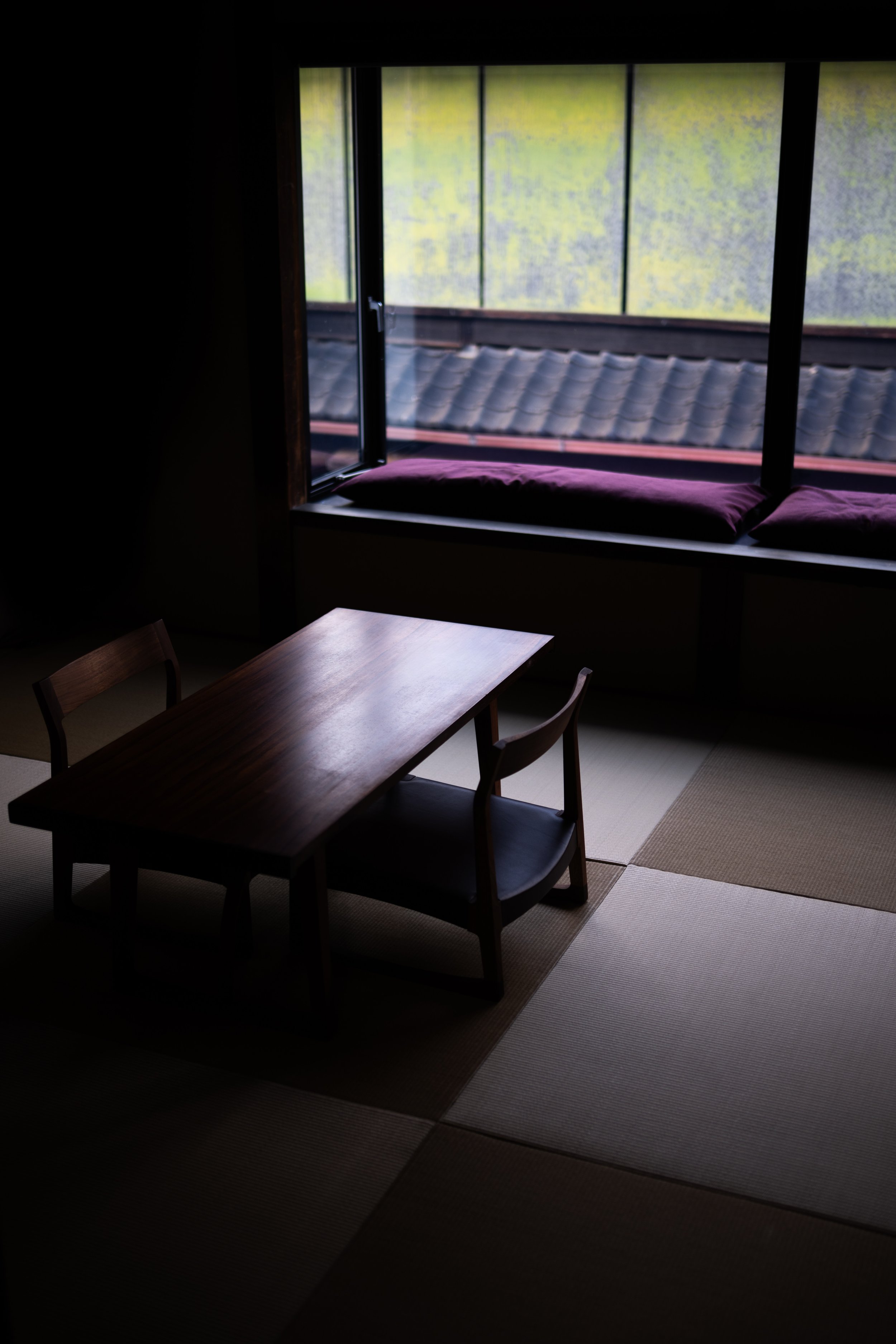
Master Bedroom - a Nest of Comfort
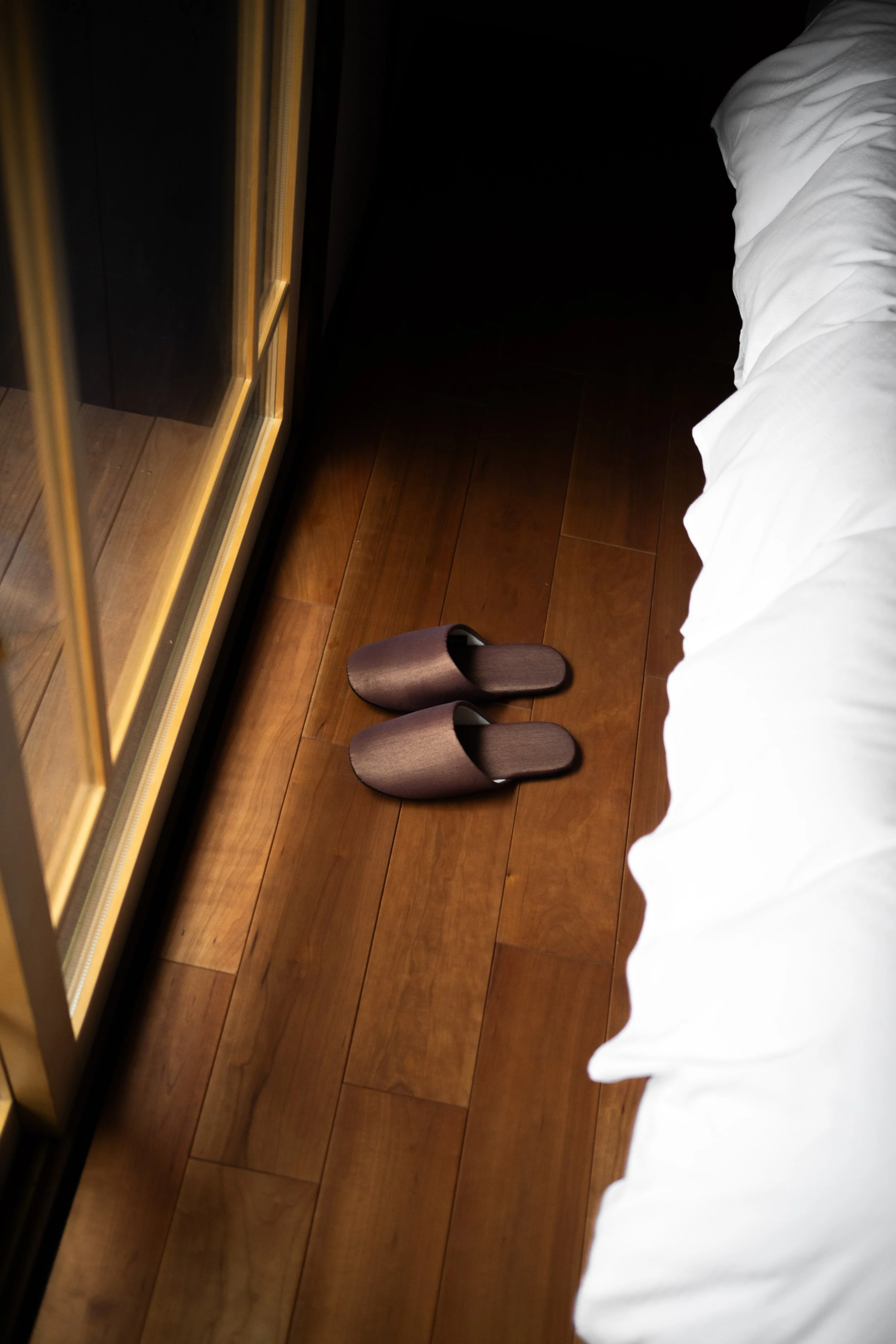
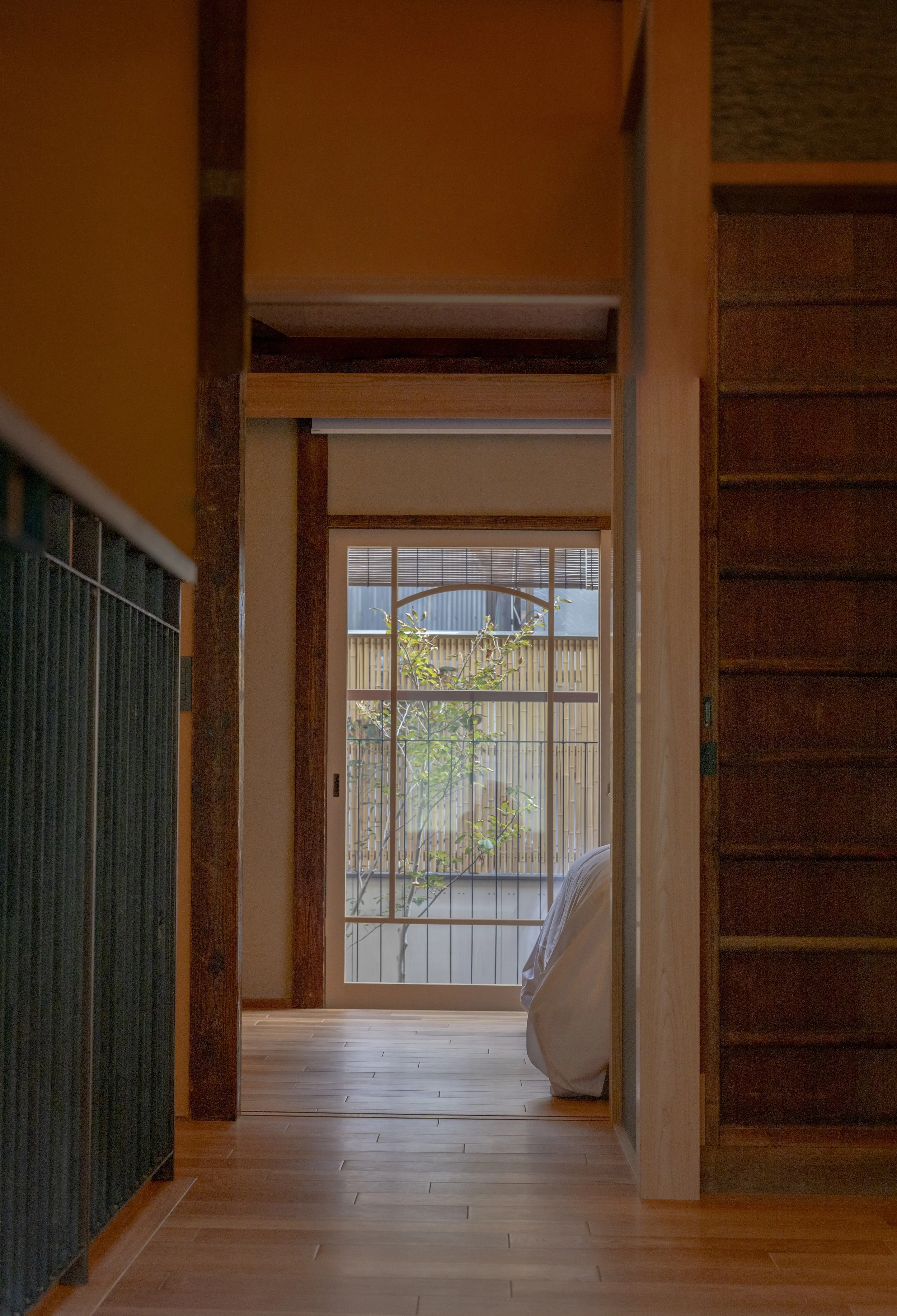
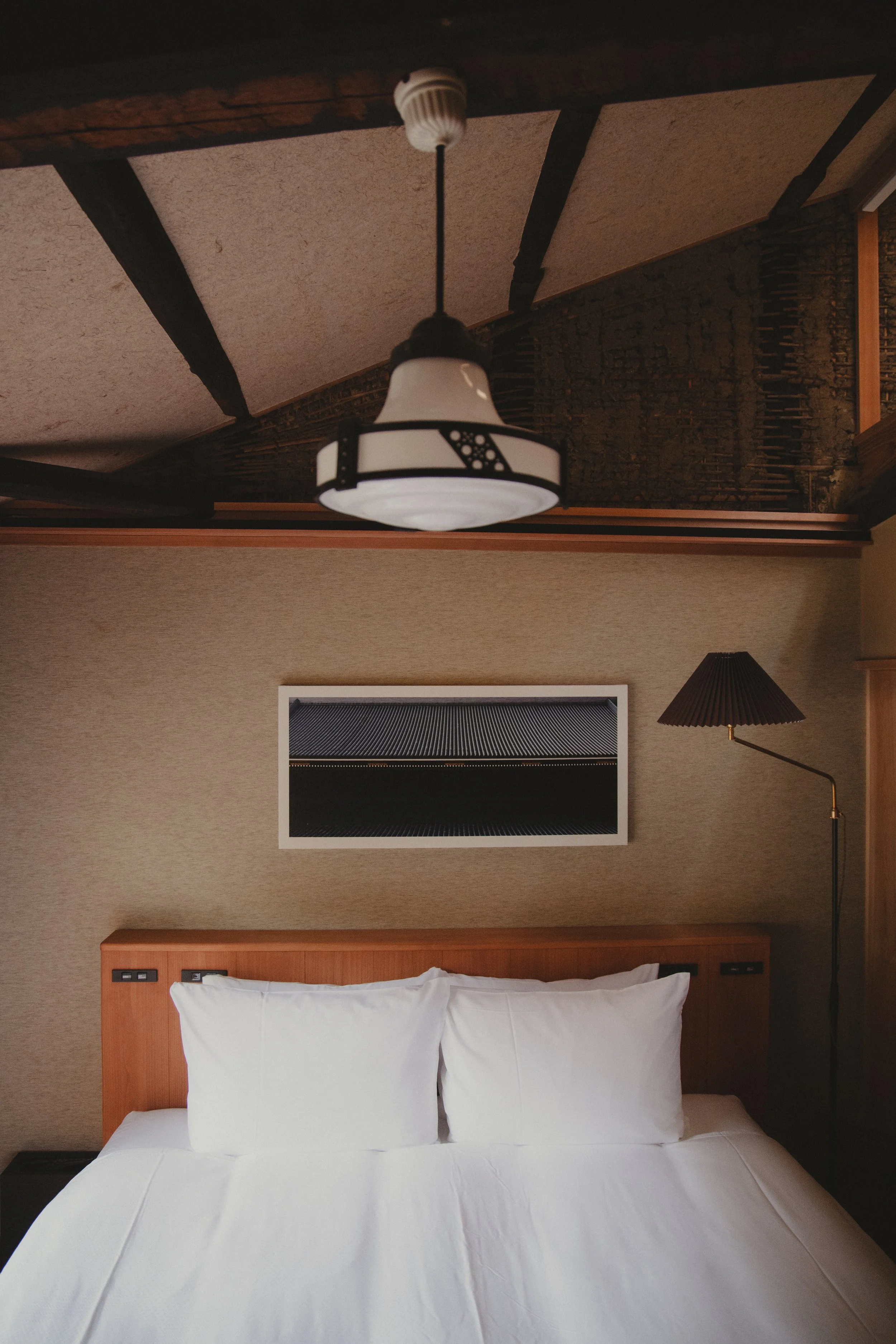
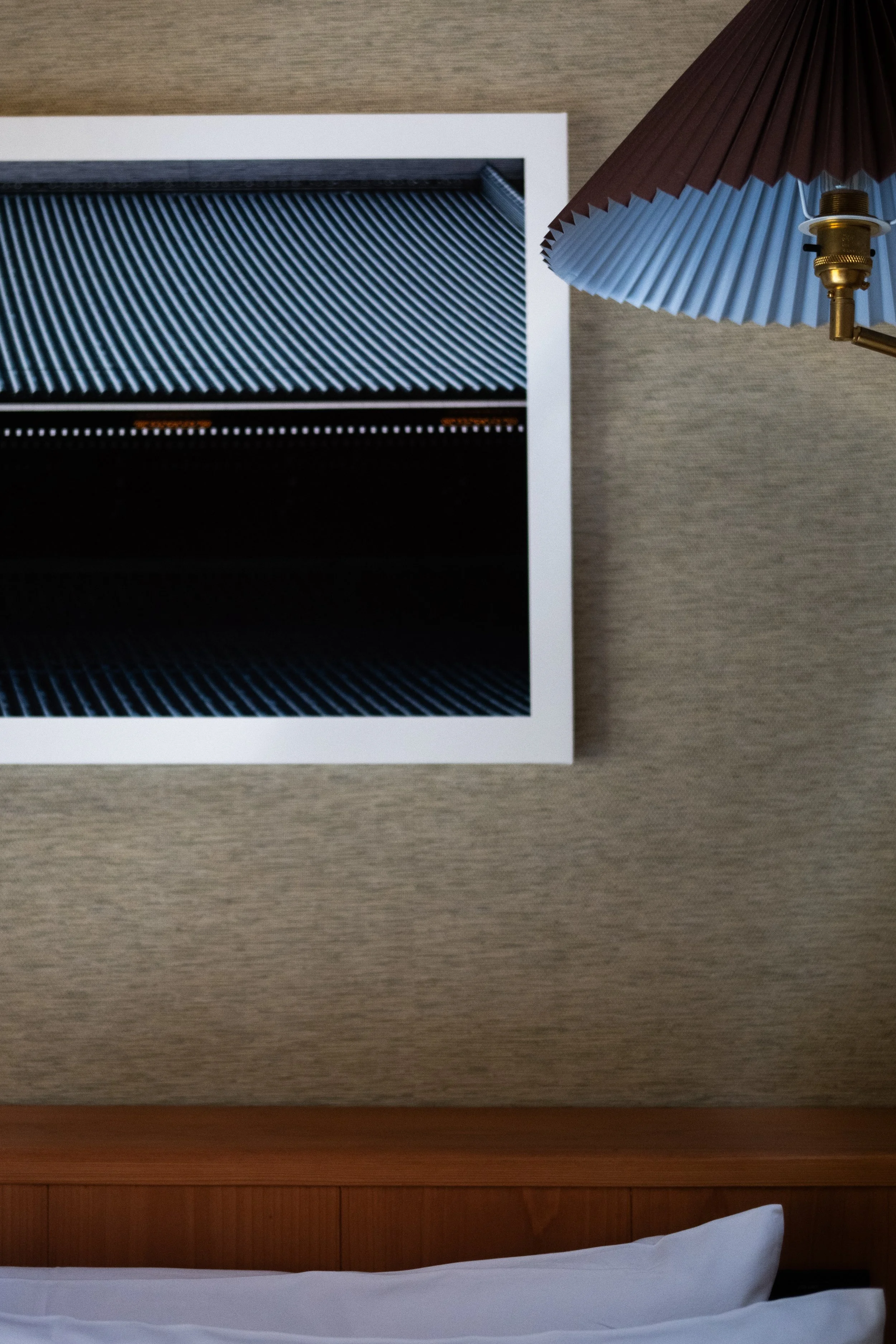
While the washitsu is a serene retreat, the master bedroom is a nest of comfort that is no less calming. The plush bed with its crisp white sheets and fluffy pillows feels cloud-like and luxurious against the raw beauty of organic earth walls and exposed beams. A framed photo of the Higashi Honganji temple roof hangs above the King bed, a representation of traditional craftsmanship in a modern medium much like this renovated machiya.
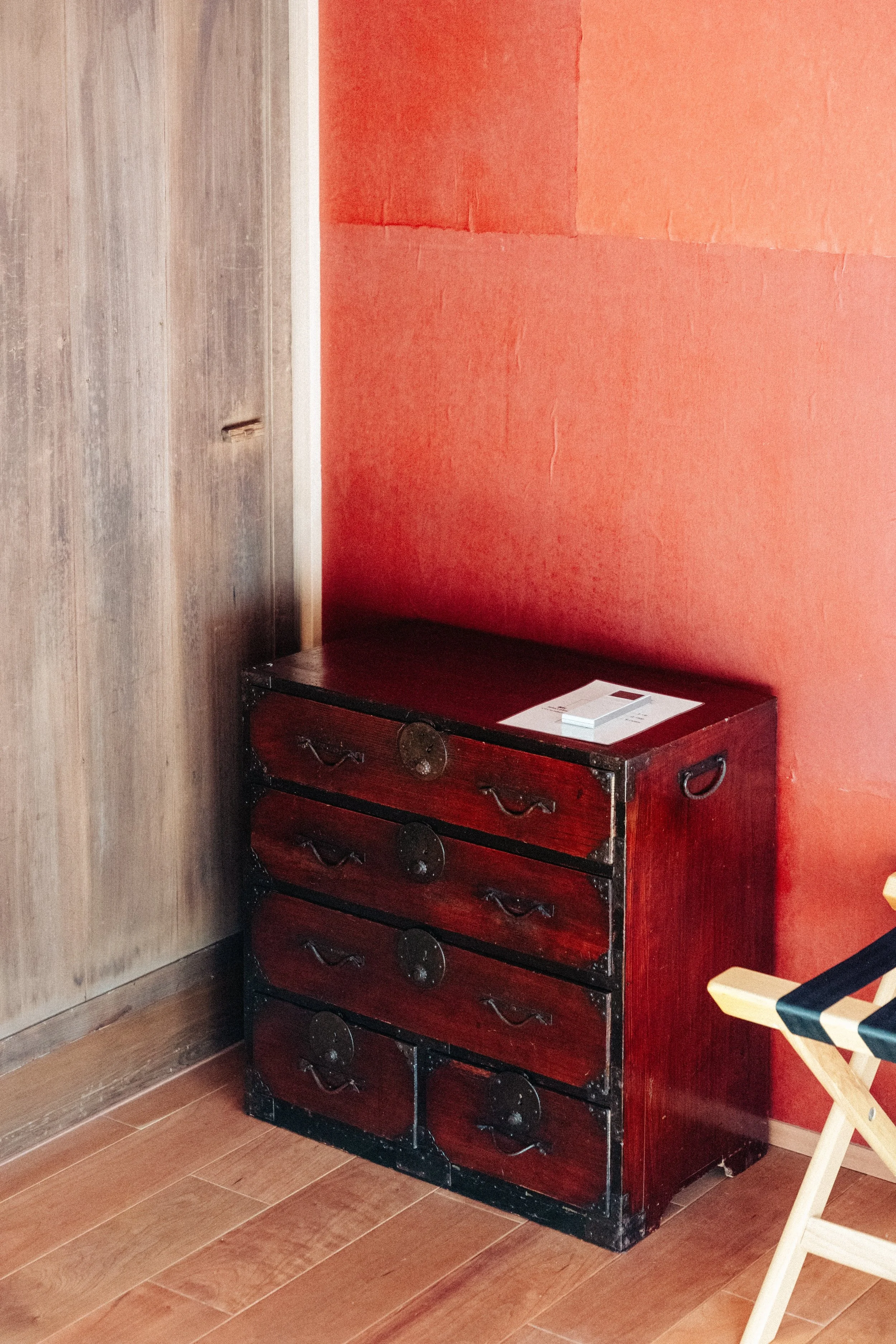
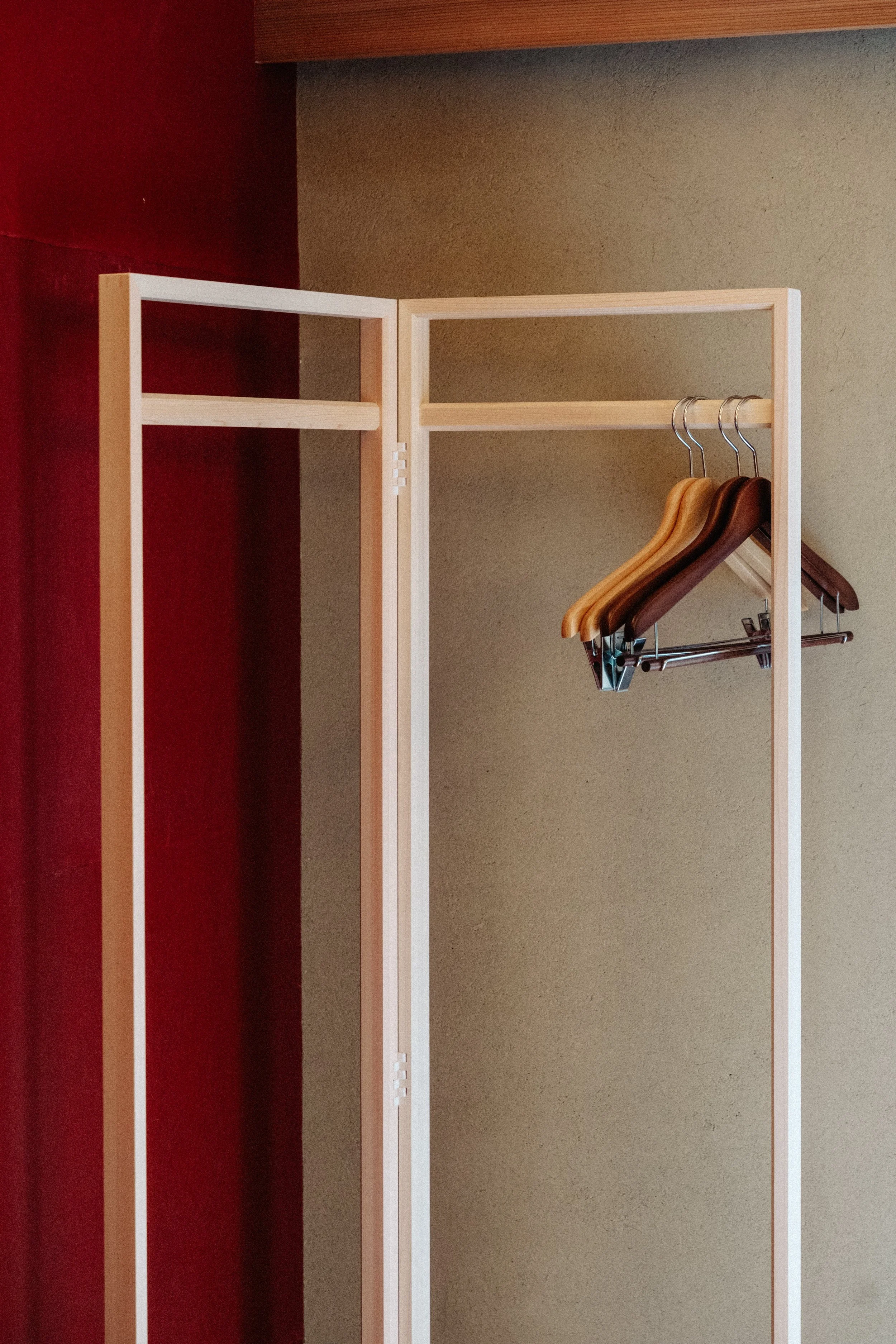
Sliding glass doors open onto a mini terrace overlooking the Ukiyo Floating World Garden. Open shelves and oshiire closet on either side of the bed, plus a vintage tansu chest, and a contemporary minimalist clothes rack provide ample storage space. There is also a full-length mirror waiting to be discovered!
Japanese Features
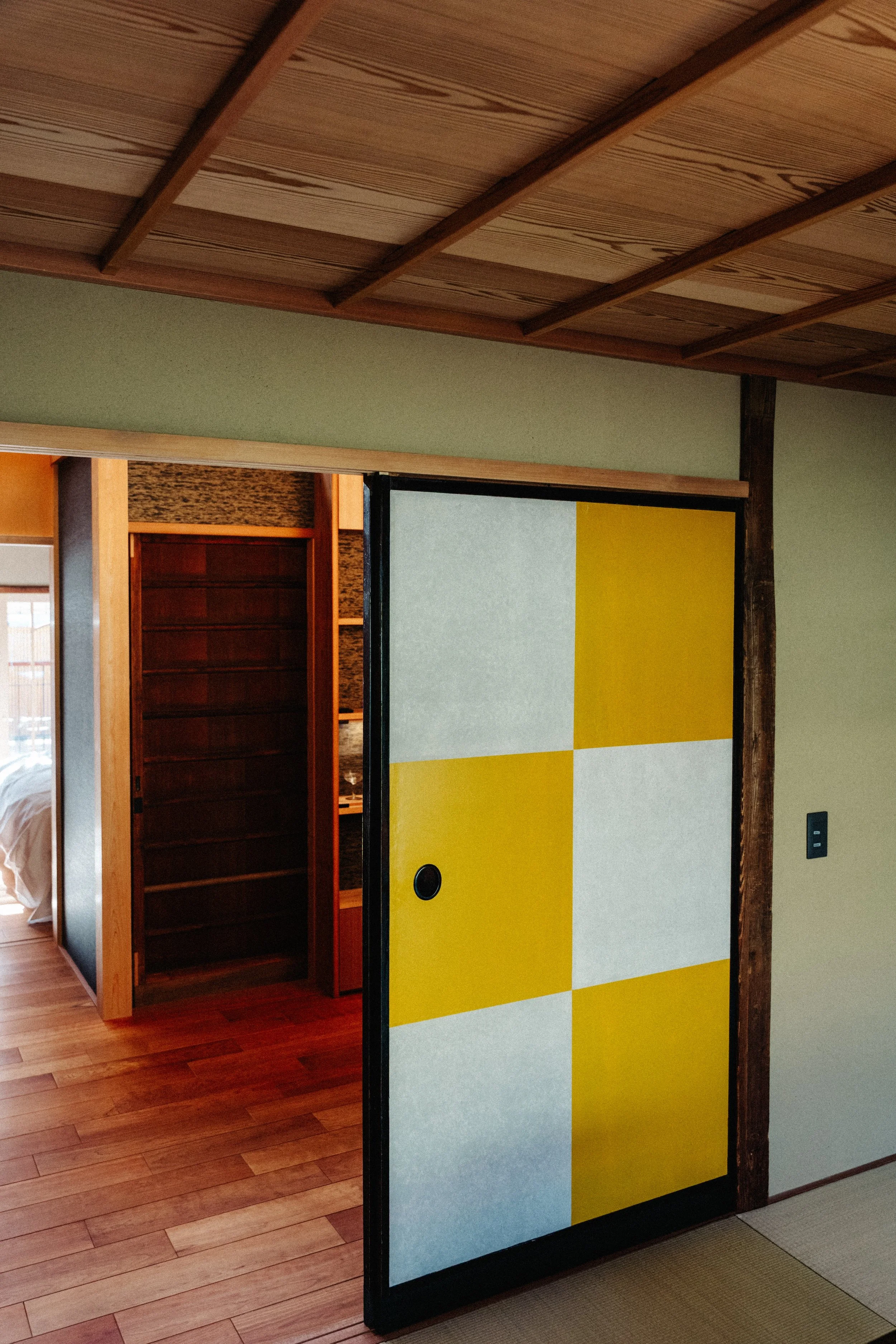
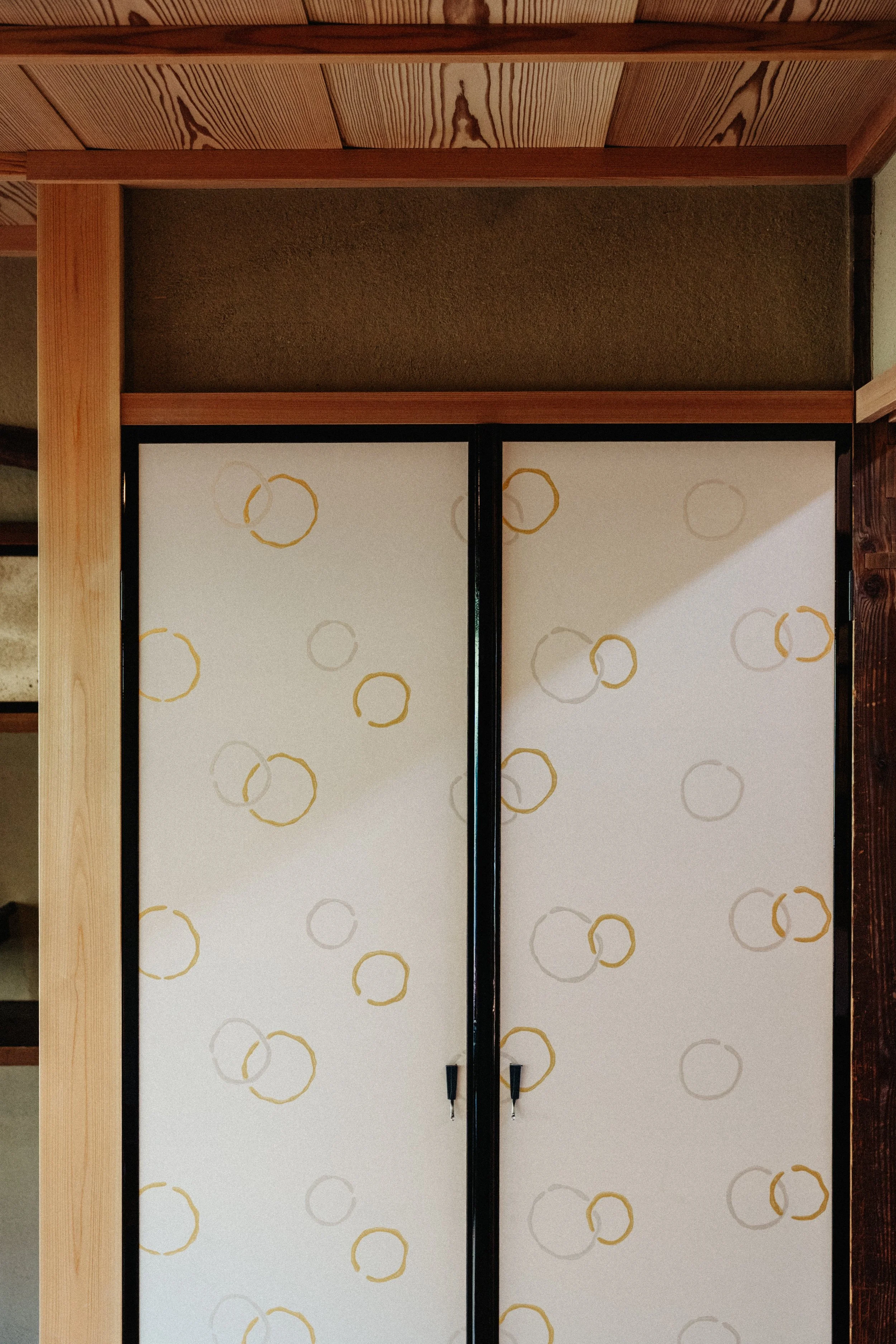
All the "rooms" in the machiya are partitioned by fusuma and/or vintage wood sliding doors that can close for privacy, or open to allow one room's space to "flow" to another. The fusuma are the karakami type covered by opaque washi paper. They are chosen over the semi-translucent shōji fusuma because they are more effective in blocking out sound and light. With each of them featuring patterns that have been hand-pressed onto the paper, they are also a subtle ornamentation of visual interest.

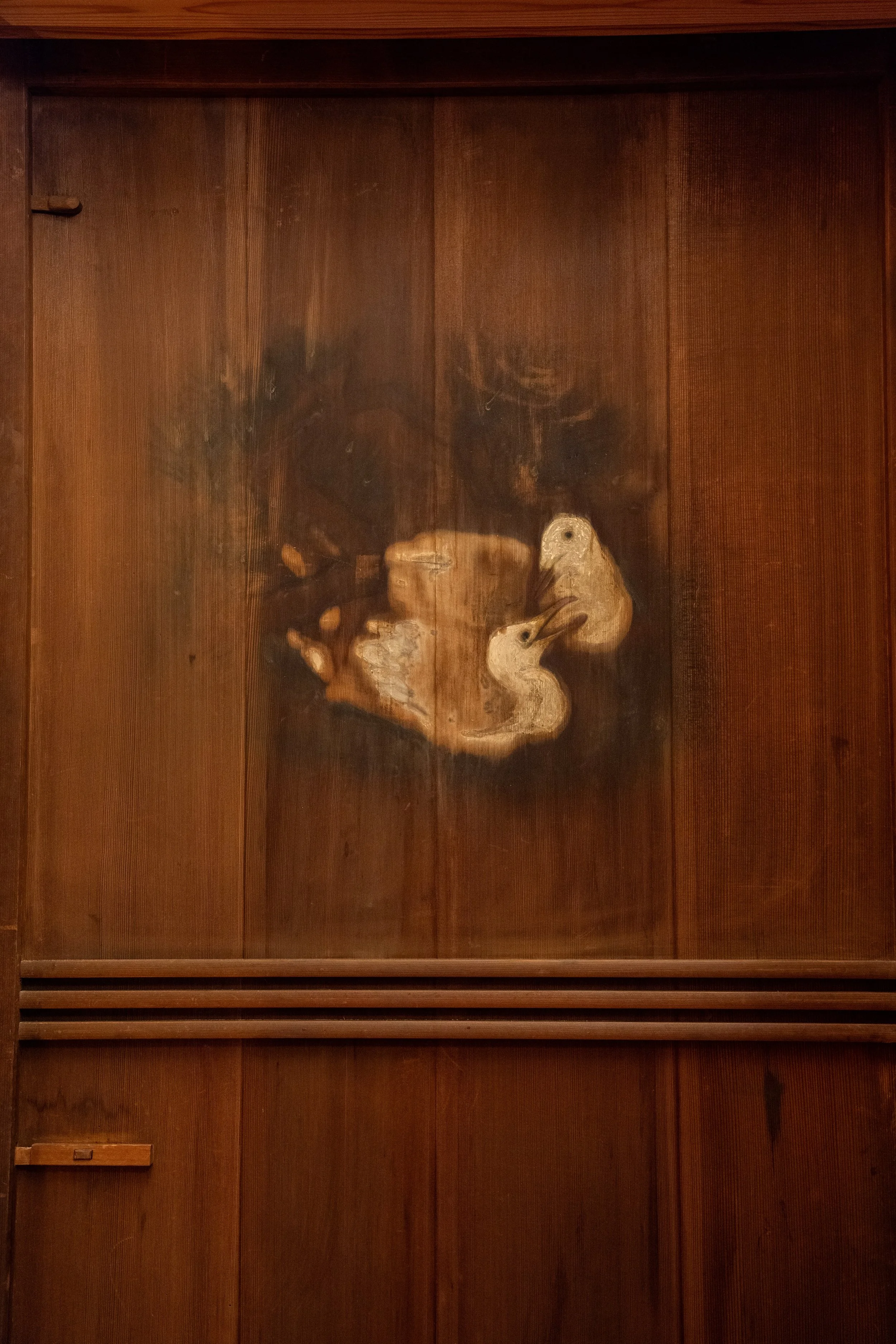
But the feature most revealing of true shibumi - it can be roughly translated here as achieving sublime beauty with the most natural way - is the use of wood in this machiya.
This is basically a house made of wood, earth and plaster, all natural materials. Where possible, original beams and boards have been preserved, and the earth and plaster walls merely repaired and plastered over. Where it is necessary to use new timber for the structure, floors, ceilings, and door and window frames, appropriate types of wood and other natural materials were meticulously crafted by an experienced crew.
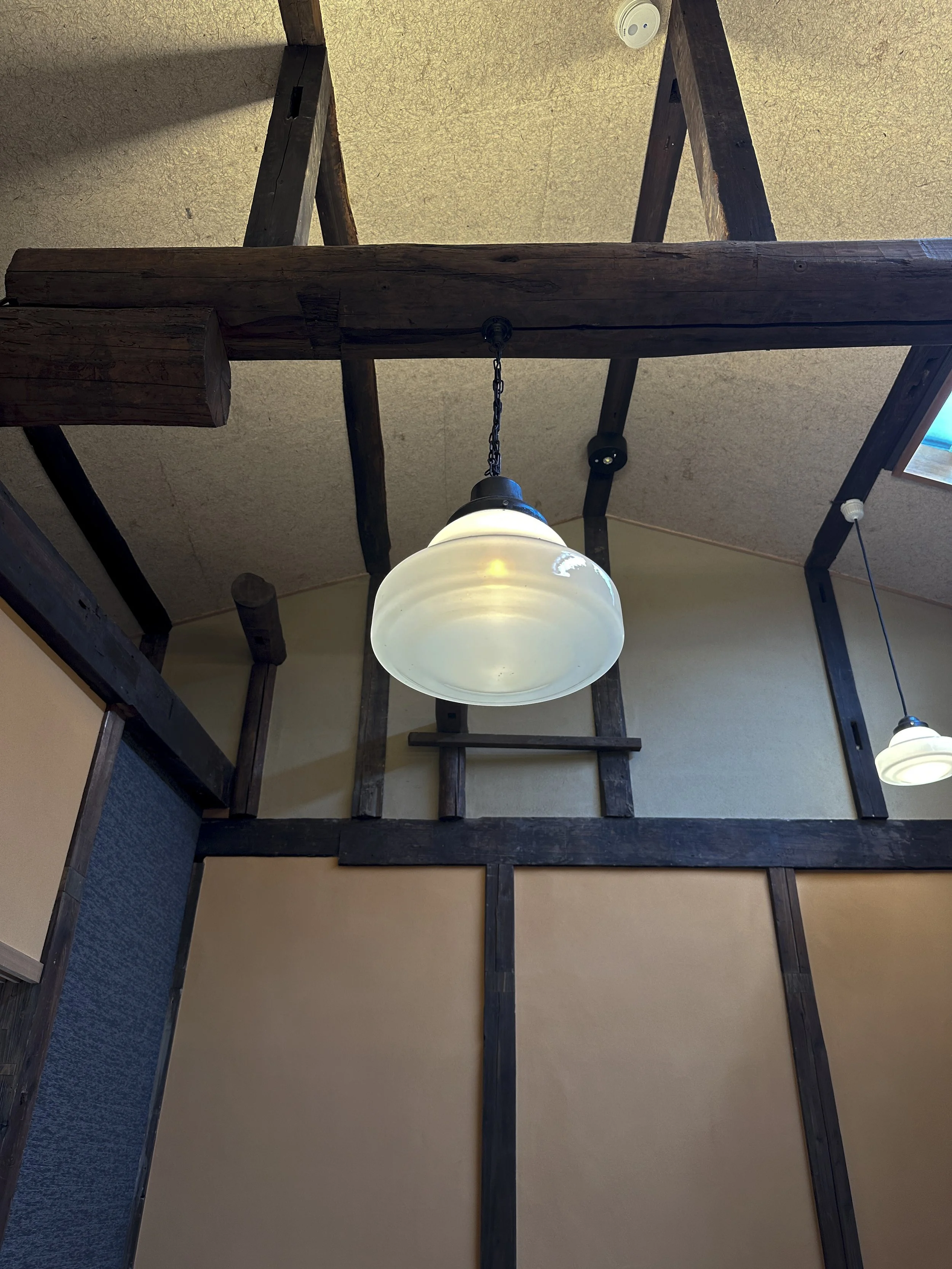
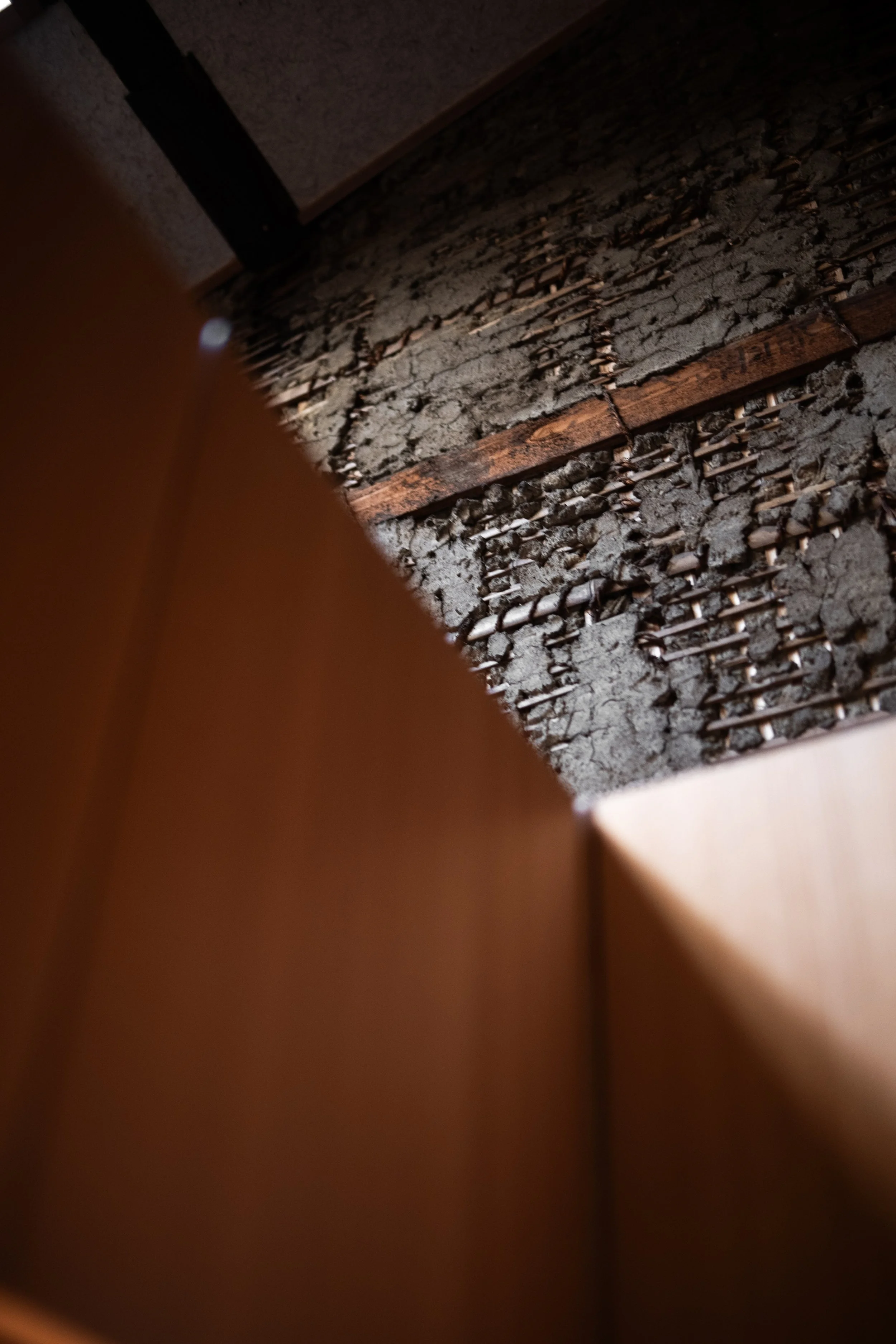
The old and the new are easily distinguishable as the new timber is of a much lighter color. One of the charms of wood is that its beauty evolves over time. Its color and texture are transformed through use, and a nuanced character develops that is the very essence of shibumi.

Window frames will acquire an aged character. Glass blocks will form a shimmering light behind Tokusa grass that grows into a green curtain.
When Genji Machiya opened its doors in December 2025, the window frames on its facade were a pale color. The tokusa bamboo grass in front of the glass blocks were not even knee high. But the wood will darken, the grass will grow. And the machiya will acquire a character and fullness in beauty that come with age and tender loving care.