

Kyoto Cherry Blossoms Guide for 2026
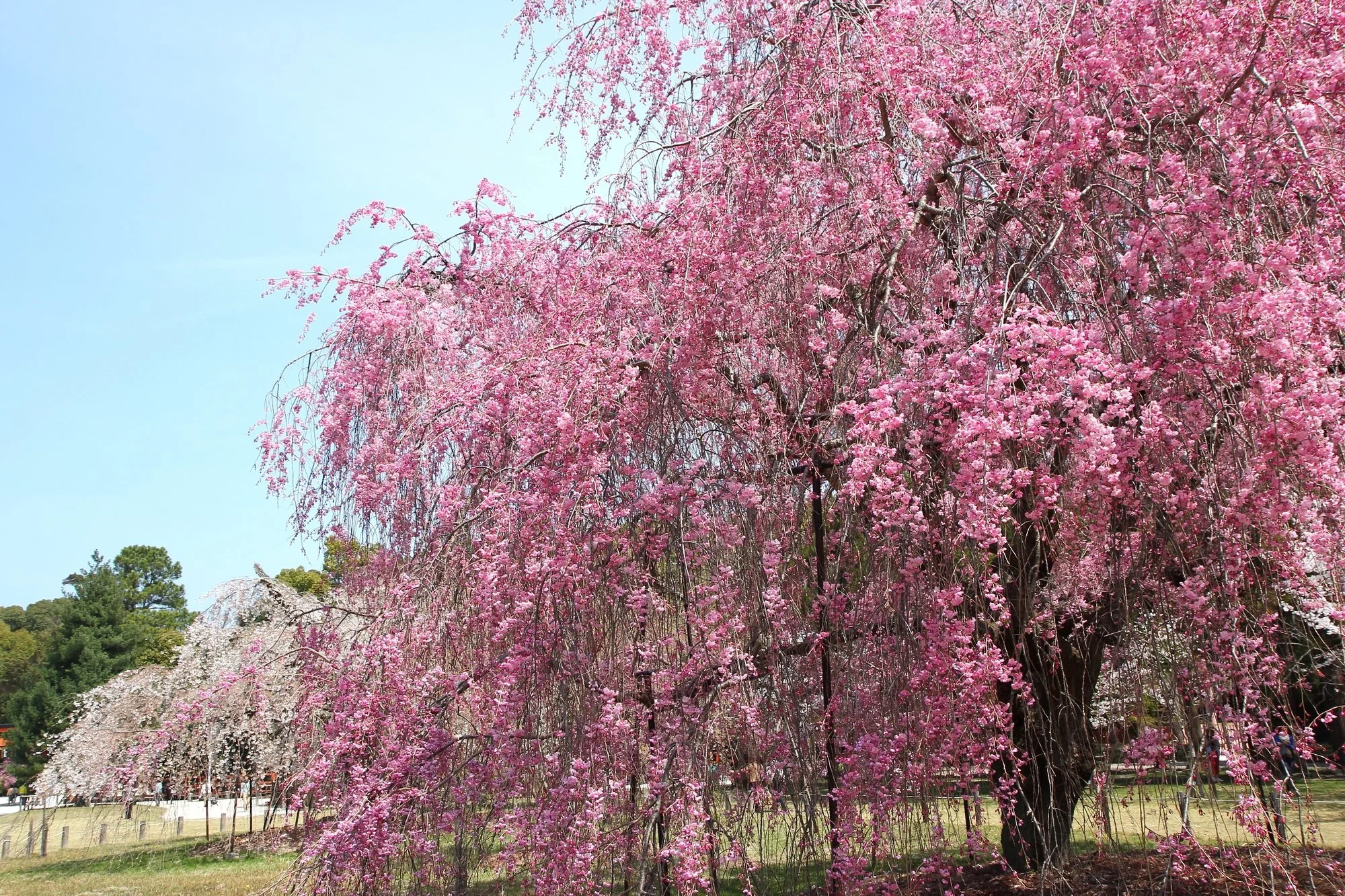
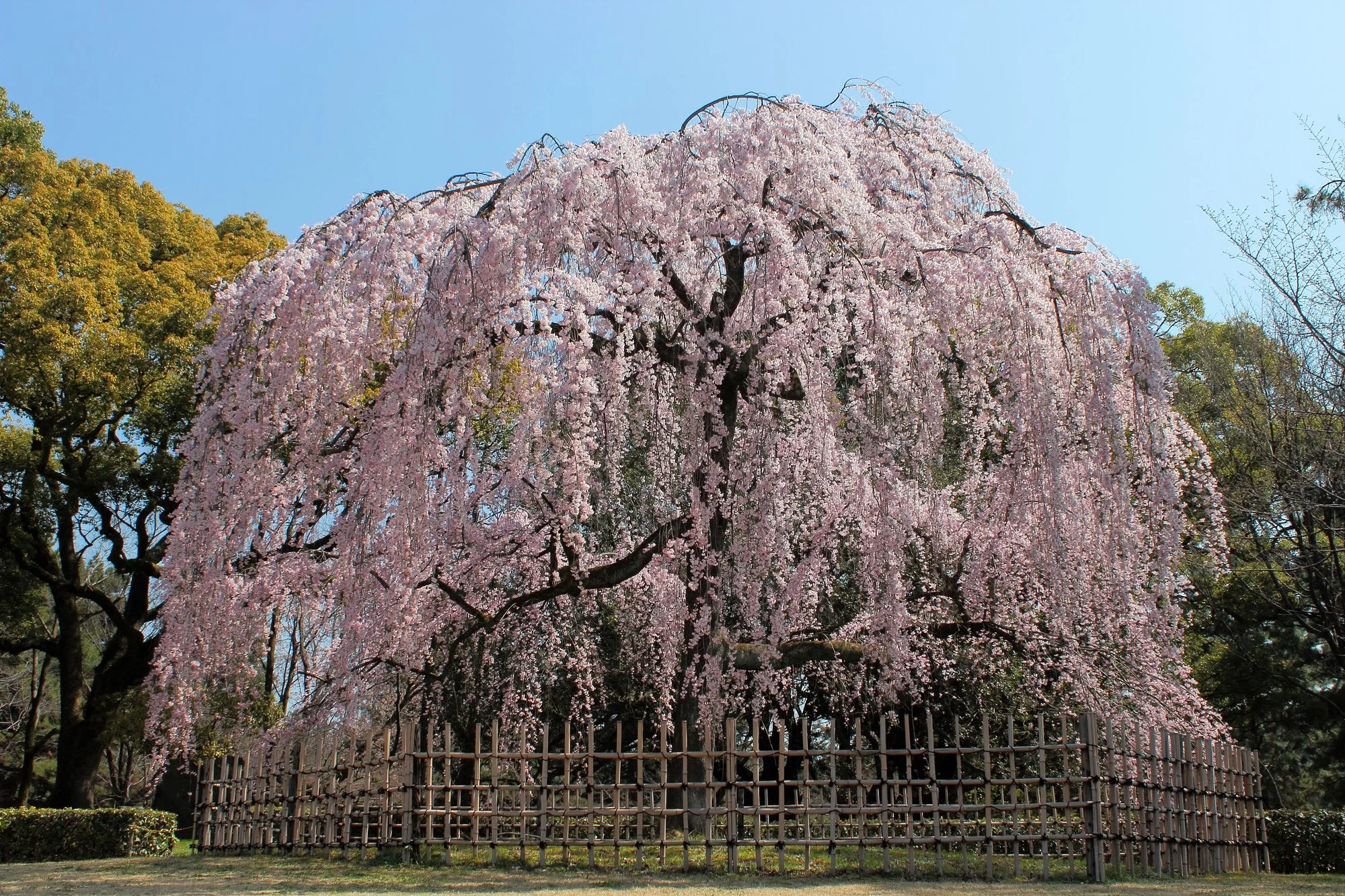
The 150-year-old pink Saiōzakura (斎王桜) with white Goshozakura (御所桜) weeping cherry at Kamigamo Jinja Shrine.
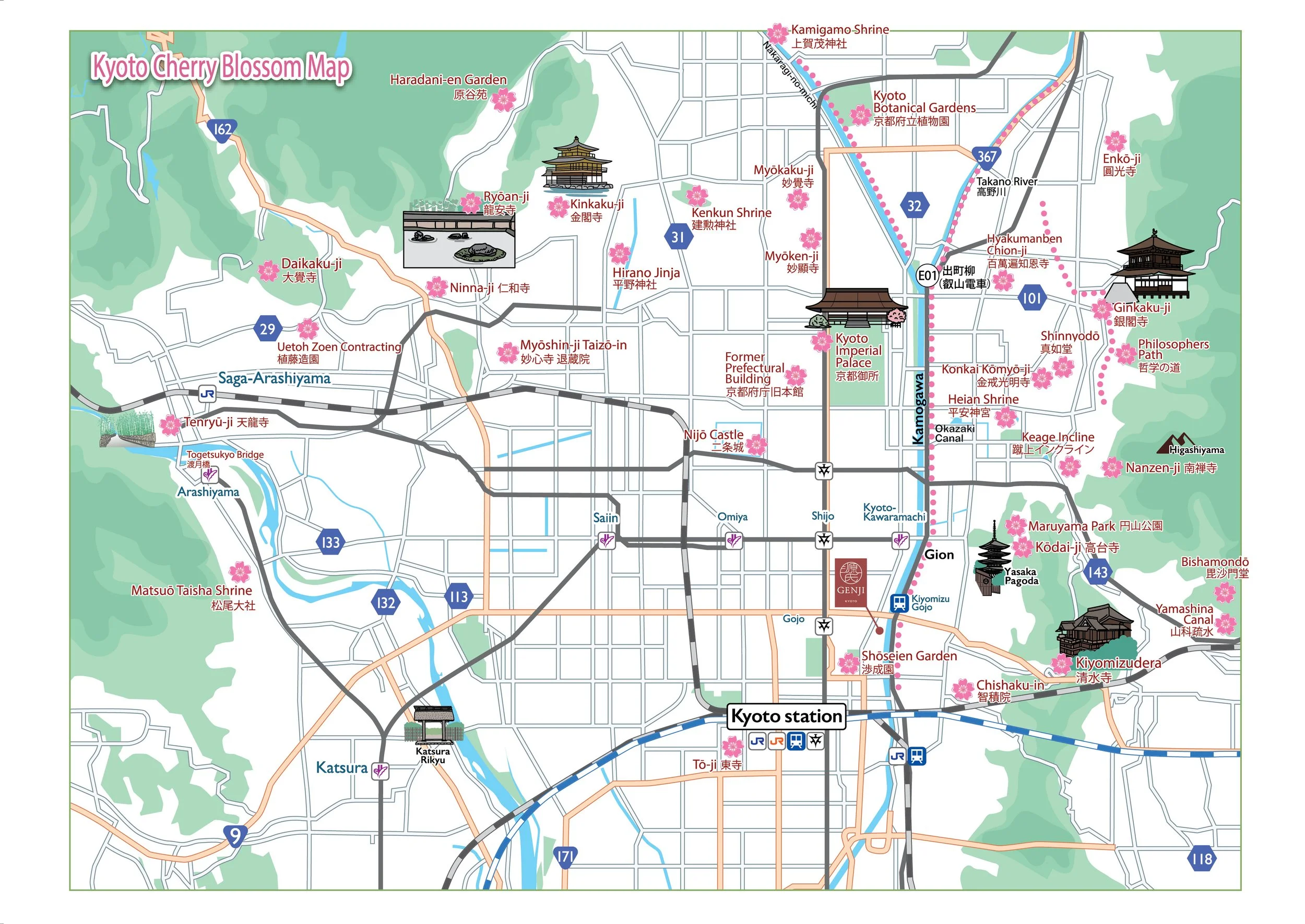
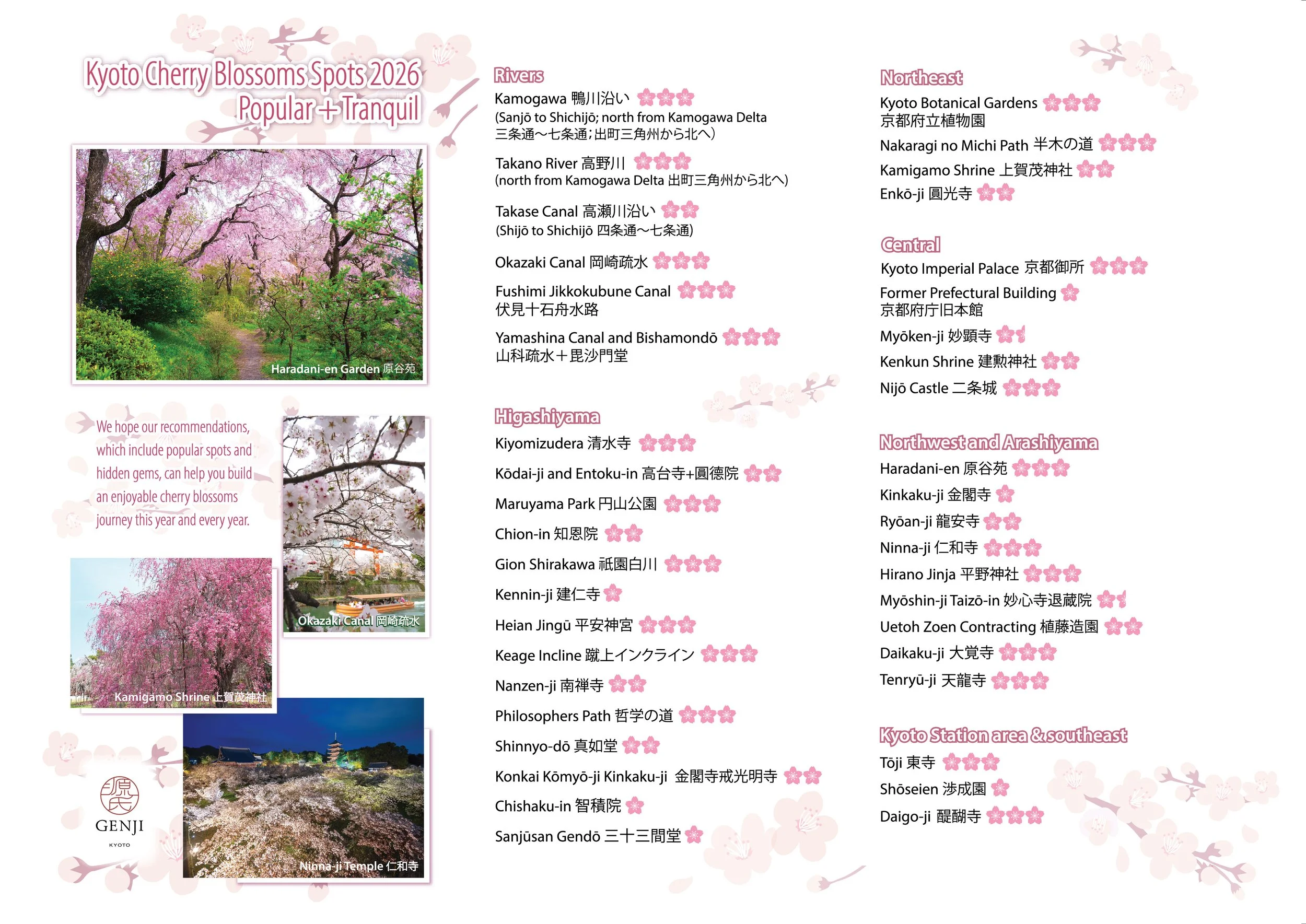
We have updated our recommendations for cherry blossoms viewing with a user-friendly map for 2026. Please download as your sakura season companion. This year we are introducing a few lesser known spots that will bring great delight, including Yodo Suiro Waterway, Yamashina Canal, Sewaritei, Enkō-ji, Kenkun Shrine, Kyoto Former Prefecture Building, and cherry guardian Sano Tōemon’s residence also known as Uetō Zōen Contracting.
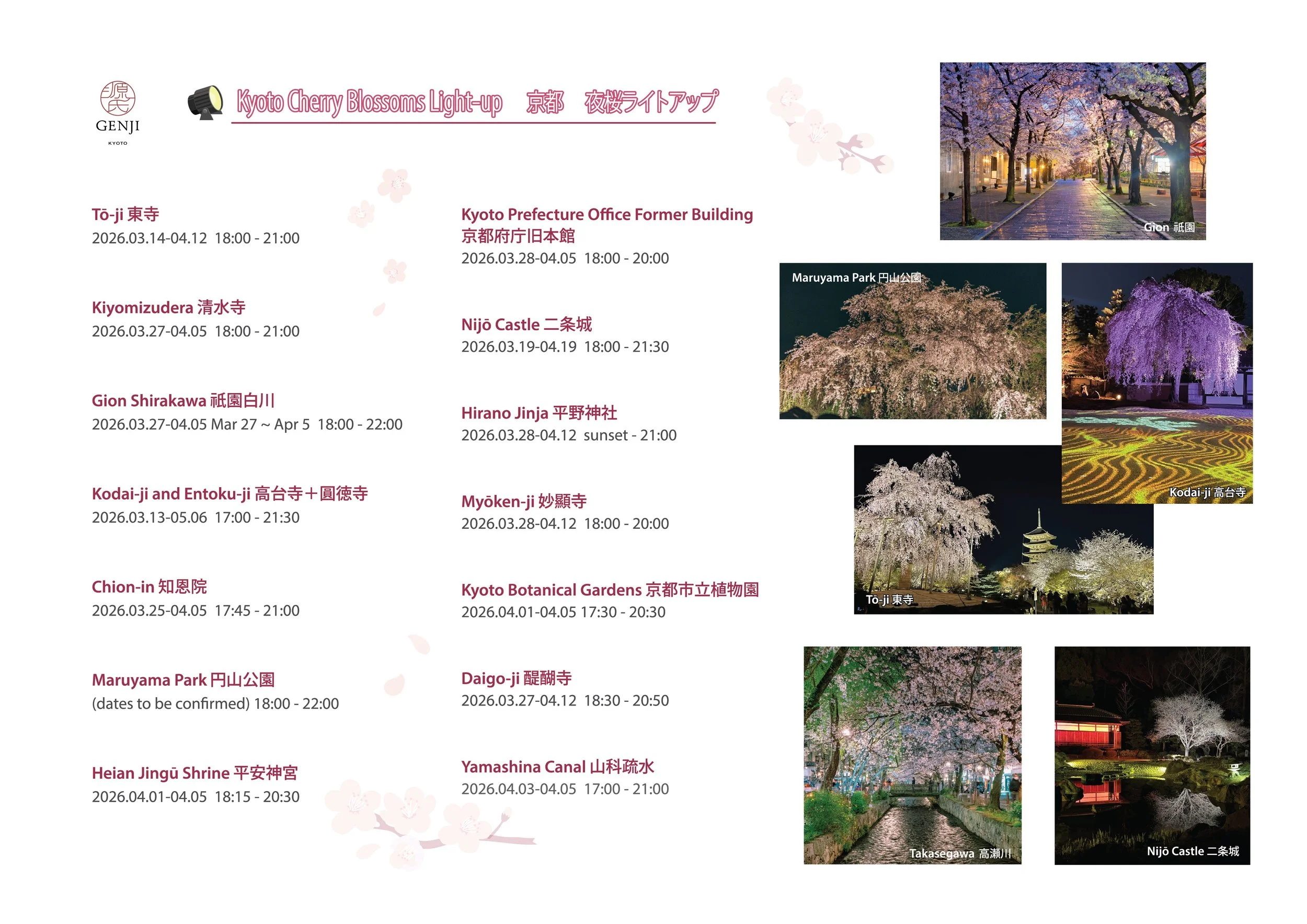
Light-up dates and times are included in the blog for venues that provide night-viewing. The ending times are for last entry, after which there is usually 30 minutes before closing. Fees apply, and as dates and hours can change, please check before setting off.
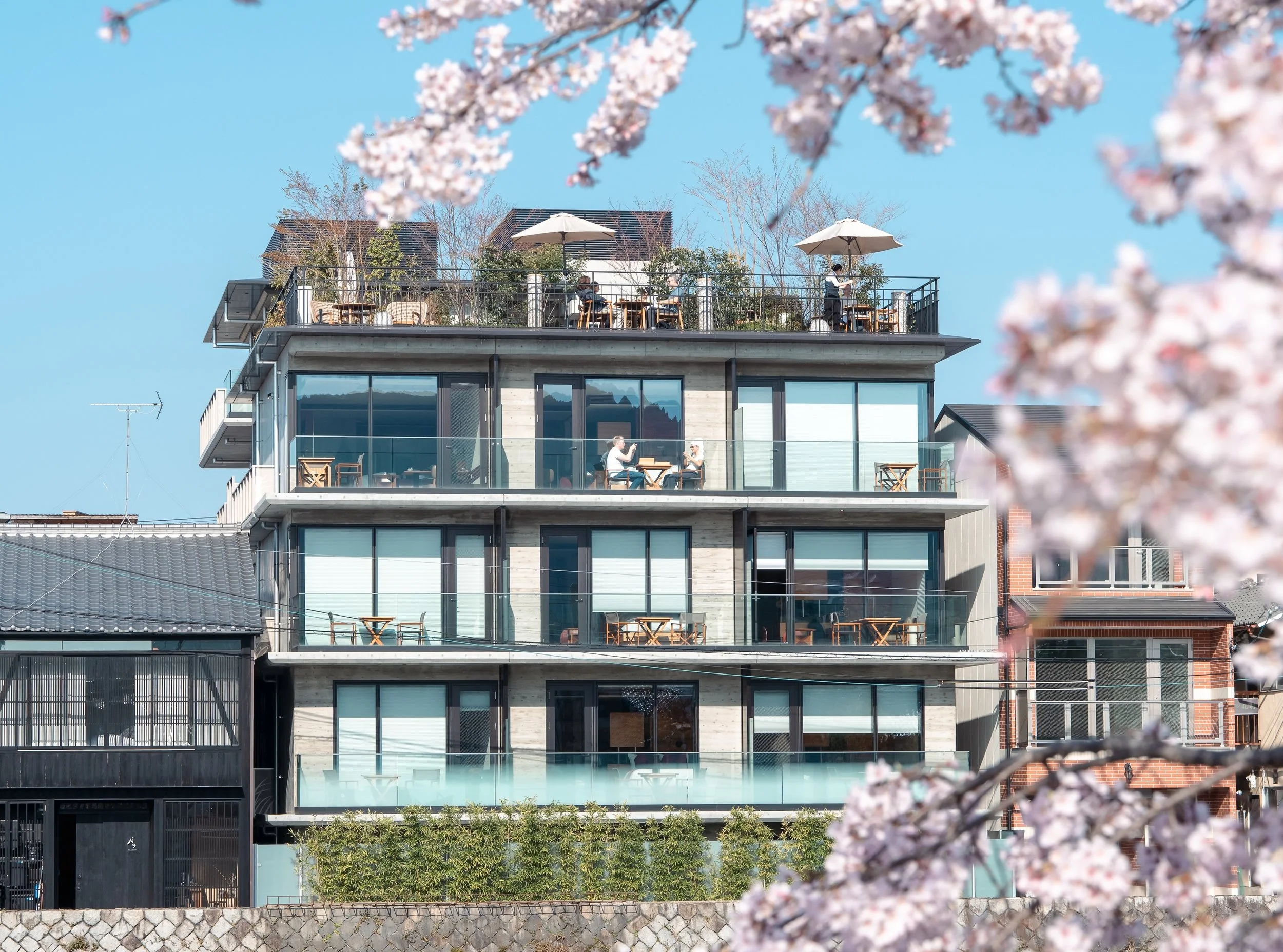
Sky Forest Garden at Genji Kyoto
For our hotel guests, naturally the best spot is our rooftop garden just an elevator ride away. You can relax with our Sakura tea or cocktail and admire cherry blossoms along Kamo River.
Rivers
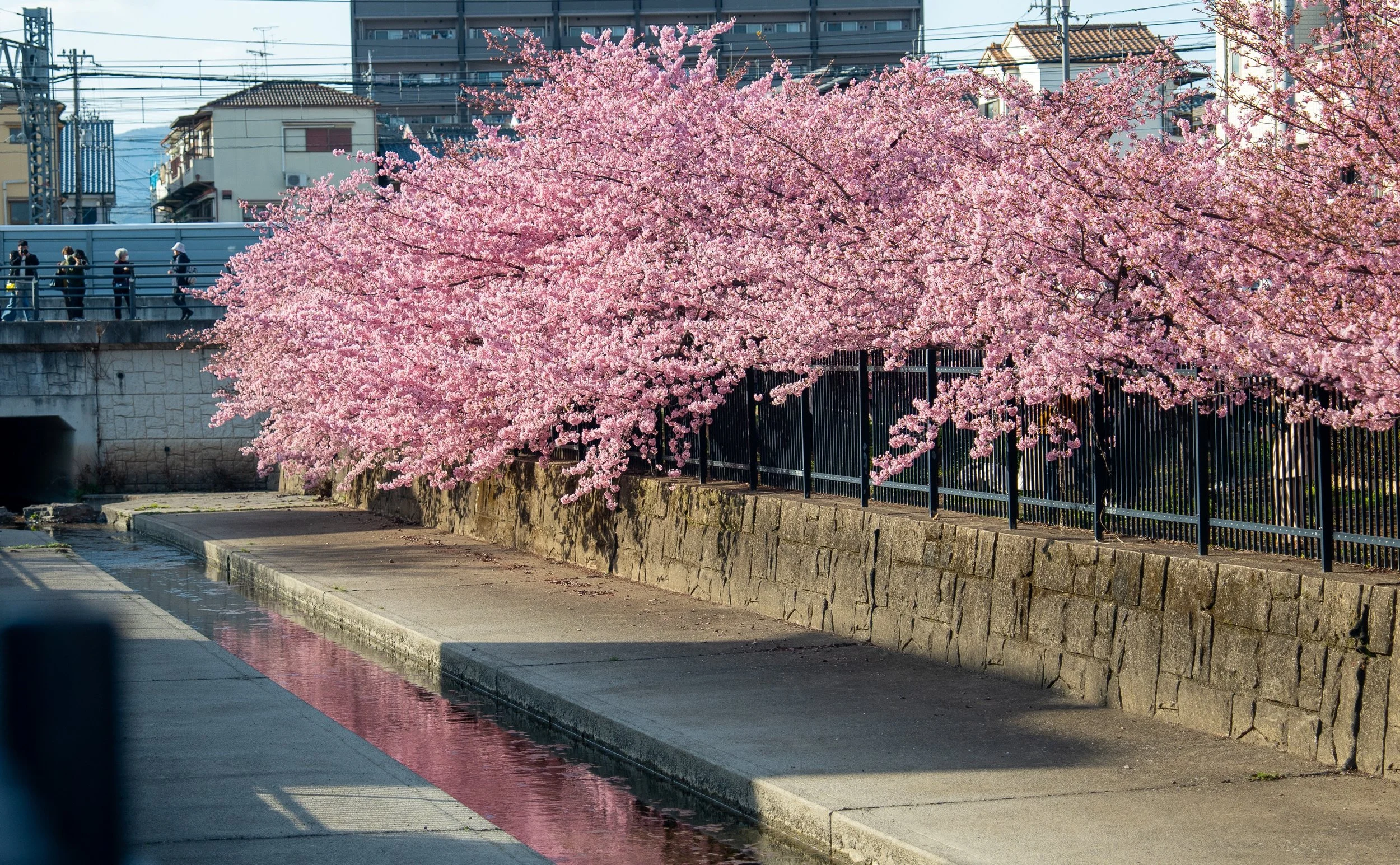
Yodosuiro Waterway 淀水路
This spot in southwest Kyoto is visited for its early blooming Kawazu cherry blossoms. It is about 10 minutes walk from Yodo Station of Keihan Railway.
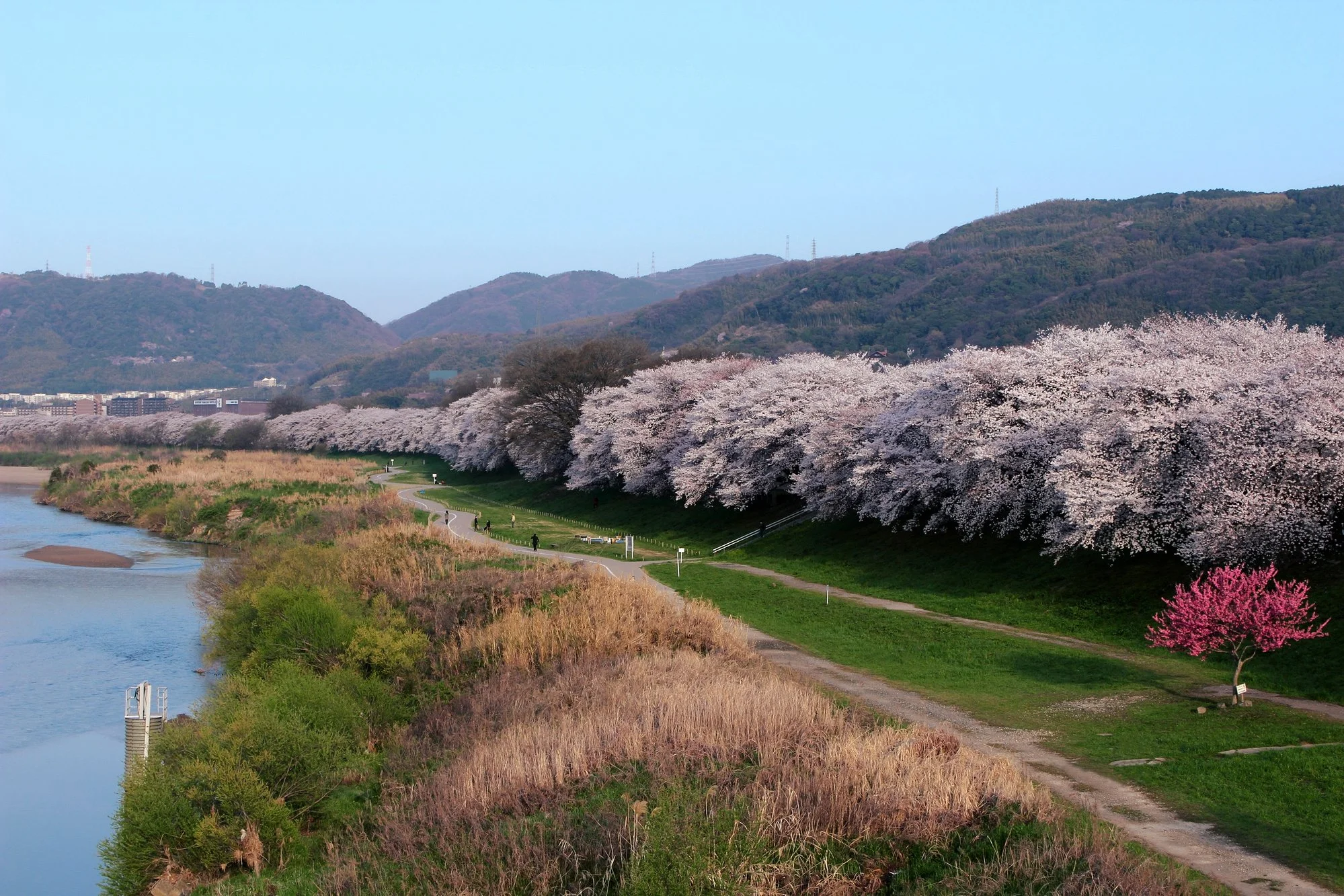
Sewaritei 背割堤
This is a strip of park formed amidst 3 rivers - Uji, Katsura and Kizu - converging to create an incredibly fertile delta. It is not far from Yodosuiro Waterway, but whereas Yodosuiro has the earliest bloom Kawazuzakura, Sewaritei is known for its late-blooming cherry blossoms which form a 1.4km pink tunnel on river banks. It is about 10 minutes walk from Keihan Iwashimizu Hachimangu Station of the Keihan Railway.
Kamogawa and Takanogawa 鴨川+高野川
You can stroll along Kamo river, or take one of our bicycles and ride up to Kamogawa Delta and beyond, where you will find long stretches of robust cherry trees.
Along Kamo River on the west side of the delta split is a stretch called Nakaragi no Michi that should not be missed. And the cherry trees are not just along Kamo River. They also line the Takano River on the east side of the delta split.

Kamo River in cherry blossom season
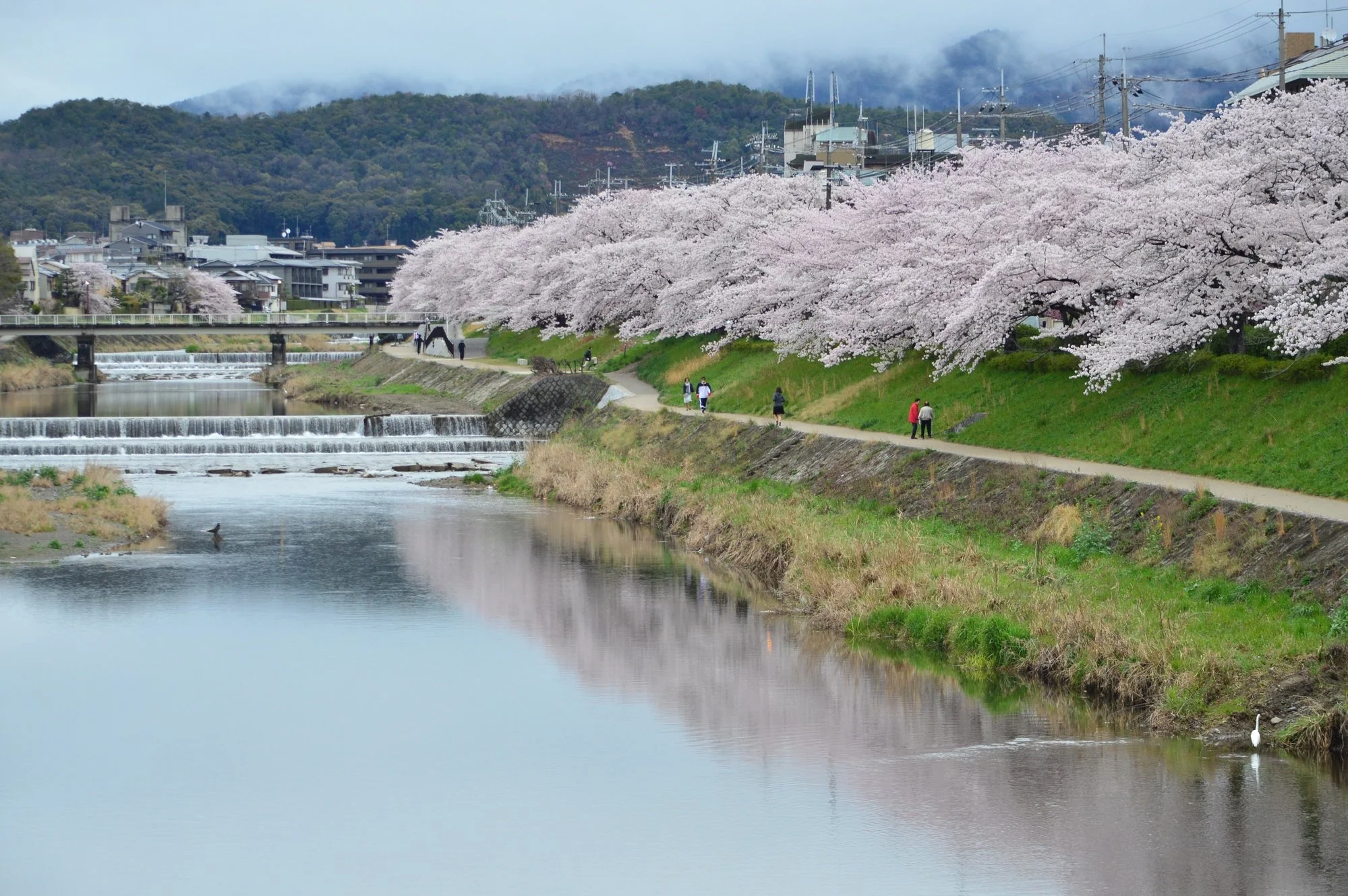
Takano River in cherry blossom season
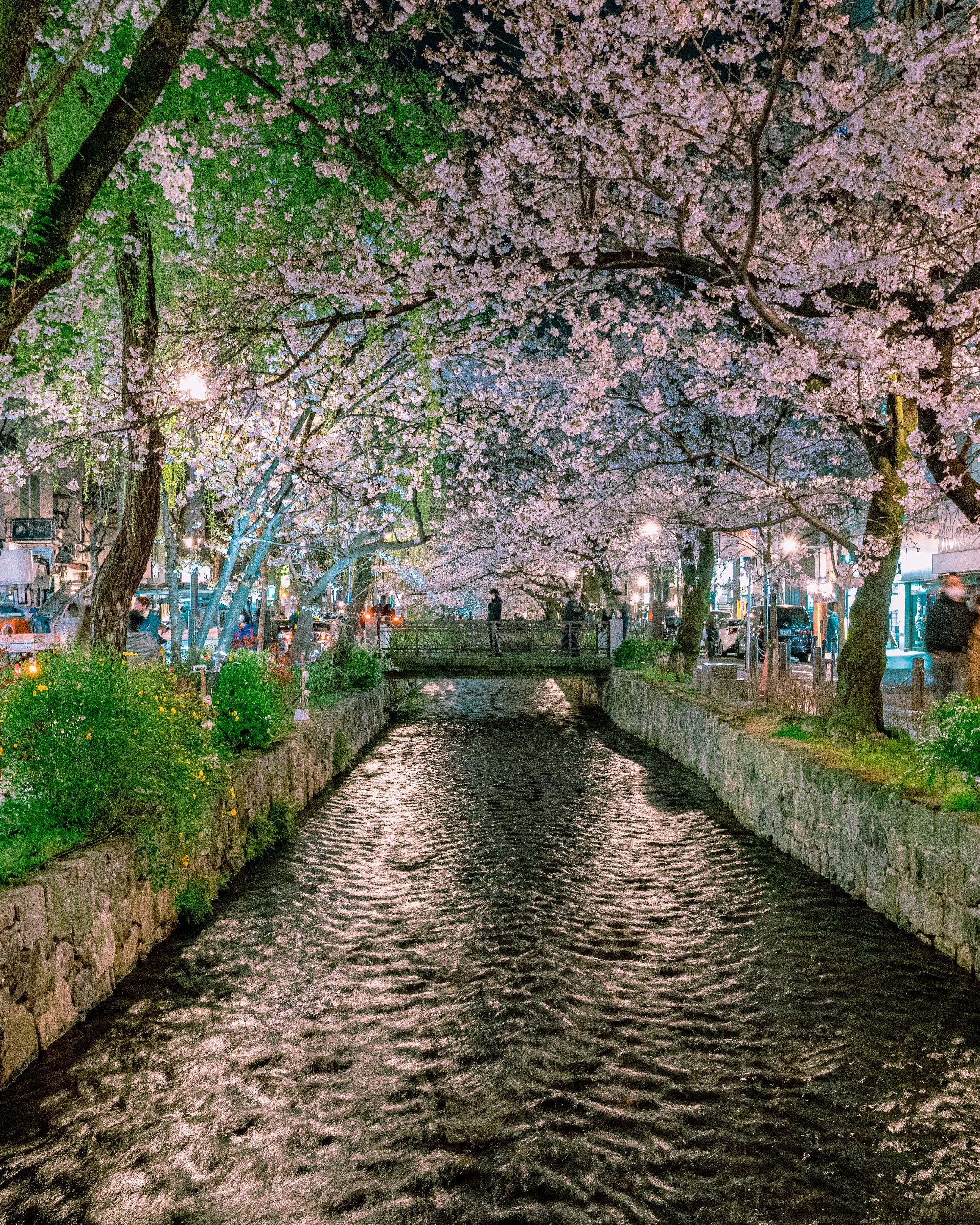
Takasegawa 高瀬川
Walk north on Kiyamachi-dori along this very narrow river (formerly a canal that carried supplies to Kyoto), and you will find cafes, restaurants, shops and plenty of cherry trees between Gojō and Sanjō streets.
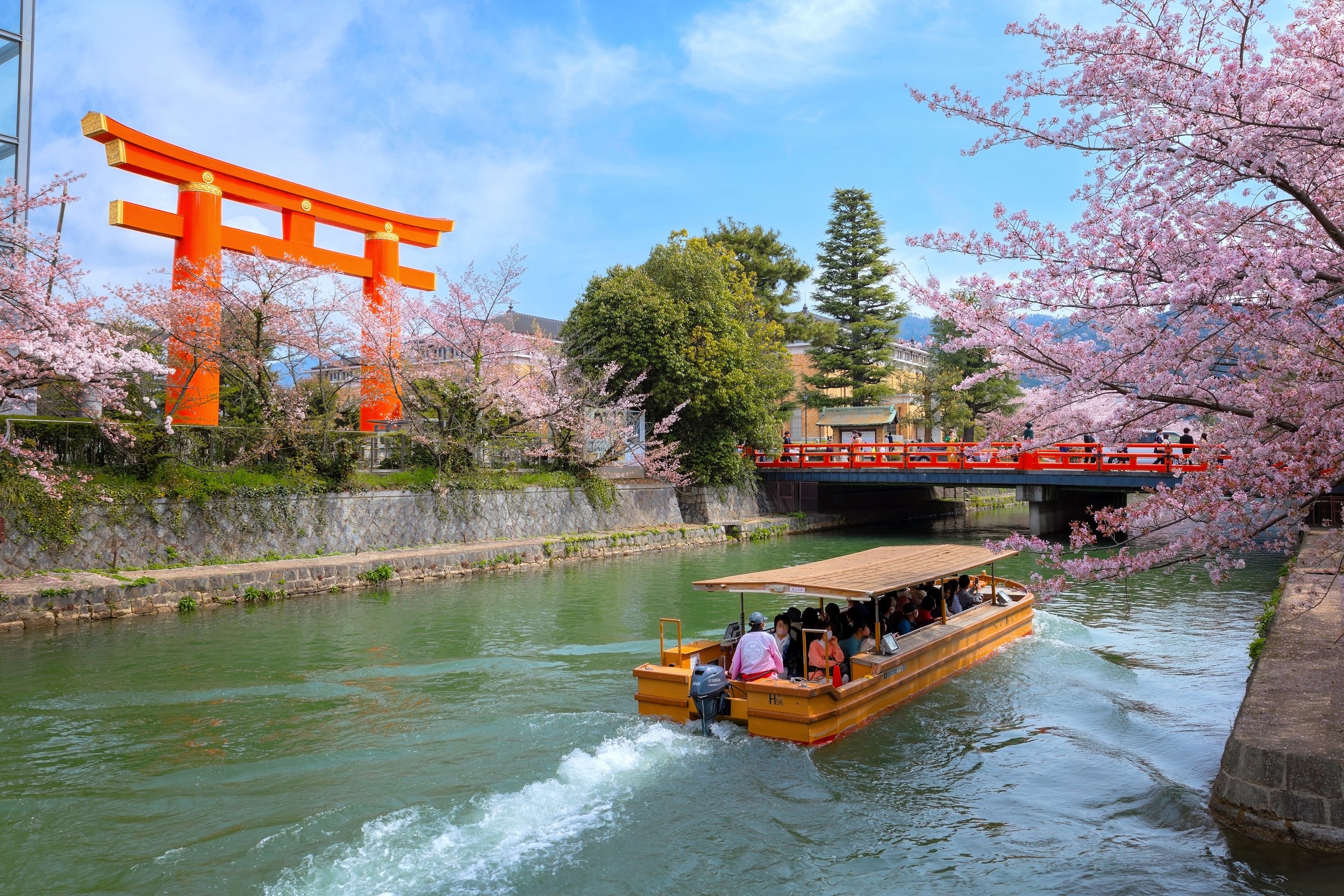
Okazaki Canal 岡崎疏水
This canal which connects Kyoto with Biwa Lake wraps around the Okazaki Park, which has Heian Jingū's huge Torii gate towering in the middle, and is also linked to the Kyocera Museum area, the Kyoto City Zoo, and in turn the Keage Incline. It is lined with some 400 cherry trees. Perfect for having picnics in the Okazaki Park, or strolling on the banks, or taking a 25-minute cruise on a flat-bottomed boat called Jikkokubune (十石舟). Book from this site in English: https://kyoto-tabi.or.jp/tour/260320jfe/
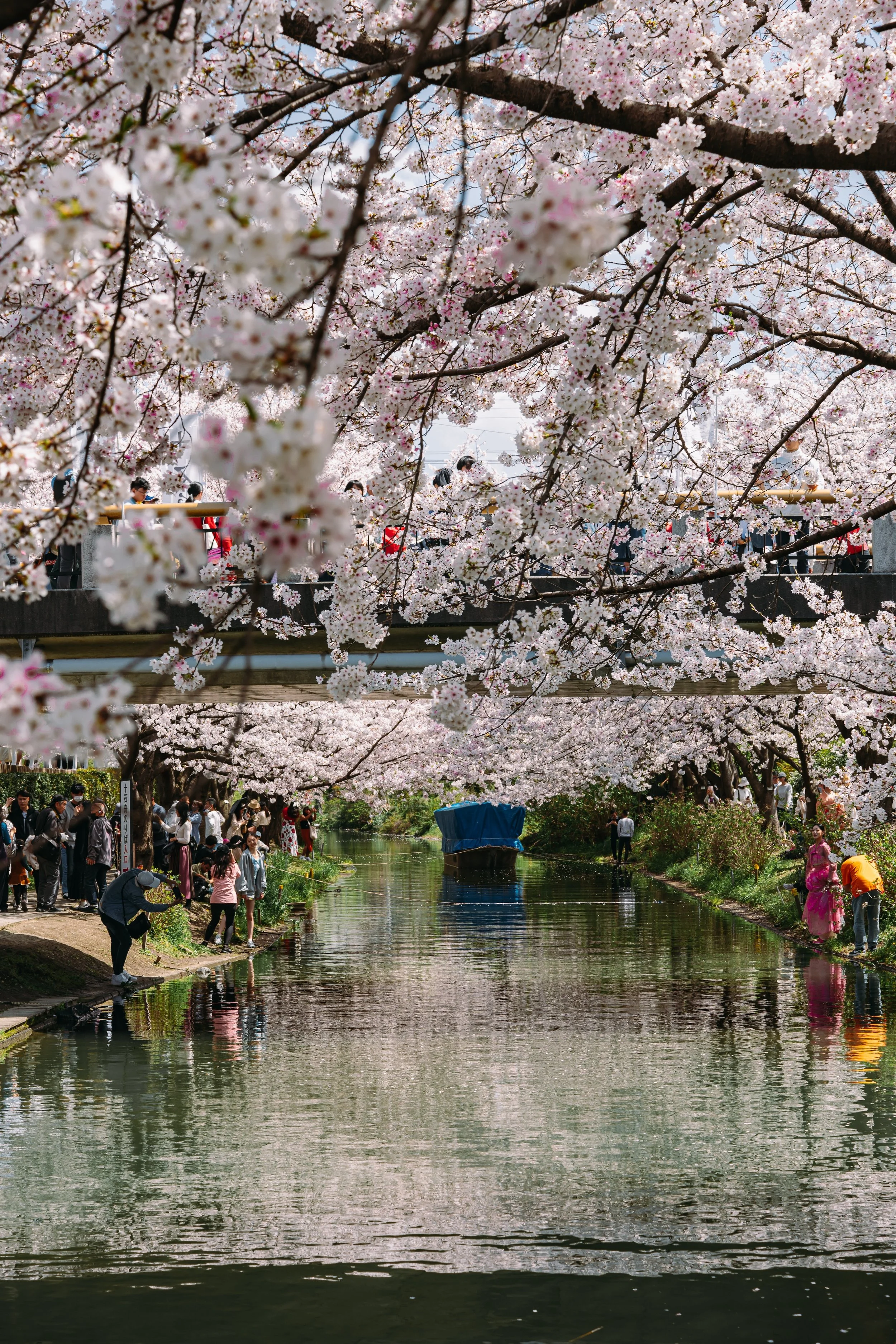
Fushimi Jikkokubune Canal 伏見十石舟水路
The canal in Fushimi's sake brewing district is lined with cherry trees. You can stroll on the banks or take a 50-minute cruise on flat-bottomed boats (十石舟) that in the Edo period carried sake and cargo. They depart every 20 minutes from 10:00. Please be sure to check first as they don’t operate on some days. Book from this official site (Japanese only) or through travel agents.


Yamashina Canal + Bishamondō 山科疏水+毘沙門堂
This canal takes drinking water from Lake Biwa to Kyoto. It is flanked by a promenade about 10 minutes walk from Yamashina Station. Cherry blossoms above and rape blossoms below make a formidable scene. Walk further on to Bishomondō temple, and you will find that it’s no less spectacular with cherry blossoms than it is with autumn colors. The beauty is top tier and there will be no crowds of tourists.
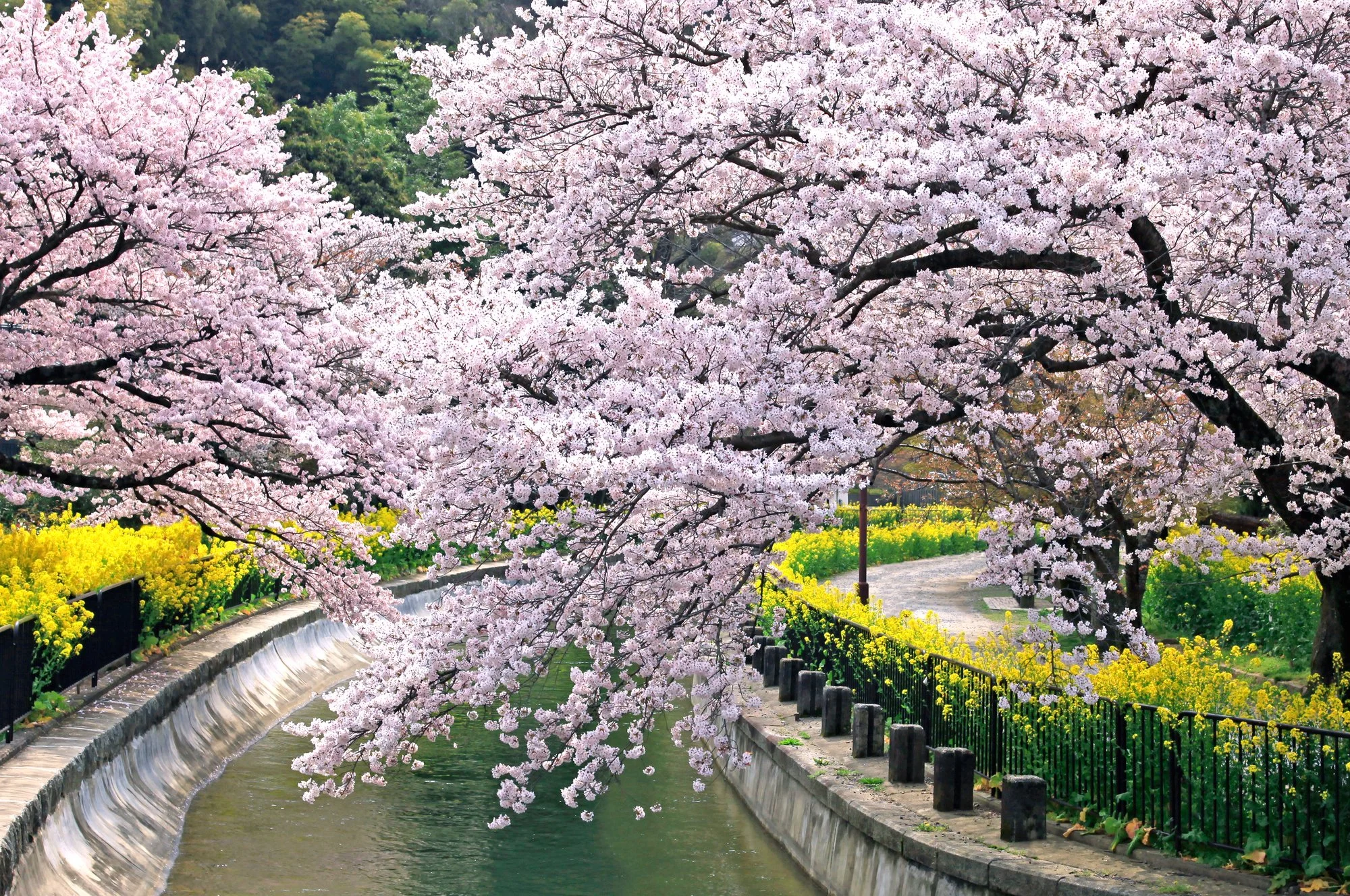
Cherry blossoms and rape blossoms at Yamashina Canal.
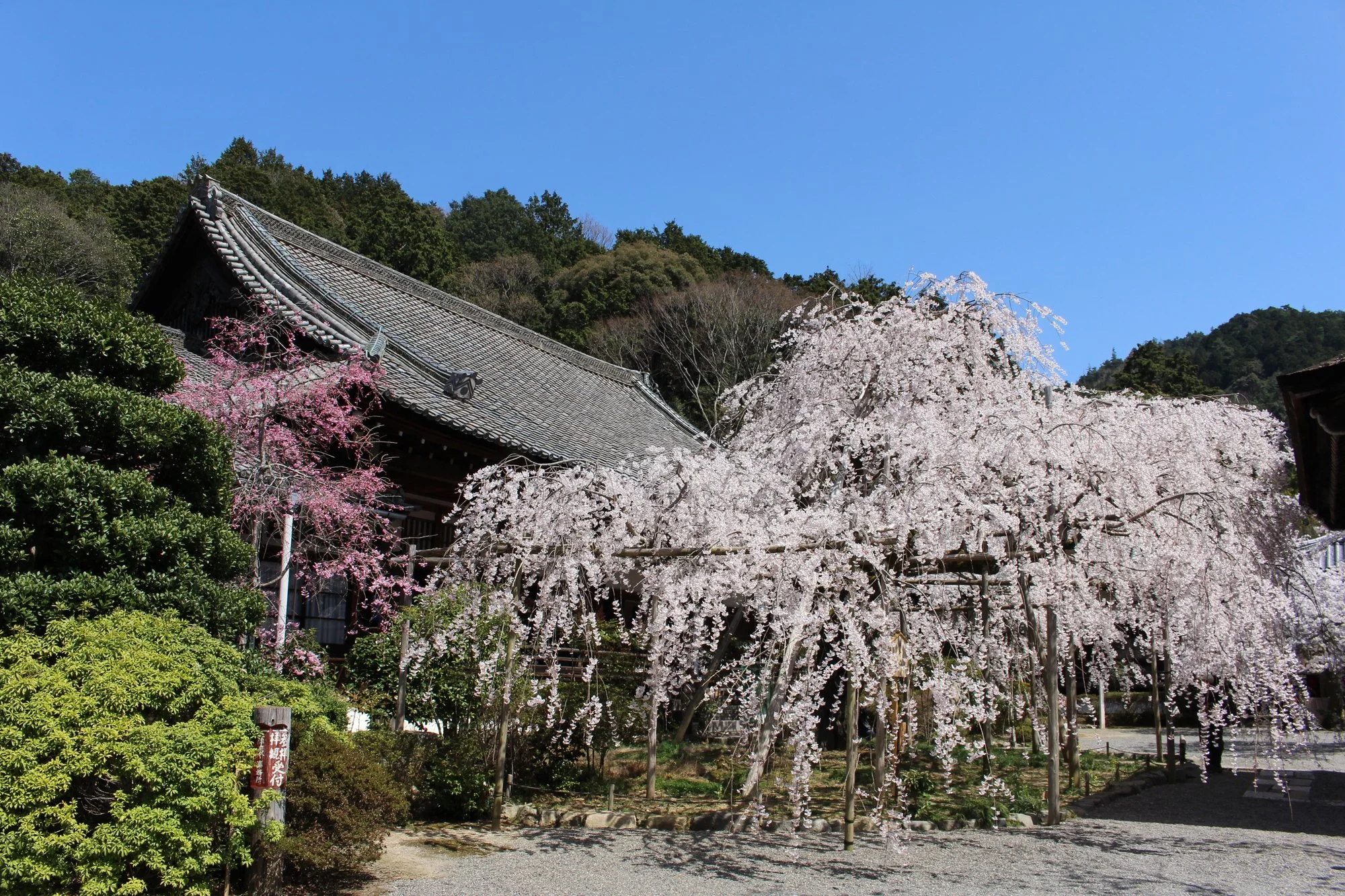
Cherry blossoms at Bishamondō Temple.
Kyoto Station Area and Southern Kyoto
Tōji 東寺
Most famous for its "Fujizakura" (不二桜), Tōji is home to some 200 cherry trees including early and late blooming ones. This important temple is one of the best places for night viewing due to its vast grounds, with a pond and a 5-story pagoda forming a most picturesque backdrop.
Light up: Mar 14 ~ Apr 12, 2026 18:00 - 21:00
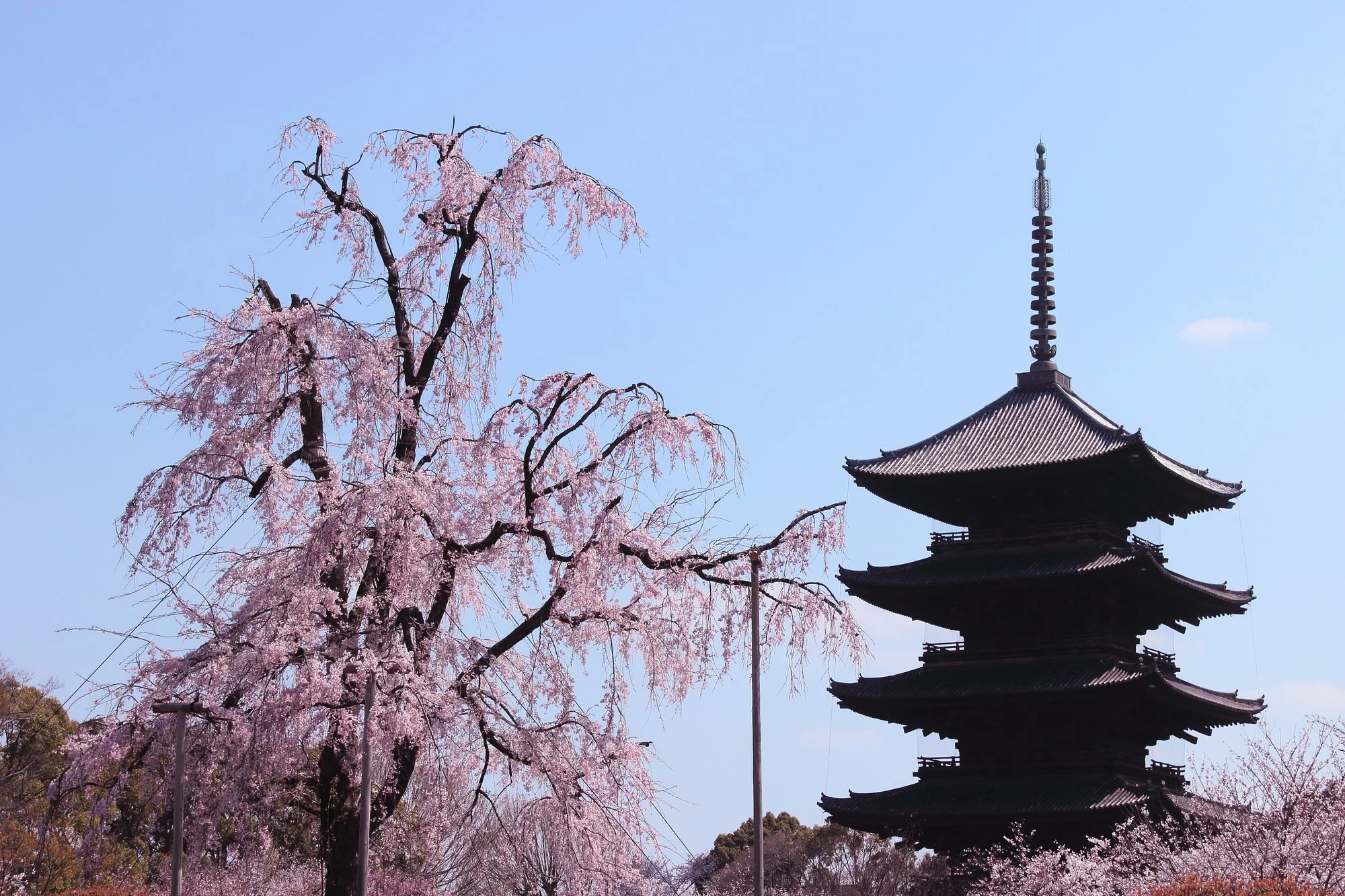
Shōsei-en Garden 渉成園
This is a Shoin style strolling garden that is part of the Higashi Hongan-ji temple. It is thought to have been the site of a garden mansion that served as the model for one such mansion in the Tale of Genji, a novel of the Heian period. It has some 50 cherry trees of different varieties, enhancing the “13 sceneries” for which this garden is known.
Daigo-ji 醍醐寺
This vast temple that takes up a whole mountainside from base to summit and has 1,000 cherry trees around its gardens, halls and ponds. One of Japan's top Hanami spots.
Light-up: Mar 27 ~ Apr 12 18:30 ~ 20:50
Gion • Higashiyama • Okazaki areas
Kiyomizudera 清水寺
This temple with its famous wooden stage is one of Kyoto's top cherry blossom spots. Its 1,500 cherry trees are scattered across the vast hillside with numerous photogenic spots.
Light-up: Mar 27 ~ Apr 5, 2026 18:00 - 21:00
Kōdai-ji and Entoku-in 高台寺 + 圓徳院
This temple even has a variety named after it called Kōdai-ji cherry blossom. The weeping sakura swaying over the Hashin-tei Zen garden is a beloved sight . Entoku-ji is a sub-temple with a more serene ambience.
Light up: Mar 13 ~ May 6, 2026 17:00 - 21:30
Maruyama Park 円山公園
This oldest park in Kyoto, with some 650 cherry trees, has an iconic tree known as “Gion Weeping Cherry” or “Night Weeping Cherry”. Its spectacle when illuminated is awe-inspiring. It is a second generation tree transplanted here by 15th generation cherry guardian Sano Tōemon, after the original tree died in 1947 at 200 years old. The park and tree have been around since the Edo period.
Light up: Dates to be confirmed 18:00 - 22:00
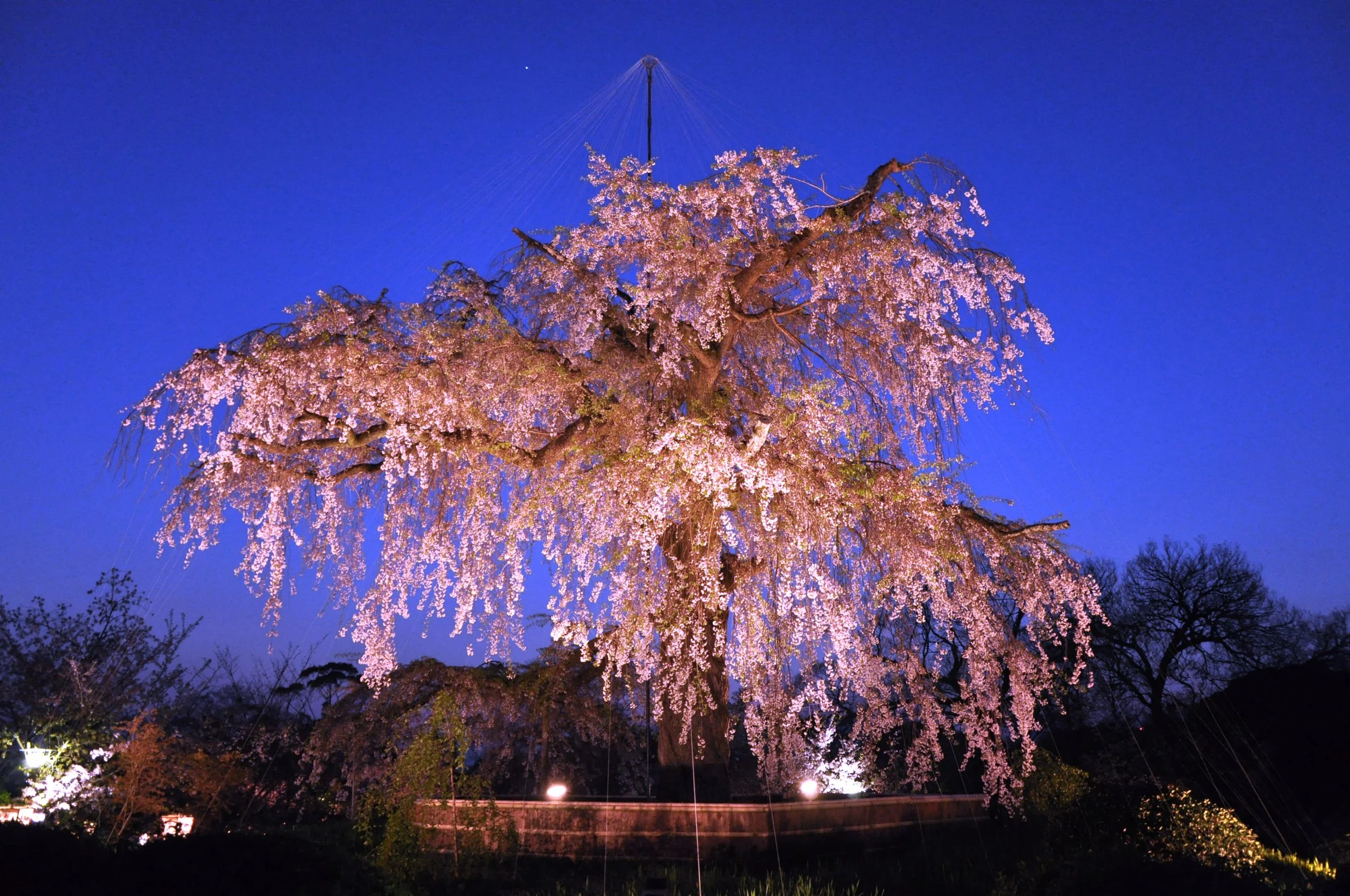
Known as “Gion Weeping Cherry”, this symbol of Maruyama Park should be about 97 years old in 2026.
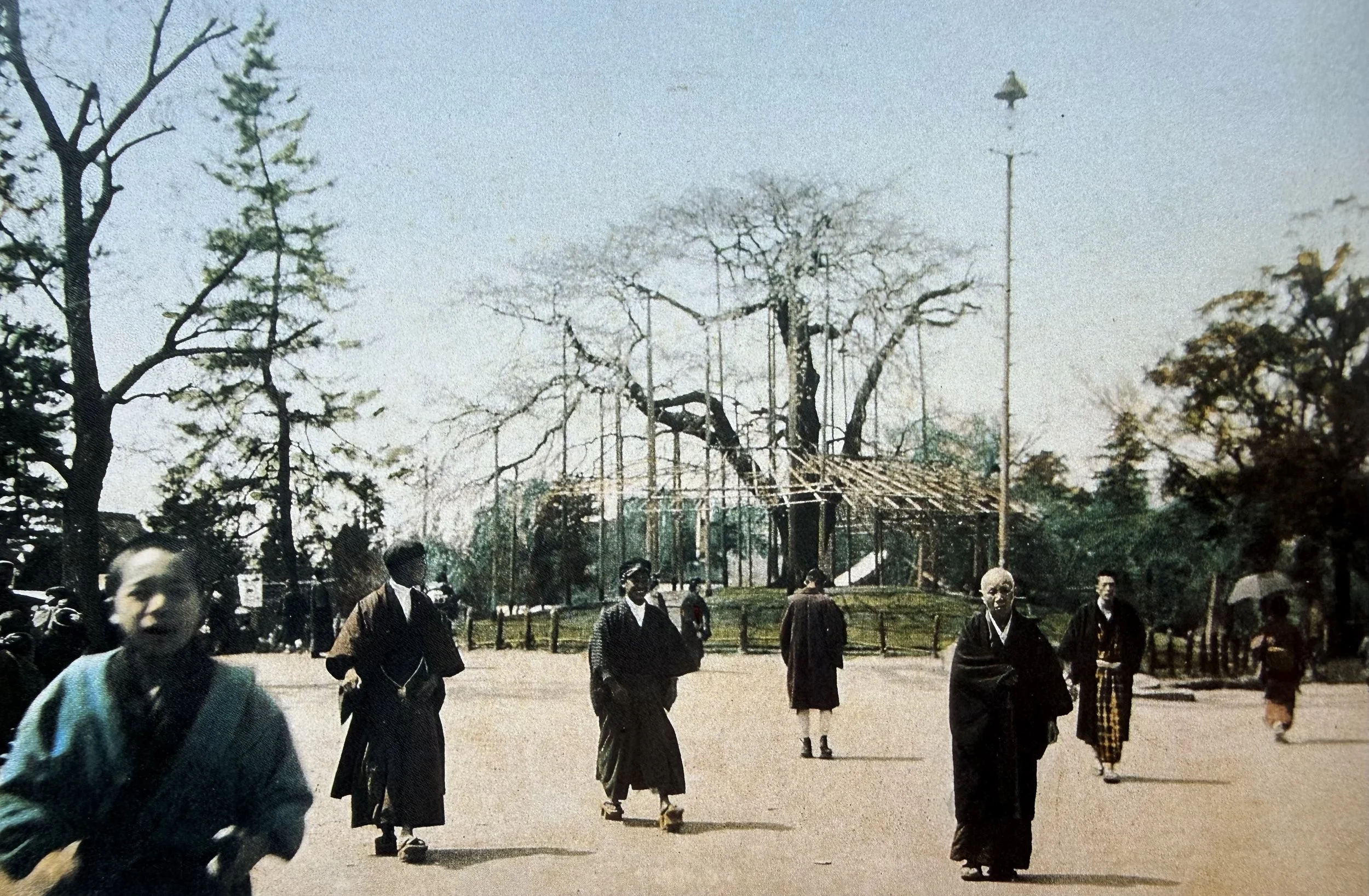
Hand-colored “Yokohama photos” made for foreign tourists in the Meiji period show famous Kyoto spots including Maruyama Park.
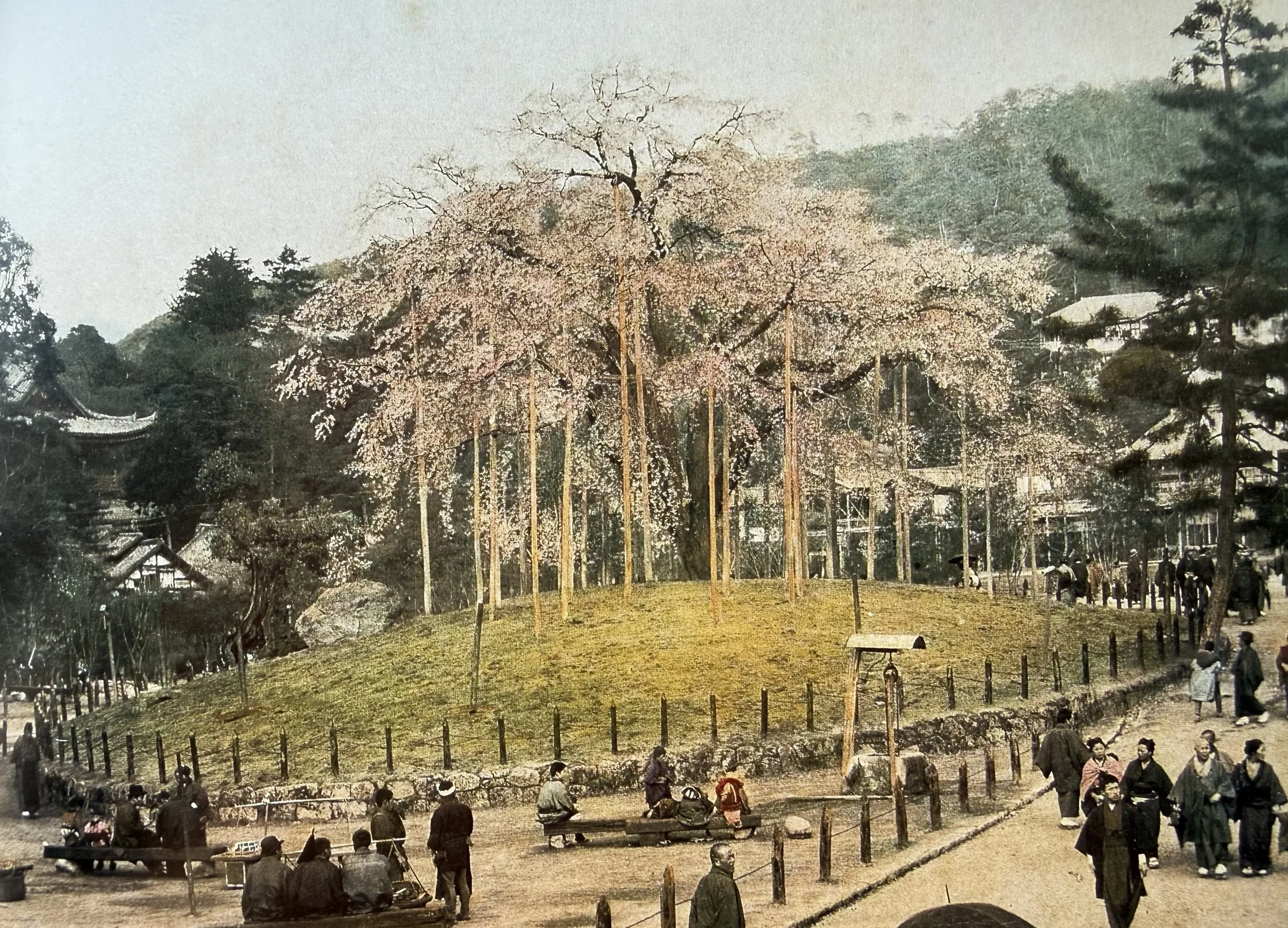
A hand-coloured photo from late Meiji period shows the majestic shape of the original weeping cherry at Maruyama Park.
Chion-in 知恩院
This temple has some 200 cherry trees with a Sanmon Gate that's a national treasure and famous gardens.
Light-up: Mar 25 ~ Apr 5, 2026 17:45 - 21:00
Gion Shirakawa 祇園白川
With cherry trees and green willows amidst teahouse buildings and cobblestone paths, and pink and white petals gently falling on the river, these small streets are quintessential Kyoto.
Light-up: Mar 27 ~ Apr 5, 2026 18:00 - 22:00
Kennin-ji 建仁寺
Head south from Hanamikoji-dori and you will see beautiful cherry trees beyond the walls of Japan's oldest Zen temple. The grounds are surprisingly quiet despite being in the middle of a lively entertainment district.
Sanjūsangendō 三十三間堂
Not particularly known as a sakura viewing spot, this temple with 1,001 Kannon statues nonetheless has early-blooming cherry trees that add great beauty to the grounds.
Chishaku-in 智積院
Popular amongst locals but less known to tourists, this temple with famous gardens and panel paintings is one of the more serene settings for enjoying several varieties of cherry blossoms.
Heian Jingū 平安神宮
With some 300 cherry trees of 20 different varieties, this shrine with a grand Torii gate visible from the Okazaki Canal and park is one of Kyoto's top sakura viewing spots. You can walk through 4 gardens with sceneries written into literature by famous authors.
Light-up: Apr 1 ~ Apr 5, 2026 18:15 - 20:30

Keage Incline 蹴上インクライン
This rail incline was built in 1891 to transport boats between Lake Biwa and Kyoto’s canal. It went into disuse in 1948 and has been planted with some 90 cherry trees of the Yoshino variety. Somehow the spectacle of a tunnel of cherry blossoms on an abandoned rail line is captivating.
Nanzen-ji 南禅寺
Nanzen-ji with its magnificent Sanmon Gate, vast temple grounds and a Meiji-era aqueduct, has 100 cherry trees and is a good starting point for a stroll up Philosophers Path.
Philosopher's Path 哲学の道
This picturesque path along a canal is shaded by some 400 cherry trees, with lots of cafes, shops and small shrines along the way. Kumano Nyakuoji shrine, with its own cherry blossoms in a quiet spot, marks the beginning of the path. But it does not end near Ginkaku-ji. In fact the best part continues further north. Please see our map for guidance.
Shinnyodō 真如堂
This temple has 70 cherry trees, and is beloved as a picturesque spot by locals. Less well-known to tourists, it has a calmer atmosphere.
Konkai Kōmyō-ji 金戒光明寺
This temple is a famous Hanami spot since the Muromachi period, but it is less well-known by tourists. It can be considered a hidden gem.
Northeast Kyoto
Takaragaike Park 宝ヶ池
This is a man-made pond built in 1763 as a water source for irrigation that has been developed into a park. With 660 cherry trees scattered in a "cherry blossom forest", around the pond and on a 1.5km promenade, it is a popular hanami spot for locals that is little known to tourists.
Kamigamo Jinja 上賀茂神社
This ancient shrine has about 100 cherry trees, many of which are treasured species with a long history. One Saiō-zakura (斎王桜), a deep pink weeping cherry, is 150 years old, 10m tall and has a trunk circumference of 2.5m.
Kyoto Botanical Gardens 京都府立植物園
This is one of the best sakura viewing venues because it has over 500 cherry trees of 180 species, meaning there will be both early and late blooming ones that make the viewing season longer than anywhere else. The Kanhi variety (寒緋桜), for example, starts blooming in early March, and the Chrysanthemum cherry (菊桜) will last until mid- or late-April. There are also rare species not found elsewhere in Kyoto.
Light-up: Apr 1 ~ Apr 5, 2026 17:30 - 20:30
Nakaraginomichi Path 半木の道
This 800m pedestrian path along Kamogawa river, from the Kitaōji Bridge to the Kitayama Ohashi Bridge, is not only shaded with 70 pink weeping cherries, but also has panoramic views of the continuous stretch of cherry blossoms along the river. One end of it is near an exit of the Kyoto Botanical Gardens. It would be ideal to visit both. There are still numerous cherry trees further north beyond this path.
Enkō-ji Temple 圓光寺
Enkō-ji, close to the more famous Shizendō villa, is a temple with spectacular spring and summer colors. Cherry blossoms over its dry landscape garden and 11-faced Kannon statue are a sight to behold.
Northwest and Arashiyama
Haradani-en Garden 原谷苑
This private garden is on a higher altitude and a little cooler than in the city, so its 400 cherry trees of over 20 species tend to bloom a little later.
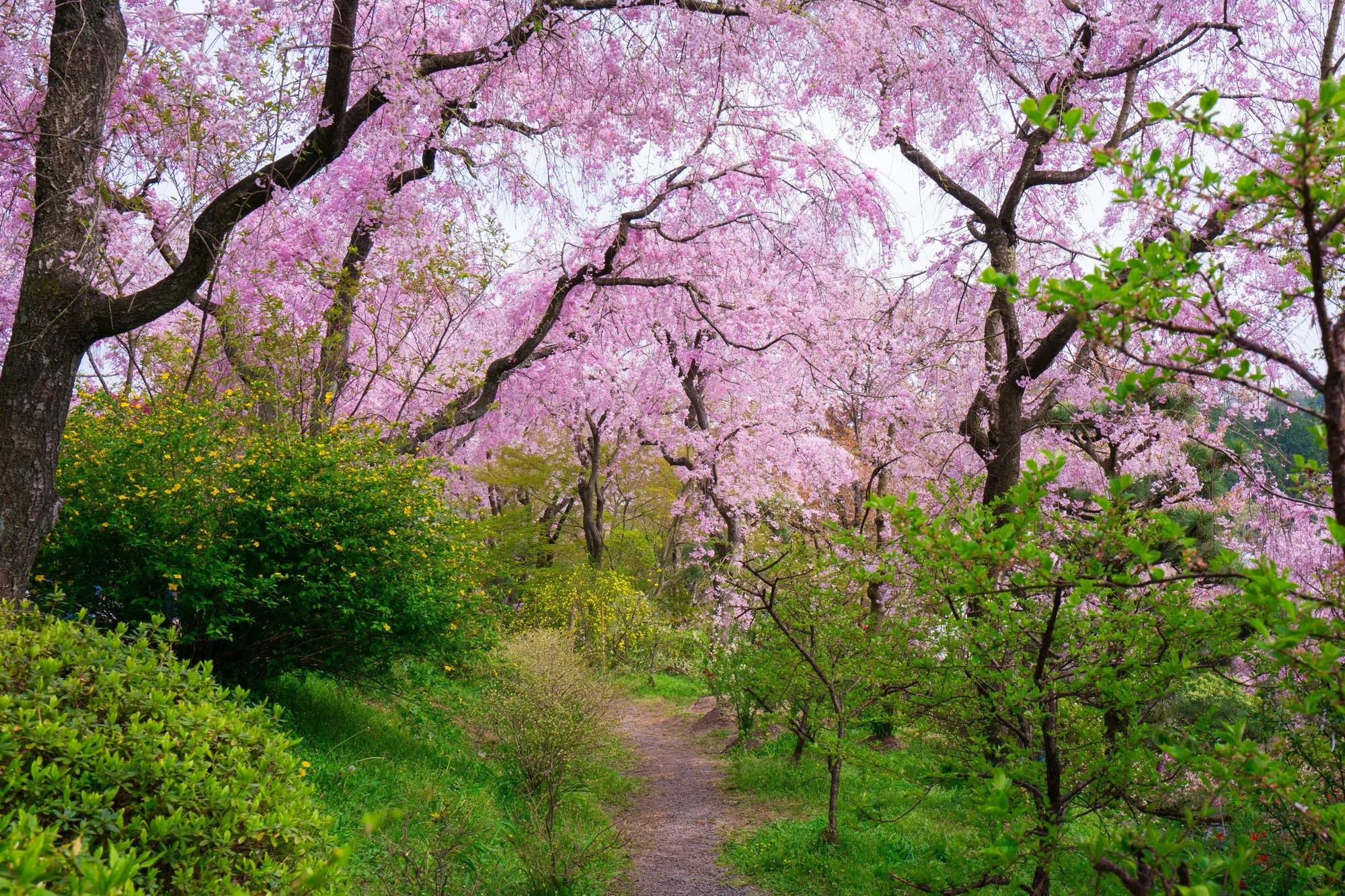
Kinkaku-ji 金閣寺
While Kinkaku-ji is not known as a cherry blossom destination, it has a number of trees that are so strategically located that you can capture very iconic pictures of the Golden Pavilion framed by cherry blossoms.
Ryōan-ji 龍安寺
Who can resist the weeping cherry hanging over the earthen walls of such a stunning rock garden? But this Zen temple has vast grounds, with cherry trees along paths around gardens and ponds.
Ninna-ji 仁和寺
Ninna-ji has a long history for Hanami and is known as the "Cherry Blossom Temple". Amongst its hundreds of cherry trees are 200 of the Omuro-zakura (御室桜) variety, which have a low height of 2-3 meters and are very late-blooming. With a 5-story pagoda as a backdrop, the sight is one of Kyoto's most photogenic.
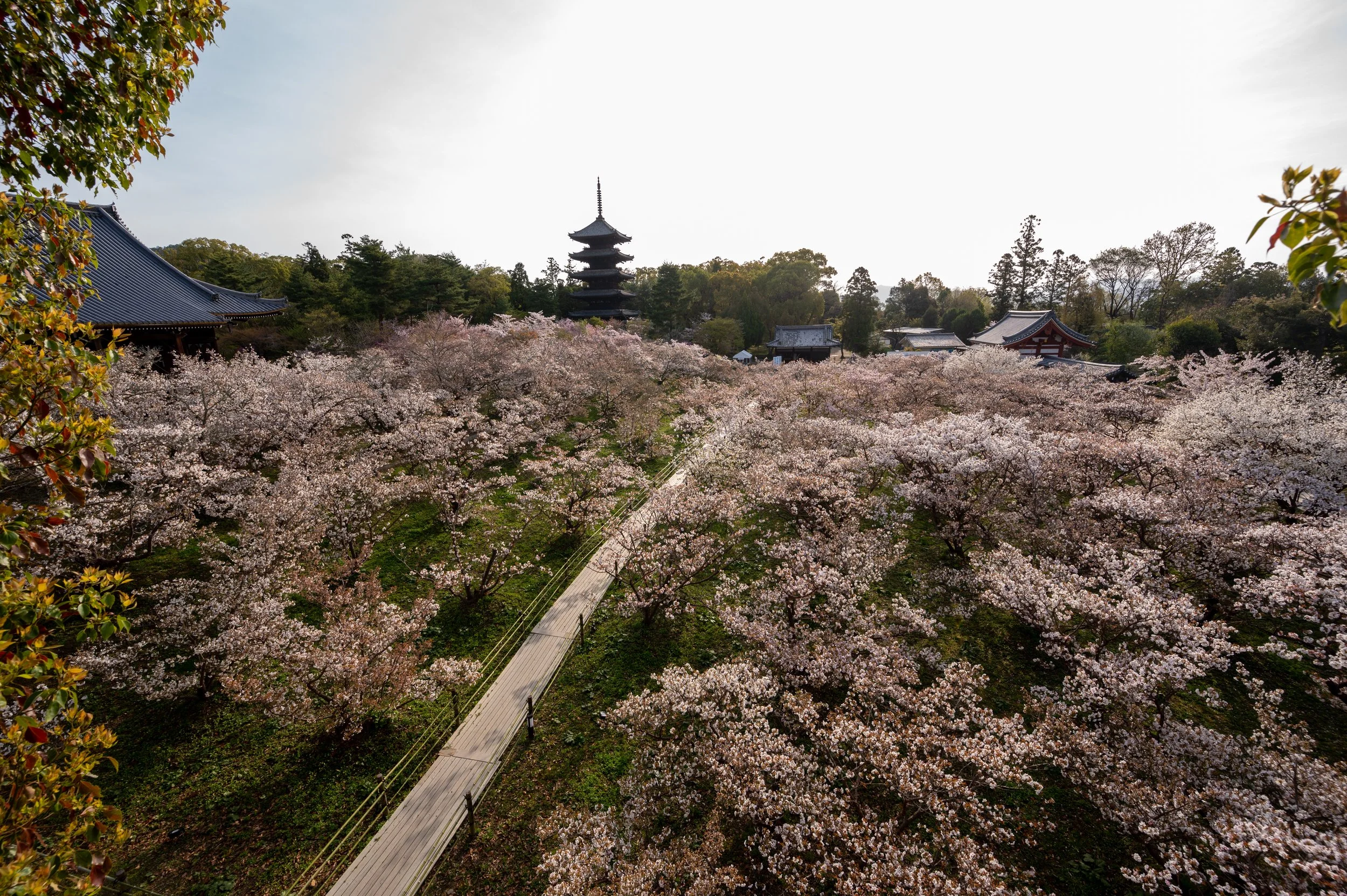
Hirano Jinja 平野神社
This shrine has a long tradition for Hanami, with 400 cherry trees of some 50 species, including the earliest and latest blooming ones. The viewing period is good from early March to the end of April.
Light-up: Mar 28 ~ Apr 12, 2026 sunset - 21:00
Taizō-in (in Myōshin-ji) 退蔵院(妙心寺内)
A sub-temple of Myōshin-ji and founded in 1404, this temple with precious art and abundant seasonal flowers has a spectacular weeping cherry cascading over its Yin Yang Garden.
Kenkun Shrine 建勲神社
Nestled atop Mount Funaoka in the Nishijin area, Kenkun Jinja is not only a shrine of historical significance (enshrining warlord Oda Nobunaga), but also an off-the-beaten-path venue for taking in both cherry blossoms and views of the city, Mt Hiei and Mt Daimonji.
Uetō Zōen Contracting 植藤造園
This is the private garden of a family of former imperial gardeners who looked after cherry blossoms at Ninna-ji, Maruyama Park and many other places in Japan, preserving precious species and becoming a landscape contractor in the Meiji era. Every generation’s head of the family is known as Sano Toemon (佐野藤右衛門) and so the garden belongs to the Sano Toemon residence. We use the name Uetō Zōen because it is more easily searched on Google. The garden with many varieties of trees is open to the public for viewing free of charge during cherry blossoms season.
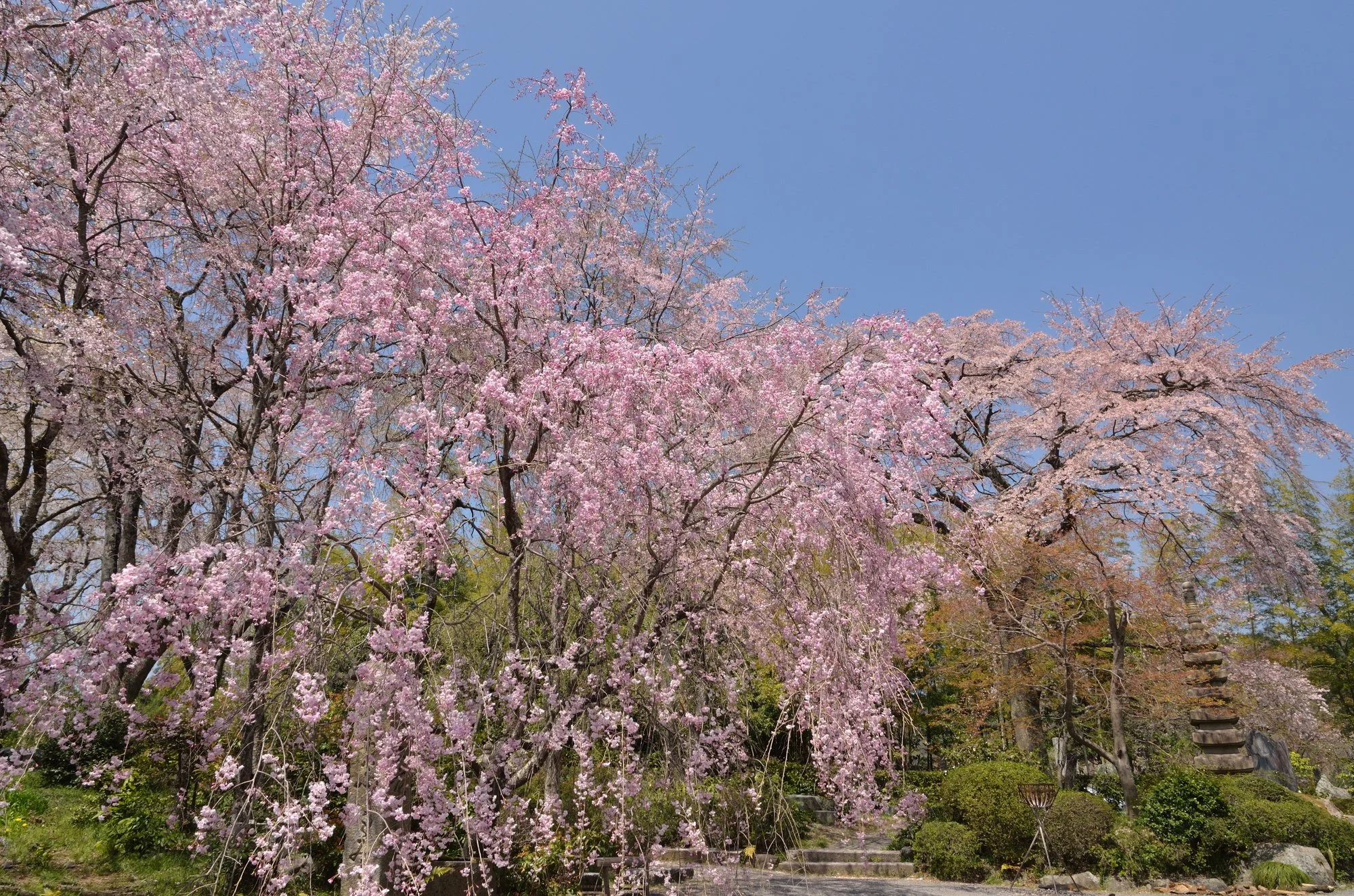
Cherry trees in the garden of Sano Toemon Residence (佐野藤右衛門)
Daikaku-ji 大覚寺
With weeping cherries scattered around the Osawa Pond that forms part of Daikaku-ji’s scenic background, this temple in Arashiyama provides one of the most fulfilling viewing experiences for enthusiasts of Japanese architecture and landscaping.

Tenryū-ji 天龍寺
This mountain temple in Arashiyama has over 100 cherry trees but it's not the quantity that matters here. The incorporation of the seasons in the design of the temple halls and gardens is exemplary and indescribably magnificent.
Matsuō Taisha Shrine 松尾大社
Enjoy views of cherry blossoms between Torii gates and amongst Yamabuki flowers in this massive shrine along the Katsura river.
Central Kyoto
Kyoto Imperial Palace 京都御所
There are 1,000 cherry trees on the vast grounds and gardens of this national park that used to be residences for imperial and court nobles. With so many trees, including both early and late varieties, the viewing season tends to be longer.
Kyoto Prefecture Office former main building 京都府庁旧本館
Although there are only 7 cherry trees in the courtyard of this former government building of the Meiji era, the sight is beautiful against the facade of the Neo-Renaissance style structure. This is a hidden gem beloved by locals. The courtyard is open for sakura-viewing Mar 28 ~ Apr 12, 2026.
Light-up: Mar 28 ~ Apr 5, 2026 18:00 ~ 20:00
Nijō Castle 二条城
With 380 cherry trees of some 50 species within a castle built in the 1600s (by Shogun Tokugawa), this World Heritage site has always been a special viewing venue.
Light-up: Mar 19 ~ Apr 19, 2026 18:00 - 21:30
Rokkakudō 六角堂
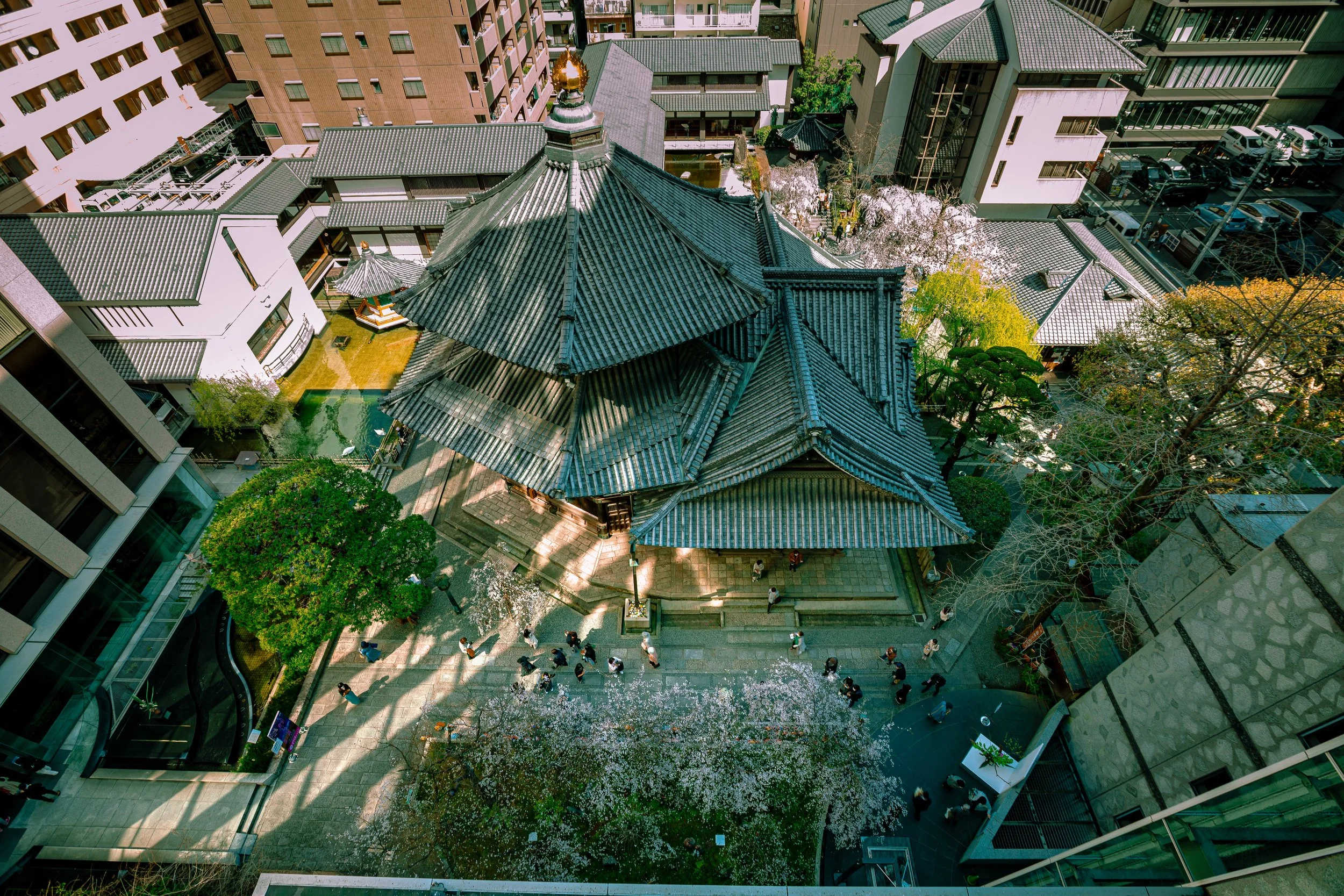
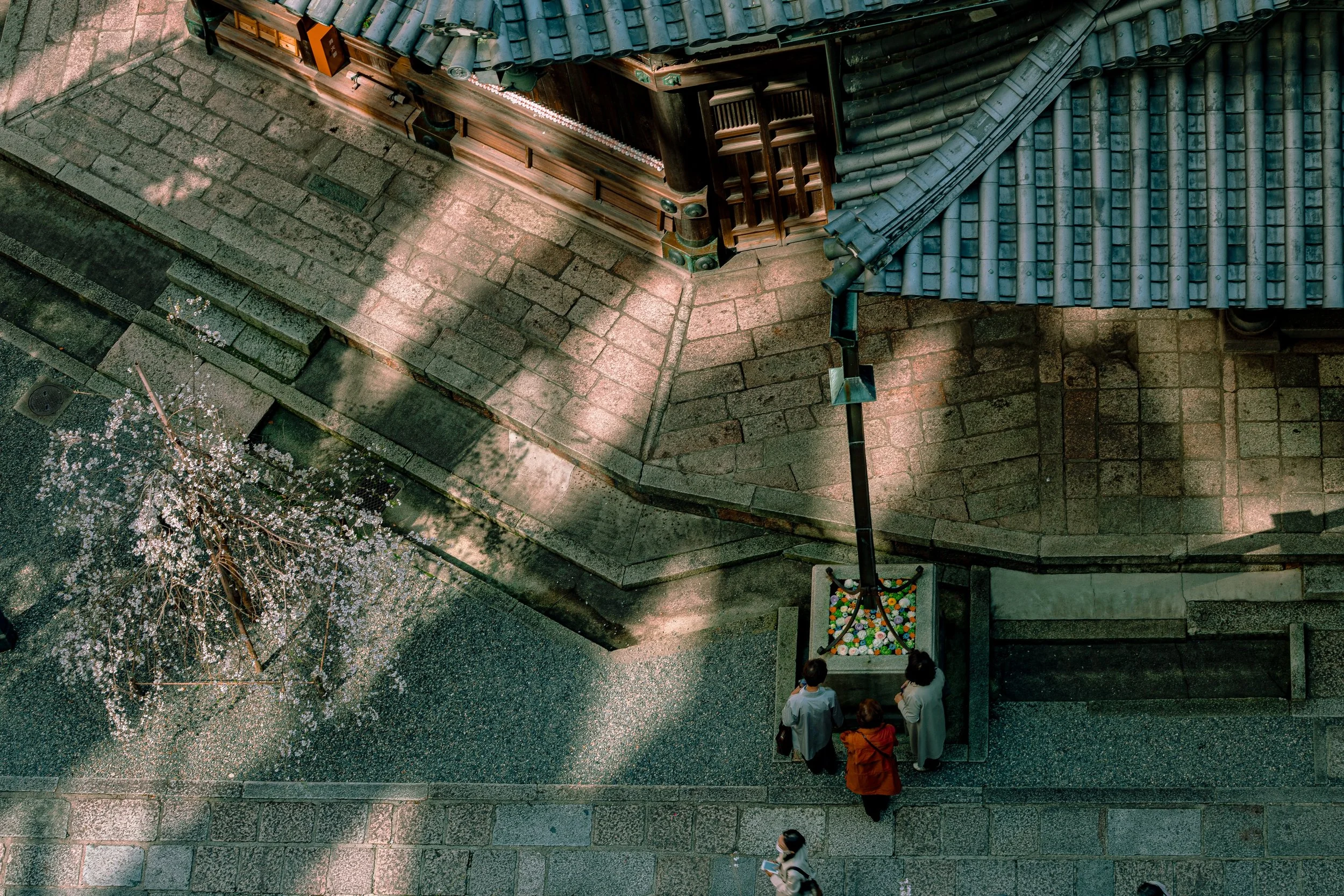
This small temple in the middle of a business district has a unique weeping cherry tree called Miyukizakura (御幸桜) that blooms early. It starts out white, but turns pink as it reaches full bloom.
Hyakumanben Chion-ji Temple 百万遍知恩寺
This is a well-known spot for locals to enjoy cherry blossom views in serene surroundings. It is the venue of regular flea markets for handmade crafts, held on the 15th of every month.