

The Ultimate Guide to Autumn Colors in Kyoto
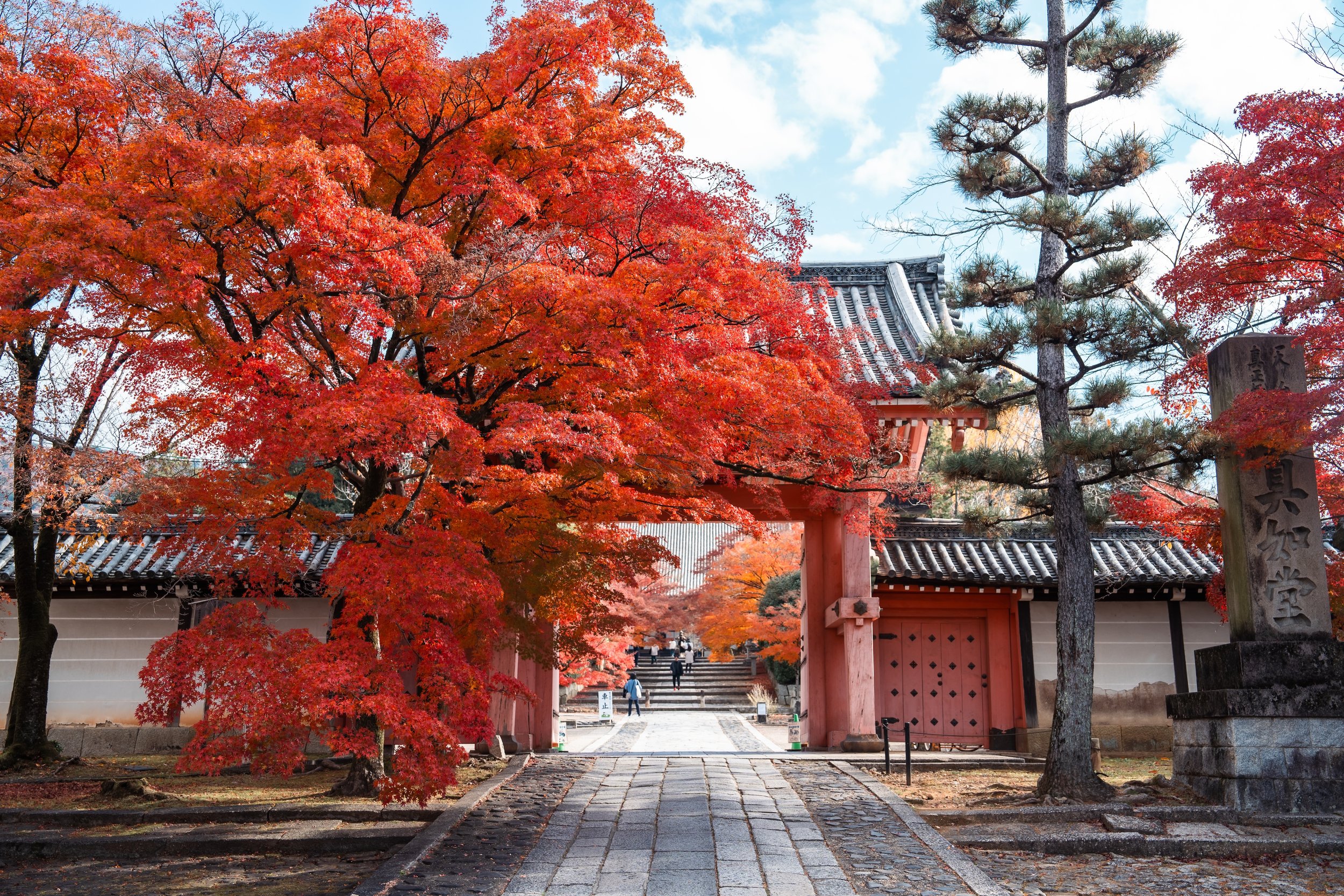
Shinnyodō, a quiet temple in Higashiyama that is popular with Japanese visitors for autumn visits.
Here is a very extensive list of Kyoto venues for viewing autumn colors that we plan to update when we have new pictures, information and light-up times. The list is of course not exhaustive, but it includes the most popular venues as well as those off the beaten track, and is meant as the ultimate guide to places that showcase the magical harmony of nature, design and serendipity.
If you would like to share pictures with us on this blog, we'd be happy to publish with the requested credit, thank you very much! Please email us at info@genjikyoto.com. We can make this the most informative and user-friendly free asset of the travelers' community!
To see why Kyoto is such a special place for foliage, and how momijigari ("maple leaf hunting" or "autumn leaf viewing") became a custom, please see our blog: Autumn Colors in Kyoto - Nature + Nurture
Here is our perennial Kyoto foliage map, which we will also be updating in real time as new tips or information comes in.
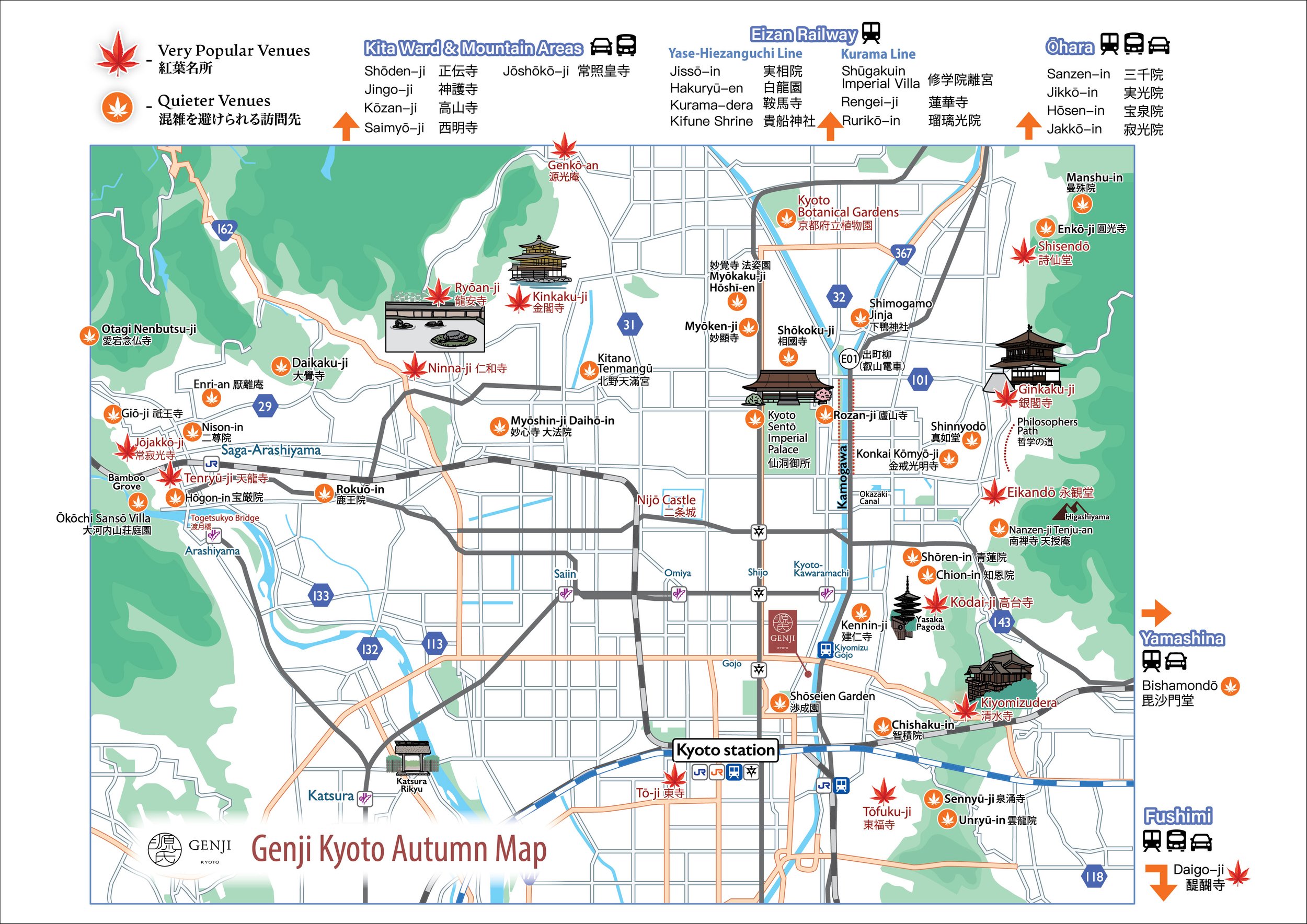
To encompass our venues, we will follow the traditional Japanese way of dividing Kyoto into 5 zones: Rakuchū (central), Rakuhoku (north), Rakutō (east), Rakusai (west), and Rakunan (south). The boundaries are vague and arbitrary, and cannot be found in any official maps or documents. But they are commonly used in Japanese travel sites and magazines, and are as good as any for describing many distinct areas of Kyoto.
Central Kyoto 洛中
Kyoto Sentō Imperial Palace 仙洞御所
This is a true hermitage within the city, located within the Kyoto Gyoen National Garden on the grounds of the Imperial Palace. Reservation is required with the Imperial Household Agency (https://sankan.kunaicho.go.jp/english/index.html). As visitor numbers are limited, a tour of these palace gardens is always tranquil, with no crowds blocking photo ops.

Rozan-ji (廬山寺) has a Genji Garden. Photo by Damien Douxchamps
Rozan-ji 廬山寺
This small temple next to the Kyoto Imperial Palace is famous for its connection with Murasaki Shikibu, the author of the Tale of Genji, which inspired a Genji Garden. Most people come for the purple bellflowers in July. But the autumn foliage juxtaposed with pine trees and islands of moss is enchanting in this unique garden.
Shōkoku-ji 相國寺
This is the main temple of the Buddhist Rinzai sect under which are the Golden Pavilion and Silver Pavilion temples (Kinkaki-ji and Ginkaku-ji). Its vast grounds with classic temple structures and a garden that combines elements of landscape and dry gardens make for magnificent backdrops to autumn colors. The best thing is it usually has very few visitors.
2026 Autumn viewing period: Sep 26 - Dec 15 (except Oct 18-21) 10:00am - 4:00pm (last admission).

A hybrid garden (both “sansui” landscape and “kareisansui” (dry landscape) at Shōkoku-ji (相國寺). Photo by Damien Douxchamps
Myōkaku-ji Hōshī-en 妙覺寺 法姿園
This temple has an interesting history, with warlord Oda Nobanaga staying in it for 18 of his 20 trips to Kyoto. Its Hōshī-en garden is an unusual "natural" garden where there is no particular landscaping or Zen elements, with maples simply being there with the moss, to be appreciated just as they are.
2026 light-up: Nov 21- Dec 6 6:00pm - 7:30pm (last admission).
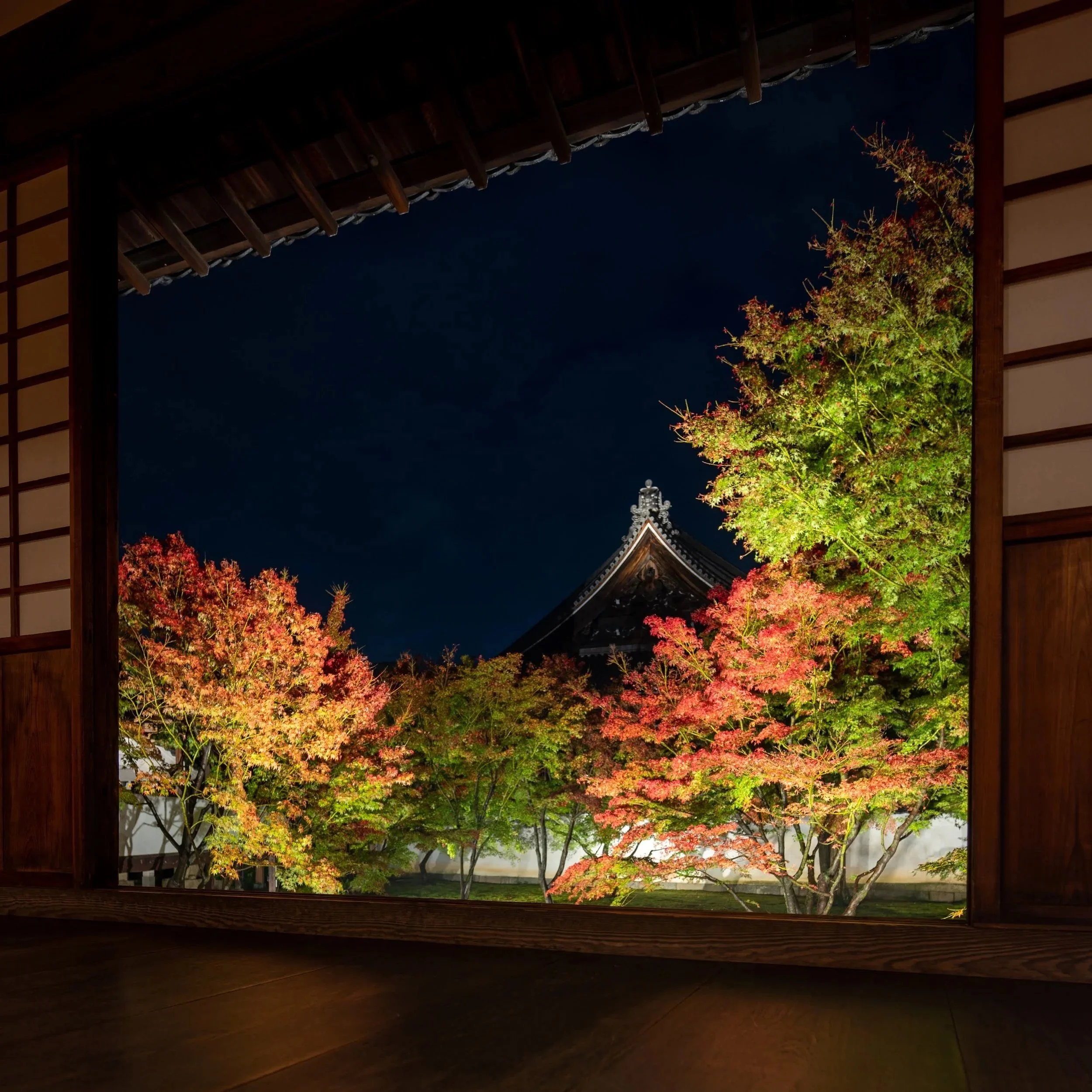
Myōkaku-ji Hōshī-en (妙覺寺 法姿園) during light-up.
Myōken-ji 妙顯寺
This temple was favored by Toyotomi Hideyoshi as his lodgings in Kyoto during the war years. Both its spring and autumn sceneries are spectacular, especially during light-ups. It is an underrated spot for autumn colors.
2026 light-up : Nov 21- Dec 13 6:00pm - 8:00pm (last admission).
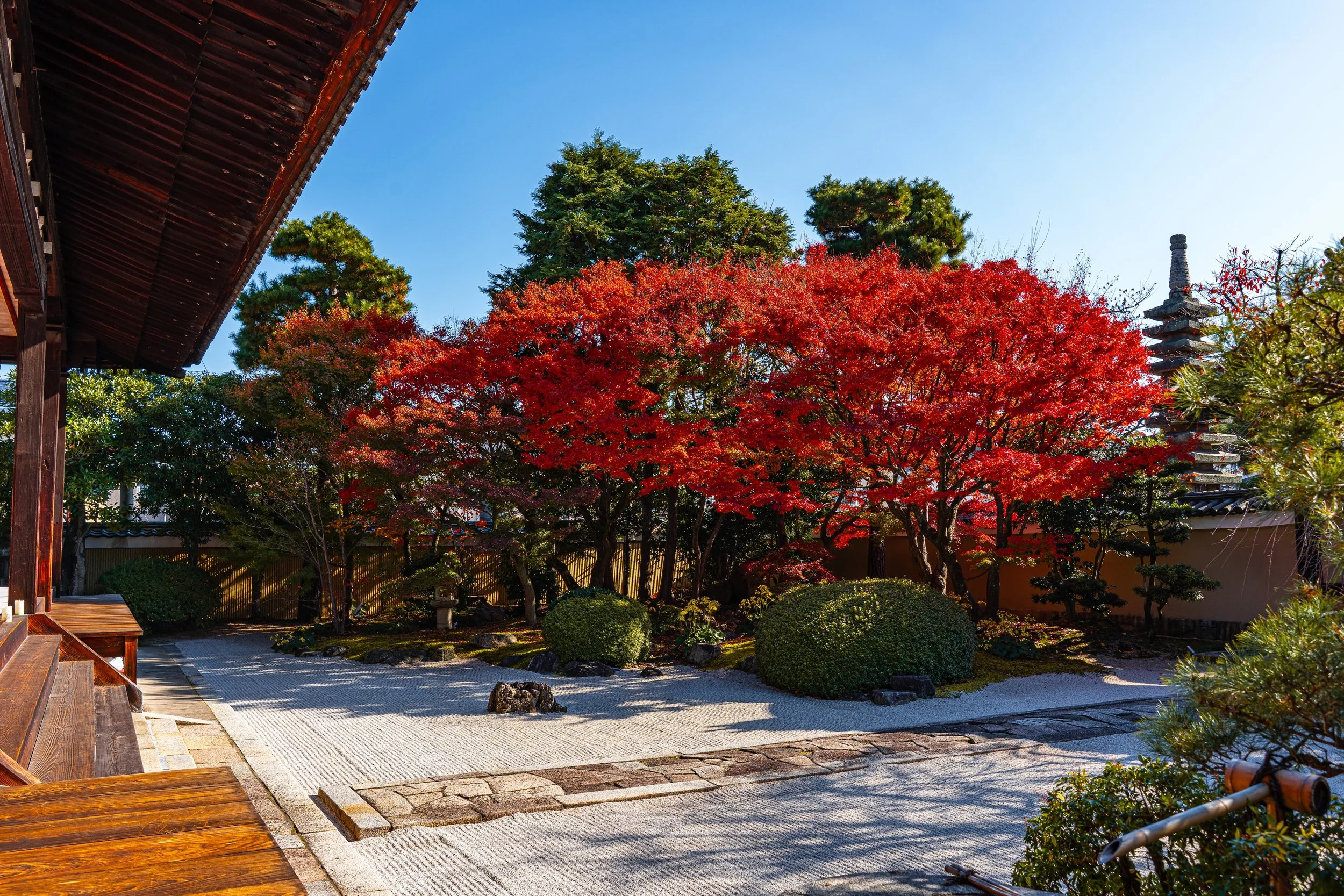
Myōken-ji (妙顯寺), an underrated spot for autumn colours.
Kitano Tenmangū 北野天満宮
This head shrine (of all of Japan’s Tenmangū and Tenji shrines) has a residual embankment once built for Kyoto’s flood control that is now a maple garden with some 350 trees.
Opens for viewing Oct 31 - Dec 6, 2026.
Light-up Nov 13 - Dec 6, 2026 Sunset - 7:40pm (last admission).
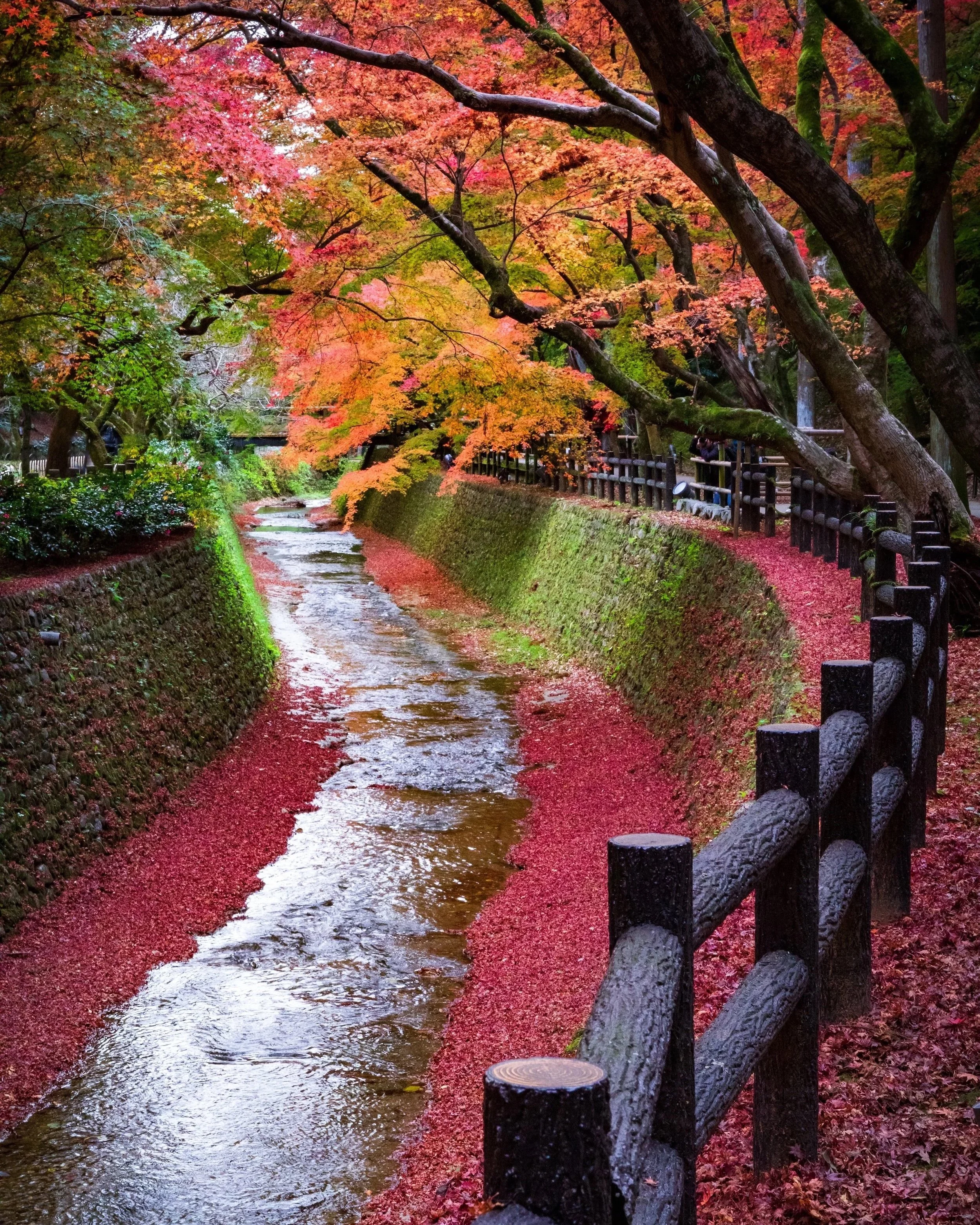
Kitano Tenmangū (北野天満宮) in late autumn.
Shōseien Garden 渉成園
This separate enclave to Higashi Hongan-ji Temple is a classic strolling garden. It is famous for “13 views” and has a pond that offers a picturesque backdrop to autumn colours.
The 2 venues have a light-up collaboration with Naked Inc in 2026 called Shōsei Naked Garden Nights. Tickets will provide entry to both Shōseien and Higashi Hongan-ji from Oct 31 to Dec 6, 2026. But for Nov 6-8 and Nov 25, only Shōseien will feature in the event.
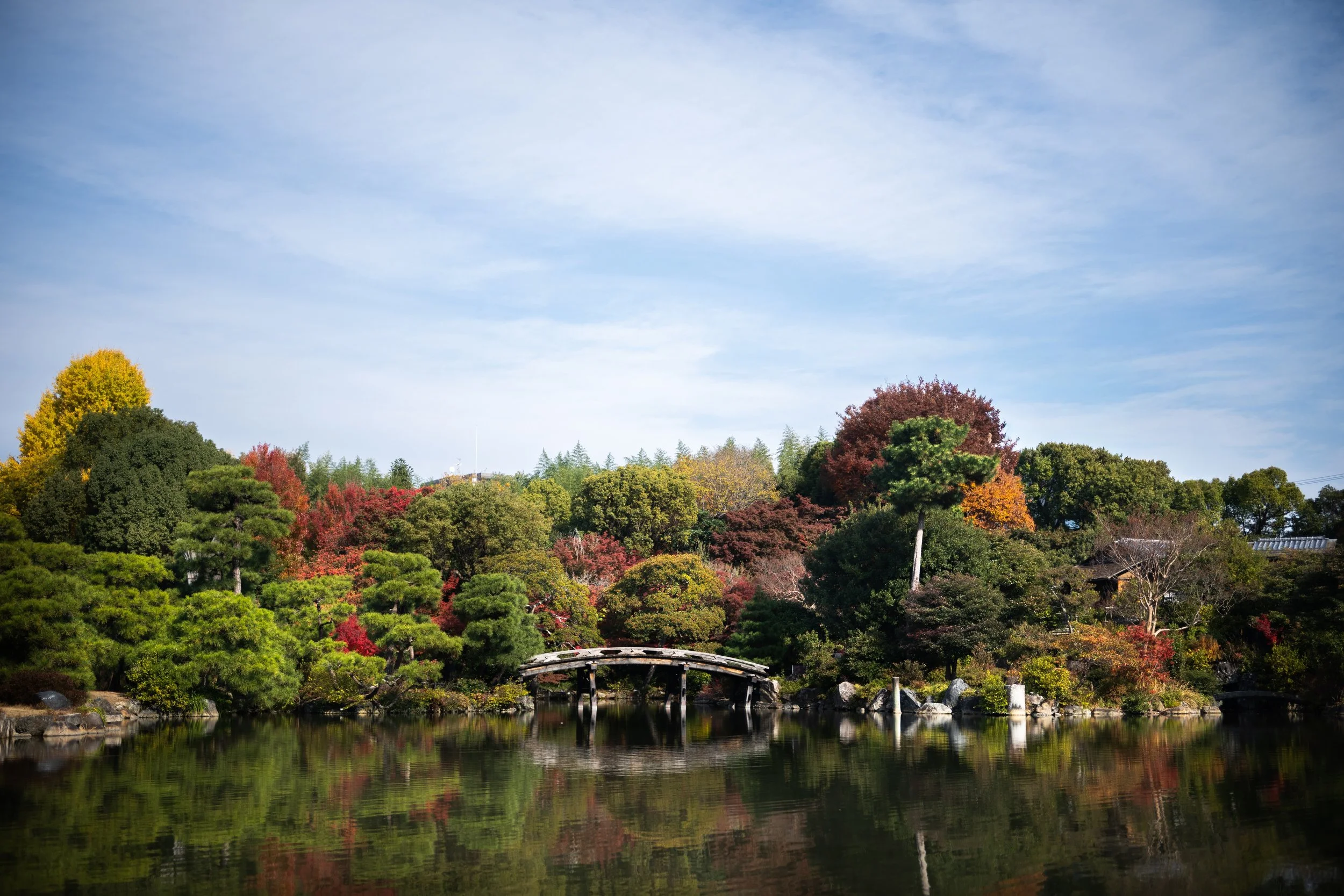
Shōseien Garden (渉成園) has a subtle beauty that shifts gently with the seasons.
North Kyoto 洛北
Shimogamo Jinja 下鴨神社
Shimogamo Shrine is distinctive for the ancient, primeval atmosphere of its Tadasu no Mori (糺の森) forest. Unlike manicured temple gardens, this is a rare surviving patch of original woodland with trees dating back centuries.
Kyoto Botanical Garden 京都府立植物園
Kyoto Botanical Garden is a top-tier venue for enjoying autumn foliage due to it sheer variety of trees, hence a longer season, and beautiful reflections from a pond surrounded by the Nakaragi Forest. Here, the autumn colors unfold in layers, offering a serene, spacious alternative to the popular temple circuit.
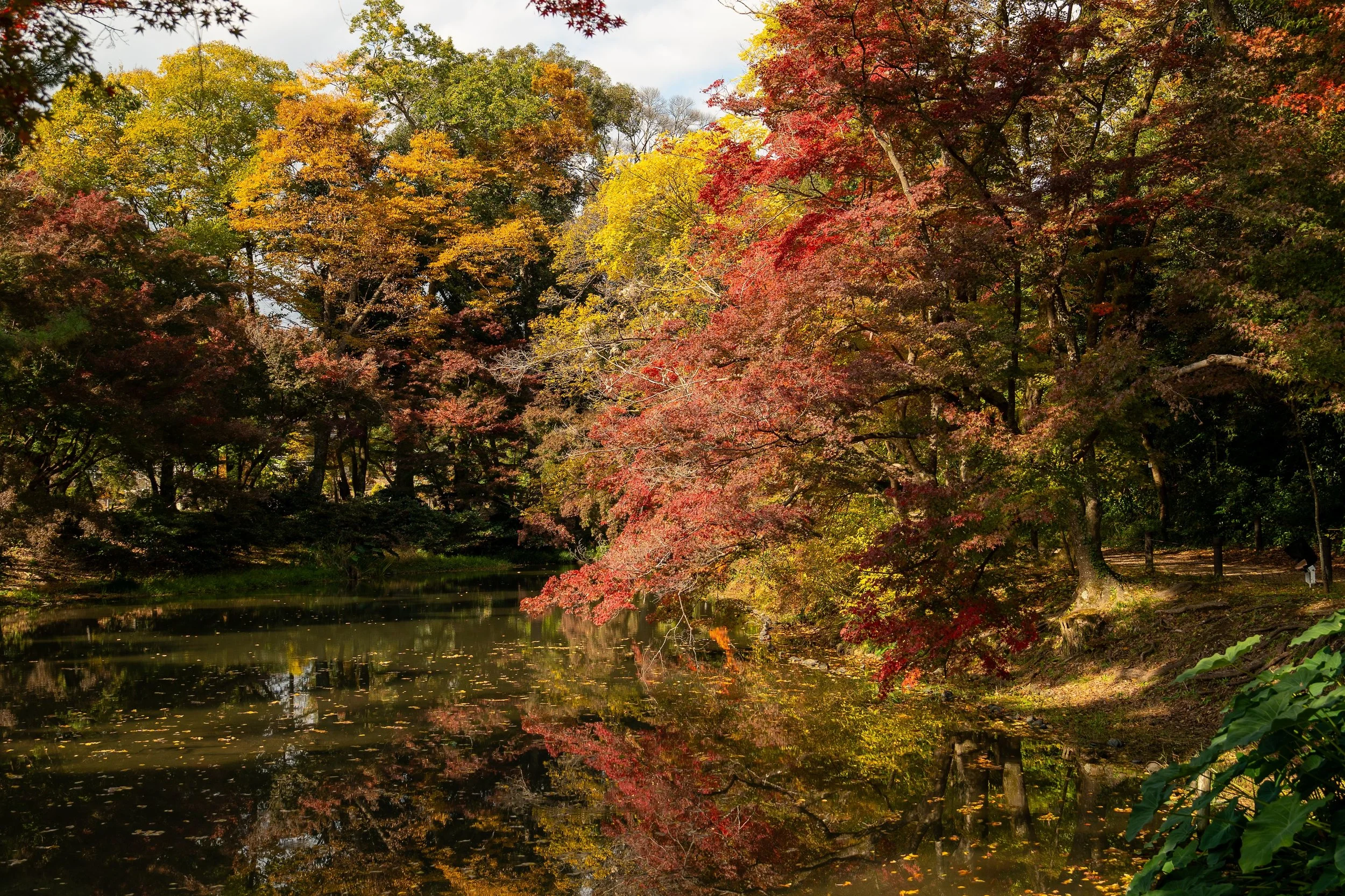
The sheer variety of trees in Kyoto Botanical Garden gives it a long season for autumn colors.
Genkō-an 源光庵
Genkō-an is a contemplative autumn venue in the Takagamine area, distinguished by two iconic windows that frame the garden's maples - the circular "Window of Enlightenment" (悟りの窓) symbolizing harmony of the universe, and the square "Window of Delusion" (迷いの窓) representing the cycle of life and sufferings. Viewing autumn colors through these windows can be a deeply evocative experience.
Eizan Railway area (叡山電鉄エリア)
The next venues can be reached by Eizan Railway (叡山電鉄), which starts from Demachiyanagi Station. For Shisendō, Enkō-ji, Manshu-in, Shugakuin Imperial Villa, Rengei-ji, and Rurikō-in, choose the train bound for Yase-Hieizanguchi. For Myōman-ji, Jissō-in, Hakuryū-en garden, Kifune Jinja, and Kuramadera, choose the train bound for Kurama.
Shisendō 詩仙堂

This villa, best known for its azaleas and 36 portraits of Chinese poets, is very famous and tends to be crowded at peak seasons. It is about 15 minutes walk from the Ichijōji Station.
Enkō-ji 圓光寺 - advance booking required
Enkō-ji is next to Shisendō and also very popular. But because it requires advance booking for autumn viewing, there won’t be uncontrollable crowds. Opens for booking Nov 10 - Dec 10, 2026.
Manshu-in 曼殊院
Manushu-in is known for its autumn scenes both inside and outside the temple. But because it is a little farther off - a 25-minute walk from the nearest Shūgakuin Station - it is usually not crowded.

Manshu-in (曼殊院) is 15 minutes walk from Shūgakuin Imperial Villa and can be visited together. Photo by Konosuke @kyotophotograph.
Shūgakuin Imperial Villa 修学院離宮
Reservation is required with the Imperial Household Agency (https://sankan.kunaicho.go.jp/english/index.html). for this mountainside villa overlooking the city, with a pond that reflects the sky and earth like a mirror, connecting the two.
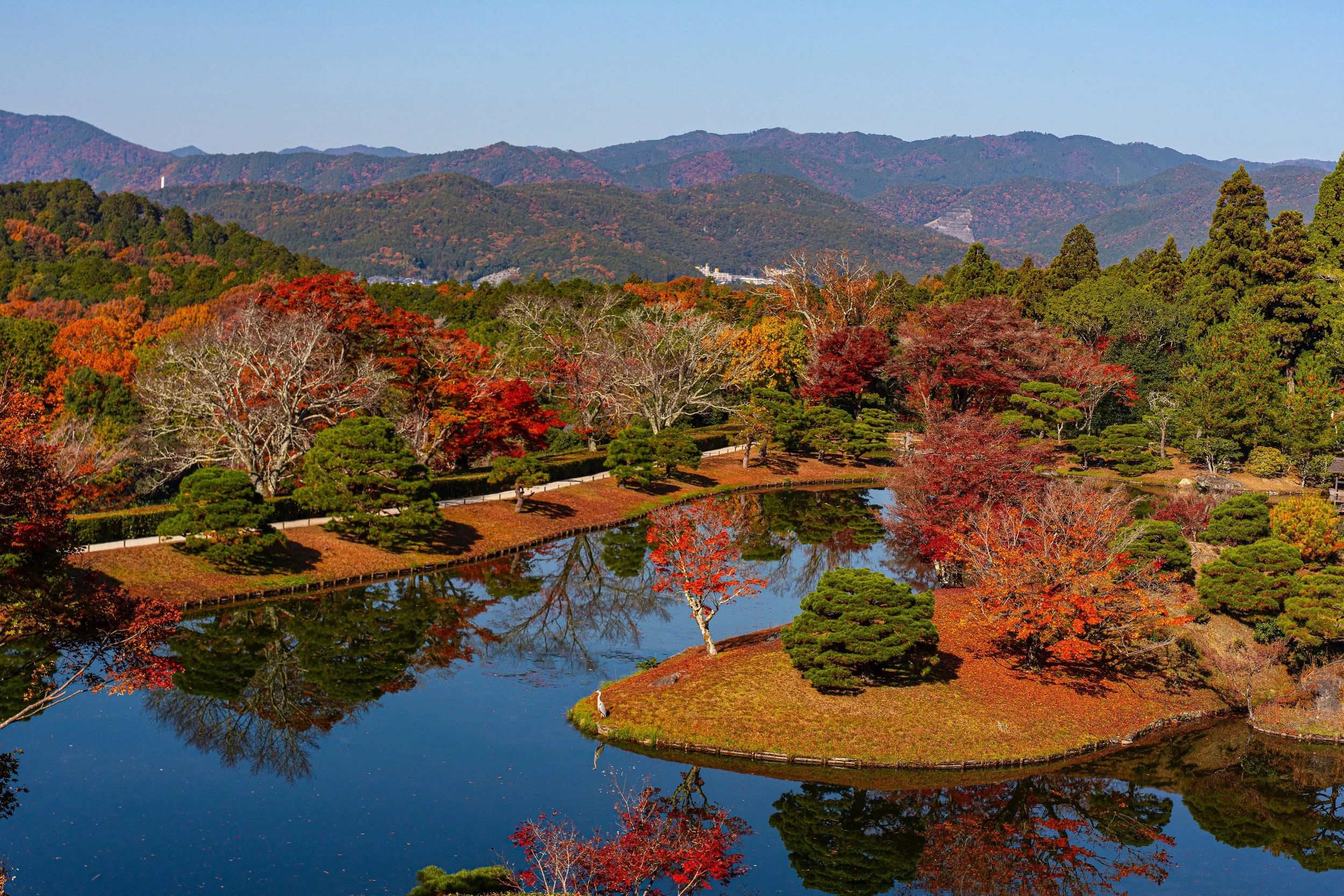
Shūgakuin Imperial Villa (修学院離宮) is a sublime expression of the harmony between nature and culture.
Rengei-ji 蓮華寺
Renge-ji is a small temple known for its "framed garden" view. Looking out from the shoin (study hall), the garden appears as if framed by the pillars like a painting, with autumn maples and golden ginkgo overhanging the garden pond. From the Miyakehachiman Station, it is about a 5-minute walk.

Rengei-ji (蓮華寺) with with its “framed garden” view from the study hall. Photo by Konosuke @kyotophotograph
Rurikō-in 瑠璃光院
Reservation is required for the peak period of Nov 13 - Dec 6, 2026 for this stunning venue, famous for its mesmerizing "reflection" views of maple leaves on polished tabletops. 2026 opening dates are Oct 1 to Dec 13, and walk-ins are allowed for days outside of the peak period.
Jissō-in 実相院
Jissō-in is a "monzeki temple" with ties to the imperial family. Besides a sansui ("山水") landscape garden, it also has a newer kareisansui ("枯山水") dry garden called "Heart Garden" (こころのお庭), created as a memorial to the 2011 east Japan earthquake victims, with symbolic waves and mountains on raked sand.
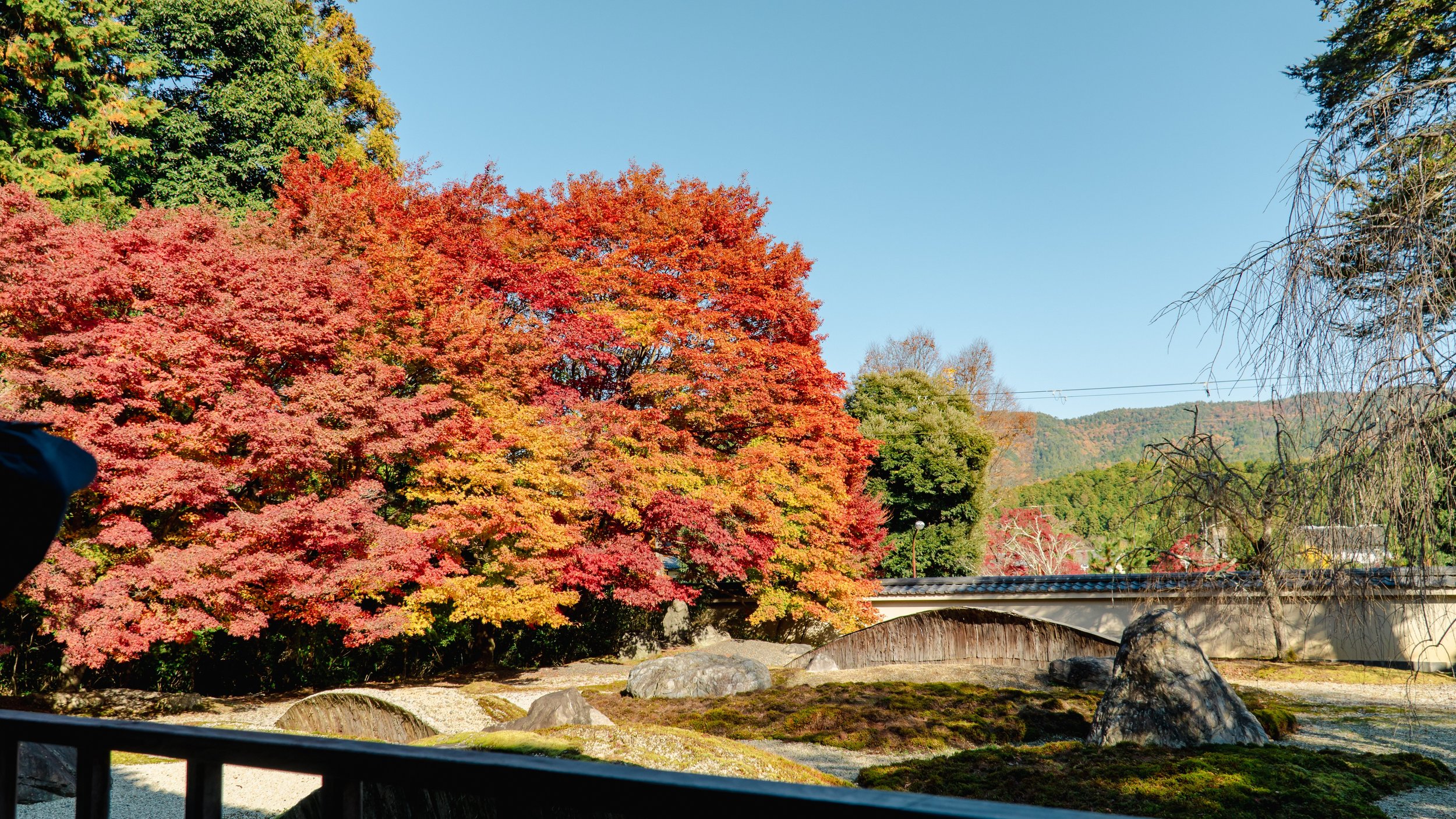
The “Heart Garden” of Jissō-in temple in north Kyoto.
Hakuryū-en 白龍園 - advance reservation required
This private villa is only open on fixed dates in cherry blossoms and autumn foliage seasons. It is a short walk from Ninose Station of the Kurama-bound Eizan Railway. For viewing autumn colors, tickets have to be applied for in advance. Only 50 people are allowed in at any hour between 10:00 and 14:00 by appointment, for a time limit of 2 hours (1 hour if you have the 13:00 appointment).
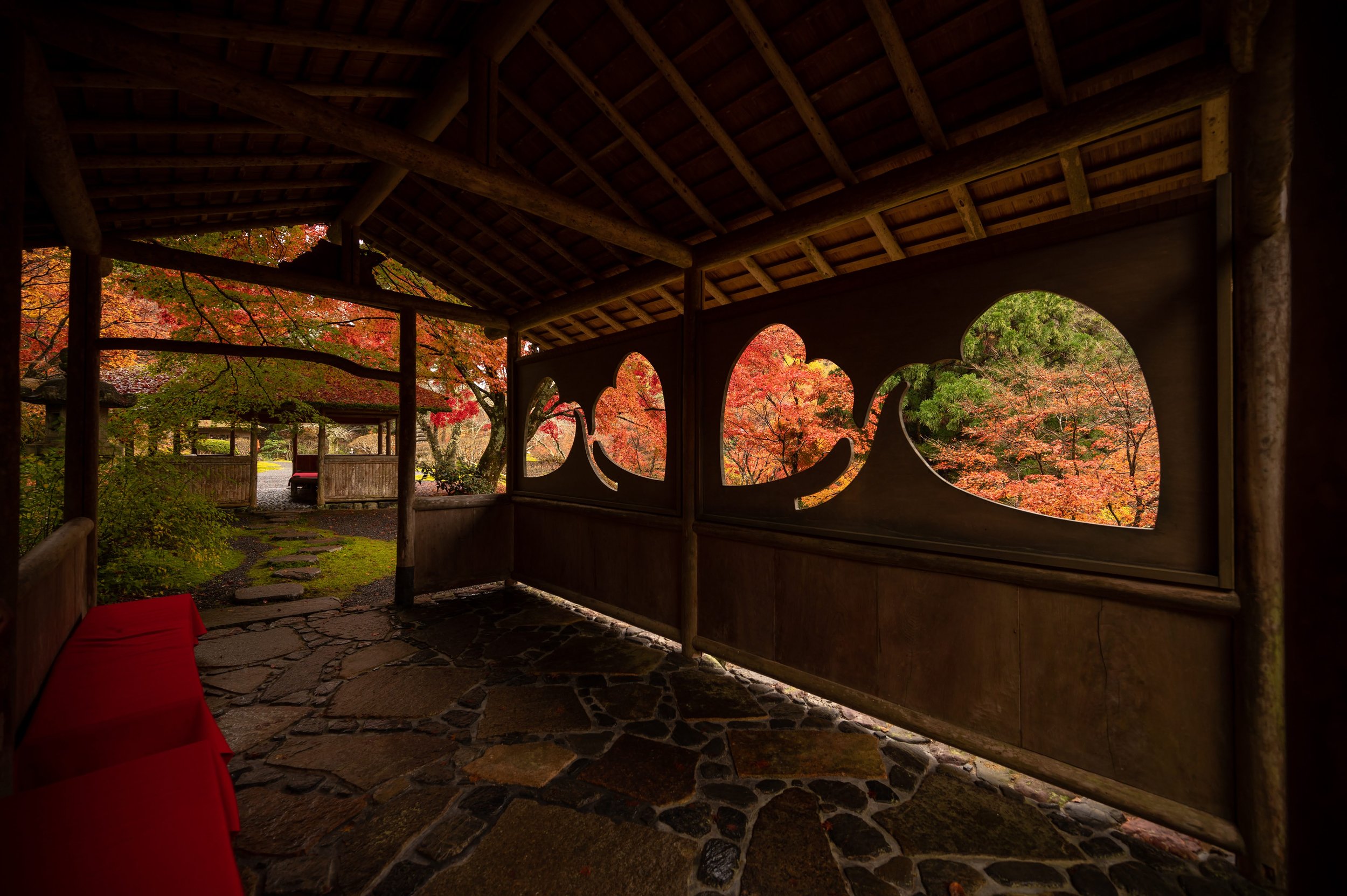
Momiji viewing through interesting windows at Hakuryū-en Garden. Photo by Konosuke @kyotophograph
Kifune Shrine 貴船神社
Apart from Kifune Jinja’s signature image of a stone staircase lined with red lanterns and vibrant maples, the shrine grounds are truly atmospheric, especially when the Kibune Maple Lantern event is held, usually from early to late November. A bonus of the Kifune autumn experience is the Eizan Railway journey. Between Ichihara and Ninose stations, the train passes through a 250-meter "maple tunnel" during which the interior lights are turned off and the train slows down, allowing passengers to be immersed in the glowing canopy outside the windows.
2026 light-up: Nov 7 - Nov 24 Sunset - 8:30/9:00pm.
Kuramadera Temple 鞍馬寺
This mountain temple with spectacular autumn colors is at the end of the Kurama-bound Eizan Railway. You can enjoy the “maple tunnel” experience getting there. Once at the entrance, you can hike up steep stairs (takes about 30 minutes) or take a cable car.
Ōhara 大原
Ōhara is a village area in northeast Kyoto with great scenic beauty. It is way beyond the end of the Eizan Railway line. But taking the Eizan train part of the way is still more direct than taking a bus from city center. We recommend taking the Yase Hieizanguchi-bound train from Demachiyanagi Station to the last stop, followed by a taxi ride. One can also take Bus #17 from Miyake-Hachiman Station, but it does not run frequently. On the way back from Ohara, there will be a long queue at the bus stop, so we recommend taking a taxi back to a stop on the Eizan Railway.
Sanzen-in 三千院
This main temple in the Ōhara area borders a quaint village with a stream running through it. It is very popular with locals and will be more crowded than the nearby smaller temples. If you take the Eizan Railway to Miyakehachiman station, and from there take the #17 bus to Ōhara, you can walk to Sanzen-in in about 12 minutes. Sanzen-in can be the starting point for the small temples nearby, such as Jikkō-in (実光院), Hōsen-in (宝泉院), and Jakkō-in (寂光院), all of which have subtle autumn colors.
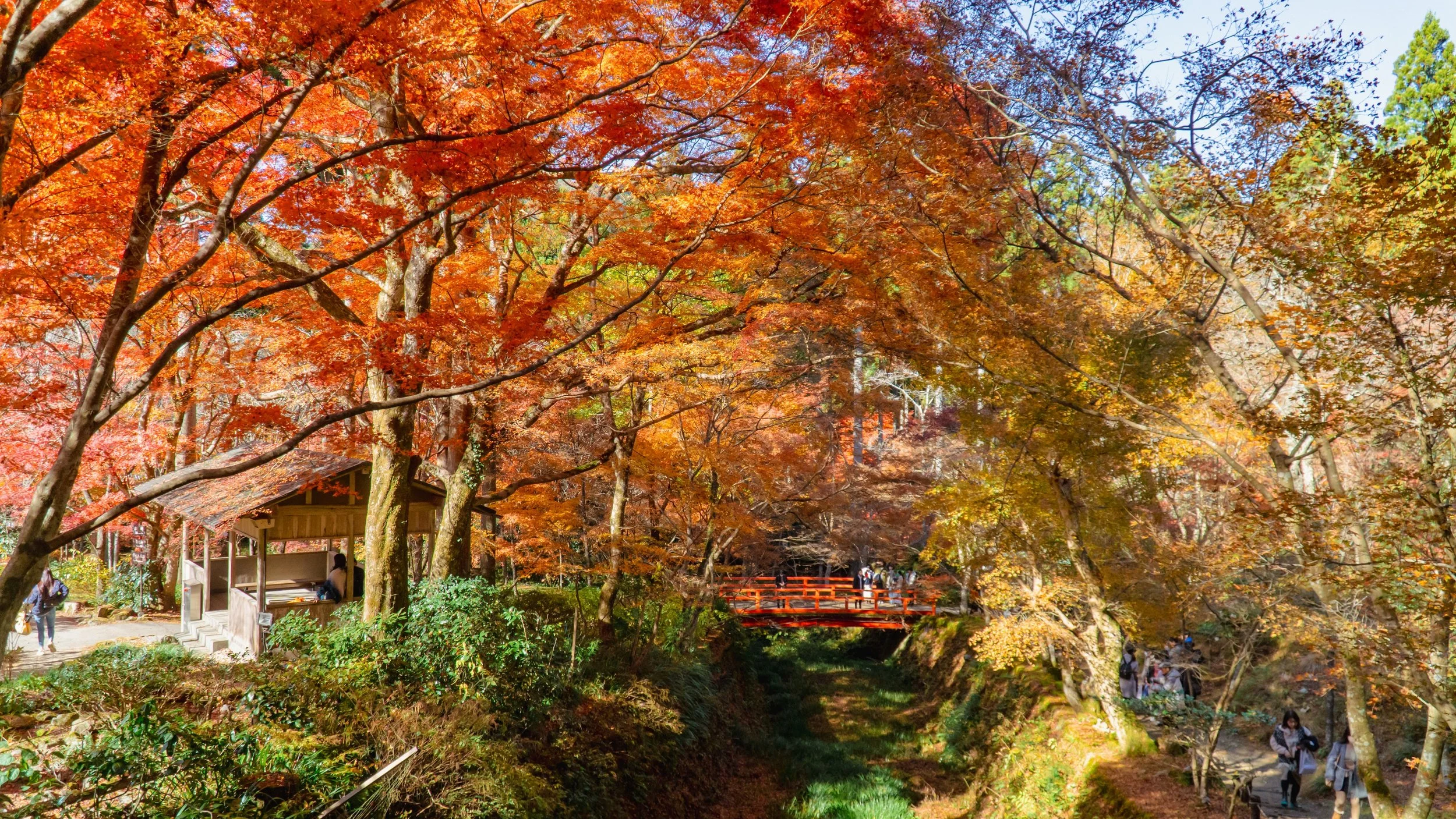
Vibrant autumn colors in Sanzen-in (三千院), the main temple in Ōhara.
East Kyoto 洛東
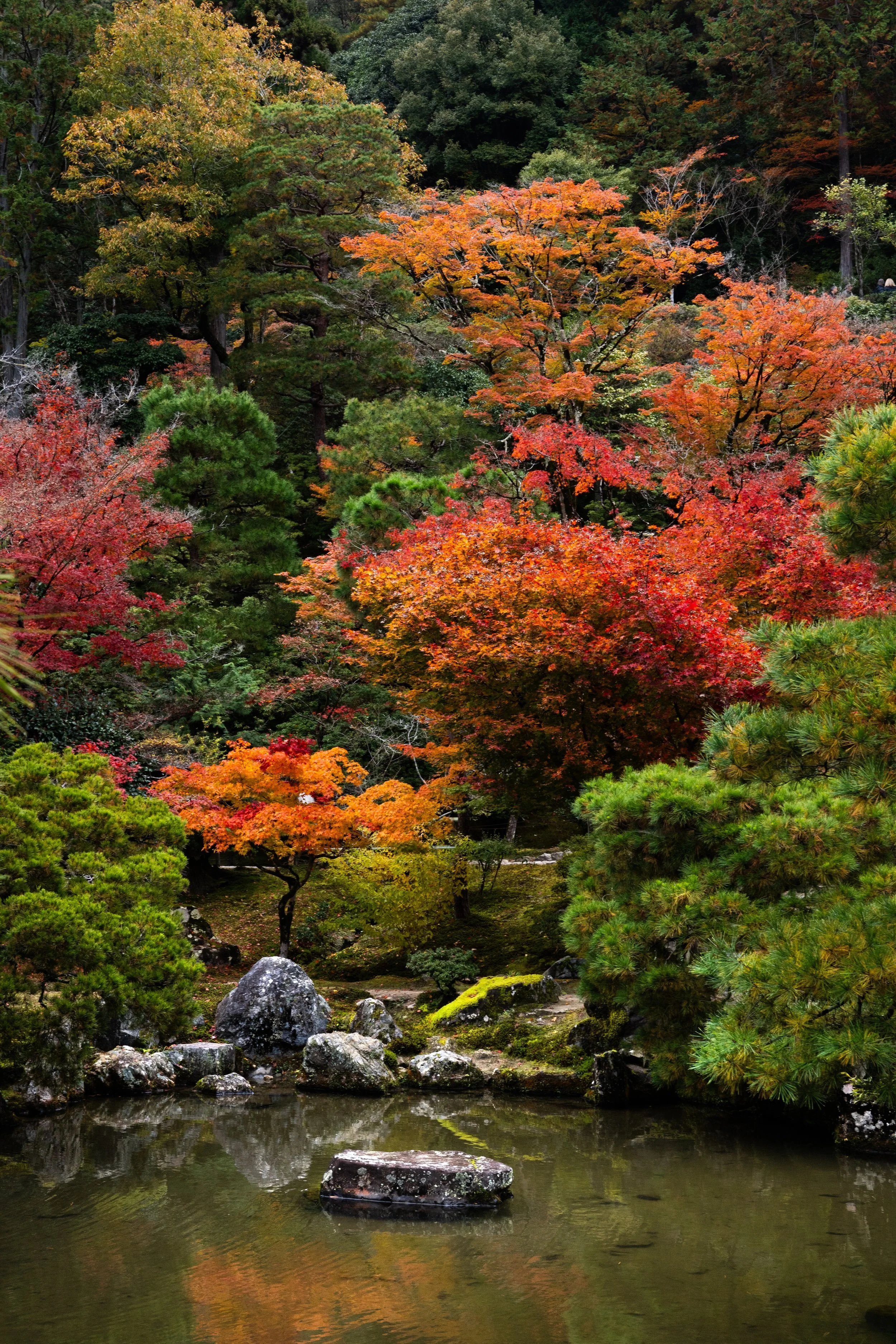
The refined beauty of Ginkaku-ji (銀閣寺).
Ginkaku-ji 銀閣寺
The appeal of the Silver Pavilion temple lies in its refined beauty rather than overwhelming spectacle. Enjoy the interplay between amongst crimson maples, lush green pines and white raked sand in the temple garden designed as a walking path.
Shinnyodō 真如堂
This is a temple much loved by locals for sceneries that are beautiful in all seasons, and particularly photogenic in autumn (see top picture).
2026 light-up: Nov 18 - Dec 18 17:30–19:30 (last admission).
Konkai Kōmyō-ji 金戒光明寺
This temple is a stone's throw from Shinnyodō and has an impressive garden that is only open in peak seasons, often with evening illuminations.
Light-up in 2026: Nov 13 - Dec 6 5:30pm to 8:00pm last admission.
Eikandō 永観堂
Also known as Zenrin-ji, this temple consistently ranks amongst top foliage spots due to its maple density, with 3,000 trees transforming the entire hillside into a breathtaking sea of fiery red, orange, and gold.
Light-up in 2026: Nov 20 - Dec 6 5:30pm - 8:30pm (last admission).

Eikandō (永観堂), one of Kyoto’s top foliage spots.
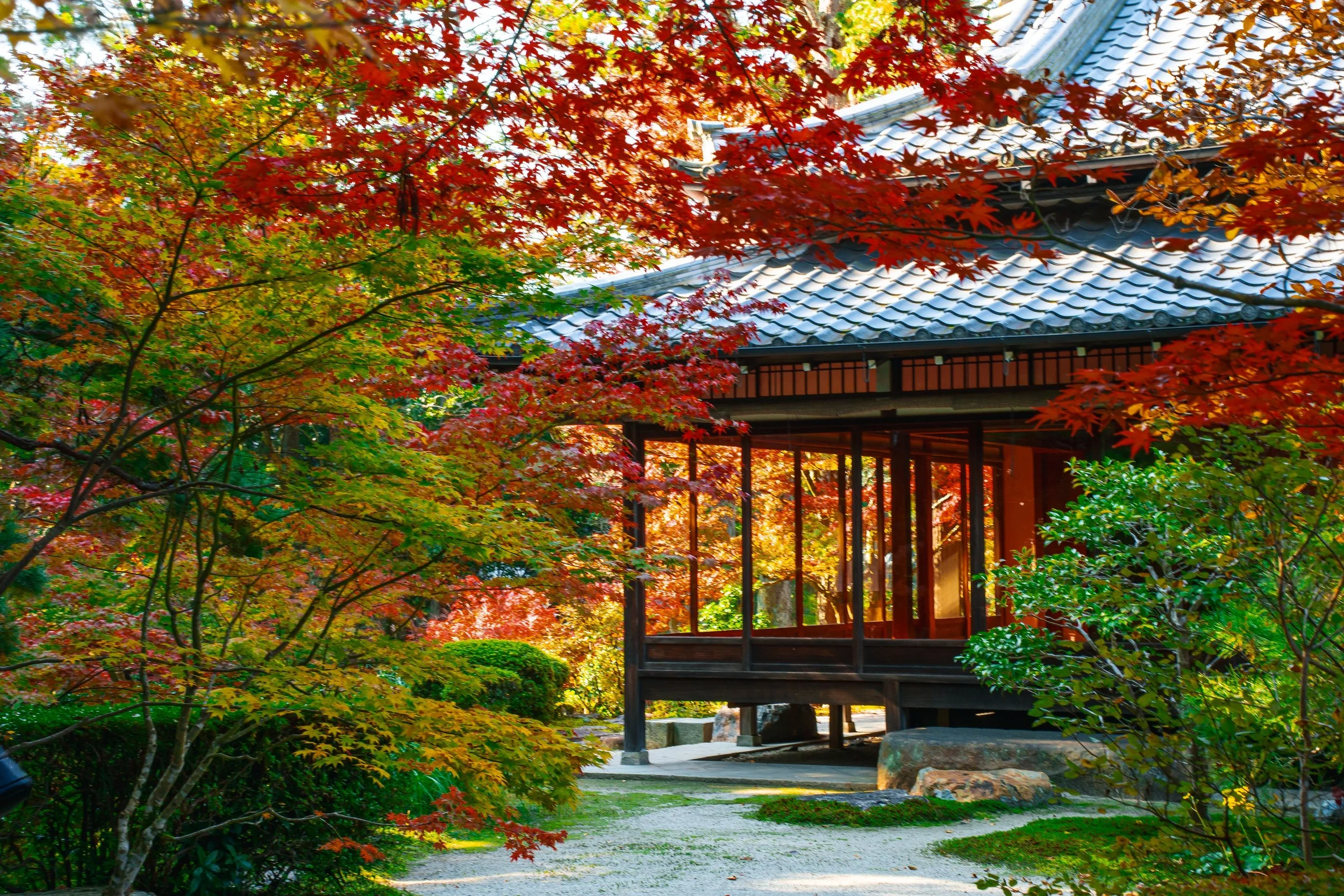
Tenju-an (天授庵), one of the most beautiful subtemples of Nanzen-ji.
Tenju-an, Nanzen-ji 南禅寺 天授庵
This subtemple of Nanzen-ji is an underrated temple for exceptional autumn beauty.
Shōren-in 青蓮院
This is a monzeki temple (formerly headed by imperial princes) with an autumn beauty that matches its aristocratic pedigree. Light-up in 2026: Nov 7 - Dec 6 6:00pm - 9:30pm (last admission).
Chion-in 知恩院
Chion-in is a grand, spacious temple where the autumn experience is about scale and the interplay between grand architecture and nature. The illumination of its Sanmon Gate is spectacular.
2026 light up: Nov 17 - Dec 6 5:30pm - 9:00pm (last admission).
Kiyomizudera 清水寺
What sets Kiyomizudera apart as an autumn venue is the sheer drama of its setting: the iconic wooden stage suspended over a tapestry of autumn colours.
2026 light-up: Nov 21 - 30 5:30pm - 9:00pm (last admission).
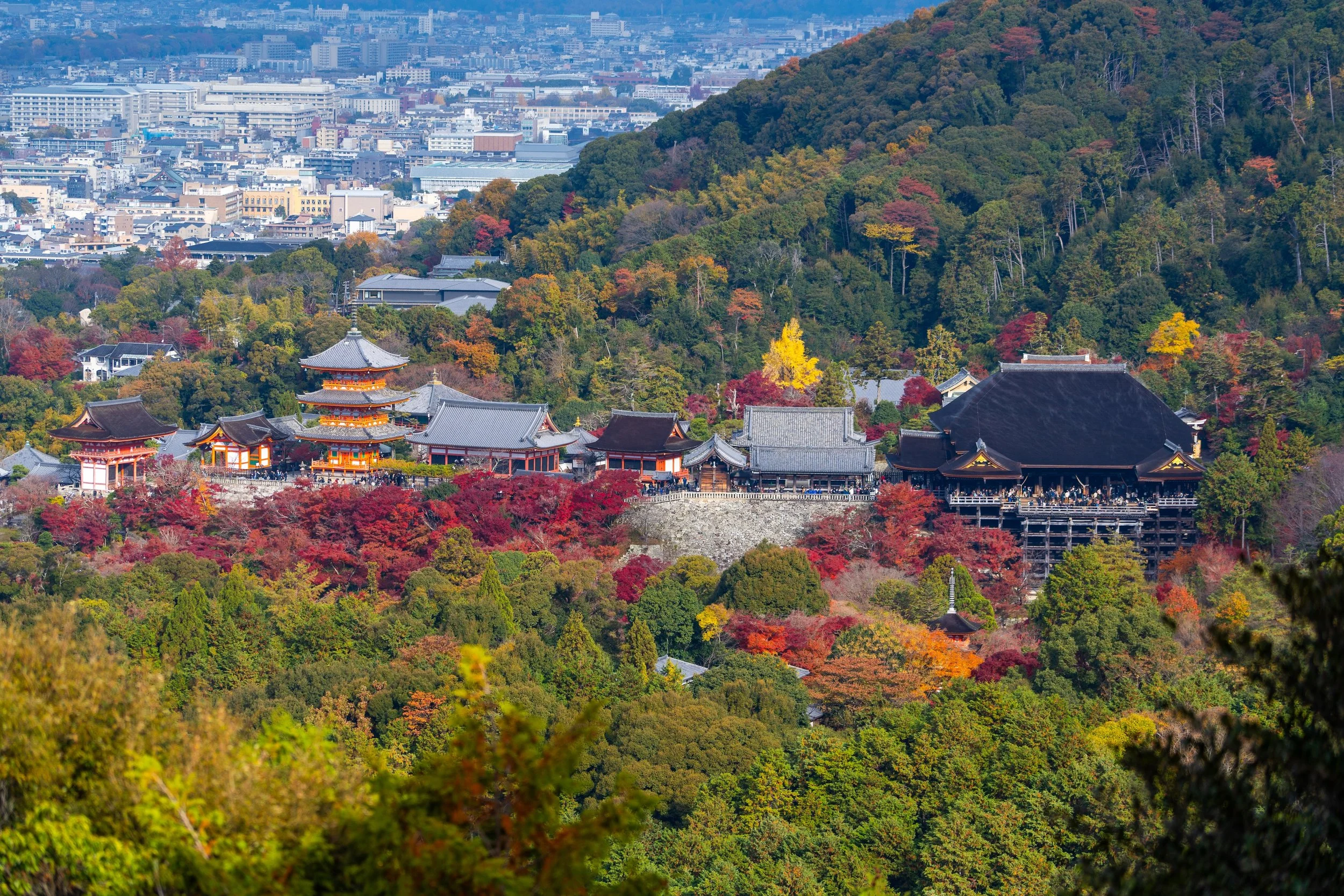
View of Kiyomizudera (清水寺) from across the valley.
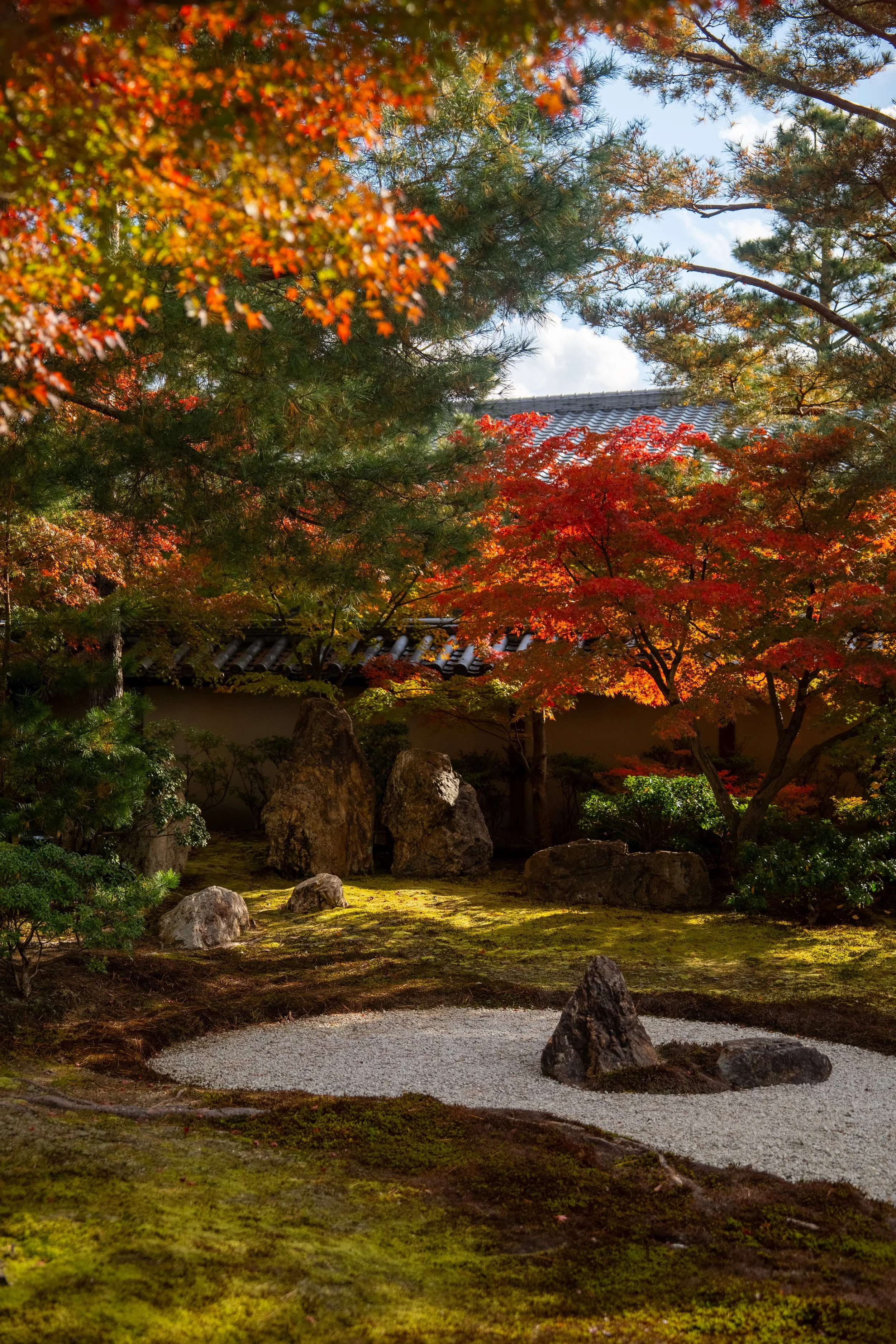
Kōdai-ji (高台寺) in Higashiyama has a variety of scenic spots in autumn.
Kōdai-ji 高台寺
One of the most popular temples in Higashiyama, and for good reasons too. Its sights for both spring and autumn are truly impressive.
2026 light-up: Oct 23 - Dec 13 5:00pm - 9:30pm (last admission).
Kennin-ji 建仁寺
Kyoto's oldest Zen temple, Kennin-ji sits on the edge of Gion's most bustling streets yet remains a quiet retreat. It is a rewarding autumn venue, particularly because its Chōon-tei (潮音庭) comes into its own later in the season, offering sublime views from every side.
Chishaku-in 智積院
Chishaku-in is a hidden gem where many maple trees are planted on the temple grounds, with a Momoyama period pond garden.
2026 light-up: 5:00pm - 8:40pm (last admission).
Tōfuku-ji 東福寺
This temple is considered by many to be the definitive Momiji venue in Kyoto for its overwhelming, valley-filling display of autumn colors.
2026 light-up: Nov 18 - Dec 6; admission is in 2 sessions: 5:30pm - 7:00pm and 6:30pm - 7:00pm (last entry).
Sennyū-ji 泉涌寺 and subtemple Unryū-in 雲龍院
Sennyū-ji, meaning Temple of the Flowing Spring, and Unryū-in, Temple of the Cloud Dragon, are both in the vicinity of the hugely popular Tōfuku-ji but with far fewer visitors. The imperial garden (御座所庭園) of Sennyū-ji is not to be missed. There are usually evening illuminations at Unryū-in. We recommend going by taxi, as there will be a 15-25 minute walk from any of the nearest bus, train or subway stations. A taxi ride from Kyoto Station will take about 10 minutes.
West Kyoto 洛西
Arashiyama Area 嵐山エリア
Tenryū-ji 天龍寺
This is a top-tier autumn venue with “borrowed scenery” from the Arashiyama mountains framing maples, architecture and pond from every which angle. Take advantage of its one hour earlier opening at 7:30am from Nov 14 to Nov 30, 2026!
Daikaku-ji 大覚寺
With its massive Osawa Pond and the stunning reflections it creates, Daikaku-ji offers a more spacious and serene experience. Being further away (than Tenryū-ji) from both the Saga-Arashiyama JR Station and the Arashiyama Station of the Randen Tram, it is more of a hidden gem.
Rokuō-in 鹿王院
This temple is a hidden gem in Arashiyama. It has fantastic autumn views, with a maple-covered walkway from gate to temple hall. And it is less than 10 minutes walk from Saga Arashiyama station (even closer if you take Randen tram and get off at Saga station). But it is not well-known and less visited.

Rokuō-in (鹿王院) in Arashiyama. Photo by Damien Douxchamps
Ōkōchi Sansō Villa 大河内山荘庭園
Tucked away at the end of the Arashiyama bamboo grove, this estate is a private villa garden built over 30 years by Ōkōchi Denjirō, a Showa-era period-drama actor. It has pavilions, strolling and dry landscape gardens, and vistas of Mt. Arashiyama and Mt. Hiei. Admission is ¥1,000, and visitors can enjoy matcha and sweets in the tea house. It is a rare tranquil retreat amid the bustling Arashiyama district.

Ōkōchi Sansō Villa (大河内山荘庭園) in Arashiyama.
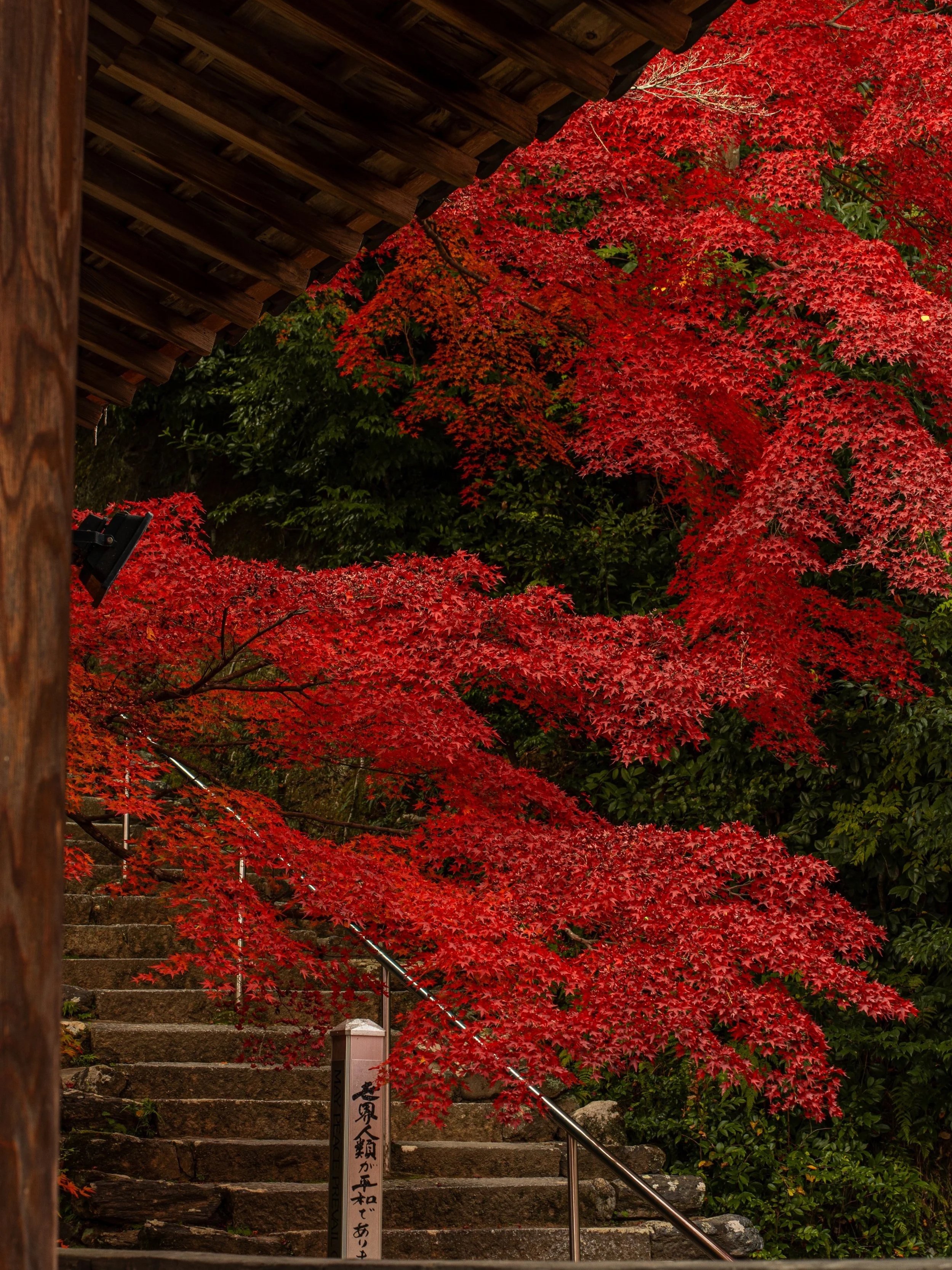
The iconic autumn scene at Nison-in (二尊院).
Nison-in 二尊院
The fiery red maple tunnel is a defining feature of this exquisite temple surrounded by trees. This year there are some “Autumn Early Morning Special Visit” days for beating the crowds: Nov 22, 23 and 29, 2026 8:00am - 9:00am. Booking required.
Hōgon-in 宝厳院
Famous for its rock garden called Lion’s Roar, this subtemple of Tenryū-ji only opens for special viewing in spring and autumn.
2026 viewing period: Oct 3 - Dec 6; light-up: Nov 13 - Dec 6 5:30pm - 8:00pm (last admission).
Giō-ji 祇王寺
Unlike temples that impress with grand maple vistas, Giō-ji's autumn charm lies in the striking contrast between moss green and maple red, underpinned by the wabi-sabi melancholy of the tragic love story from The Tale of the Heike.
Enri-an 厭離庵
Open to the public only during the foliage season, the exclusivity of this hermitage makes it feel like a rare privilege to visit. Its combination of vivid autumn colors, a simple rustic atmosphere, and literary history makes it a memorable stop on a Saga-Arashiyama foliage walk. It is the site where the poet Fujiwara no Teika built his mountain villa (Ogura Sansō) in the 13th century and compiled the "Ogura Hyakunin Isshu," an anthology of 100 waka poems by 100 poets.
2026 Autumn viewing period: Nov 1 - Dec 7 9:00am - 4:00pm
Jōjakkō-ji 常寂光寺
One feels very free and refreshed in this temple with plenty of trees and lush grounds for nature walks. Climb up their 2-storied pagoda for a sweeping view of the city.
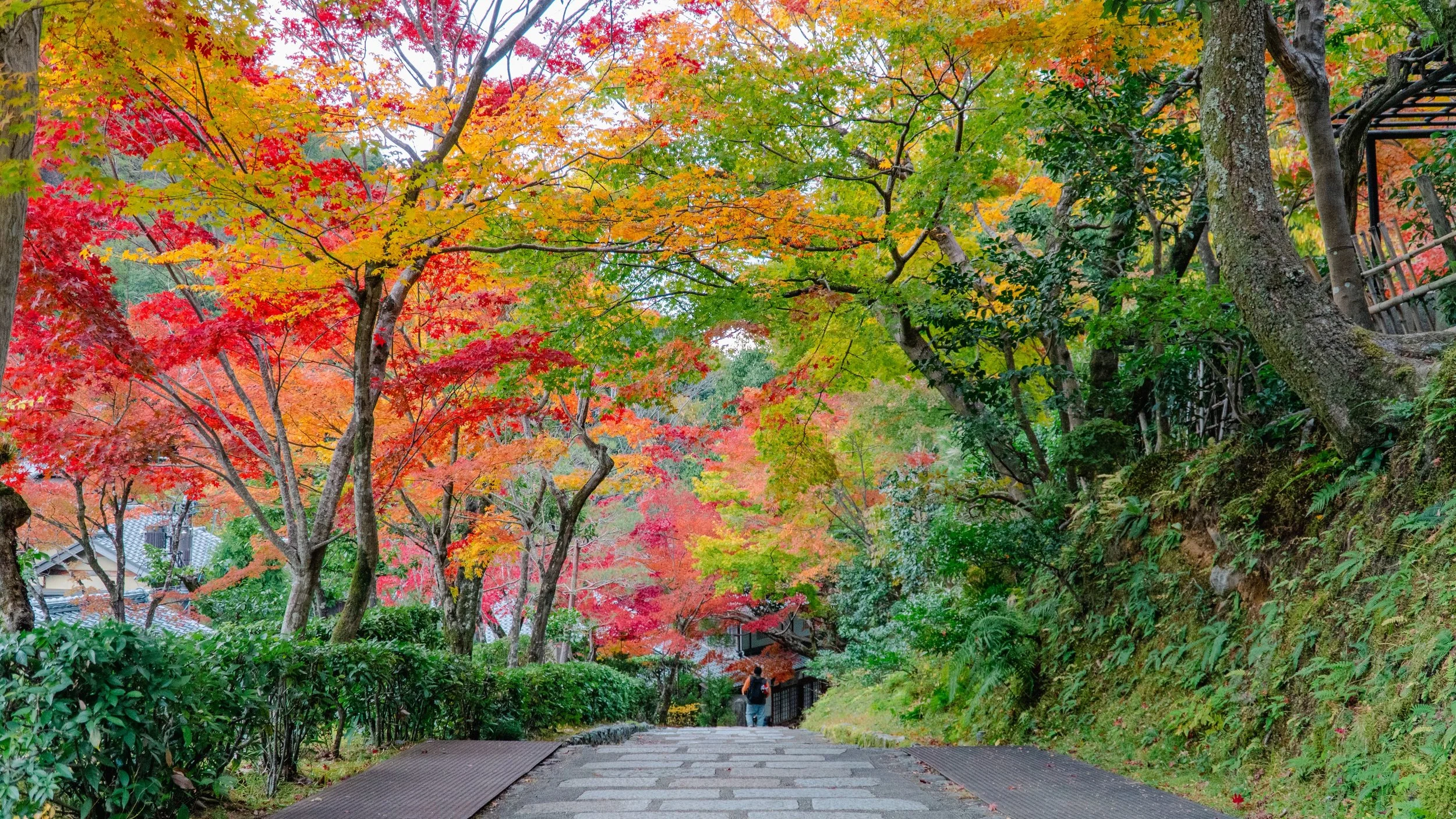
On the way to the lush grounds of Jōjakkō-ji (常寂光寺).
Otagi Nenbutsu-ji 愛宕念仏寺
The crowds will have thinned out by the time you walked here, past Nison-in and Jōjakkō-ji, and the Saga Toriimoto Preserved Street. Here you will find maples framing numerous “rakan” statues carved by ordinary people under temple guidance.
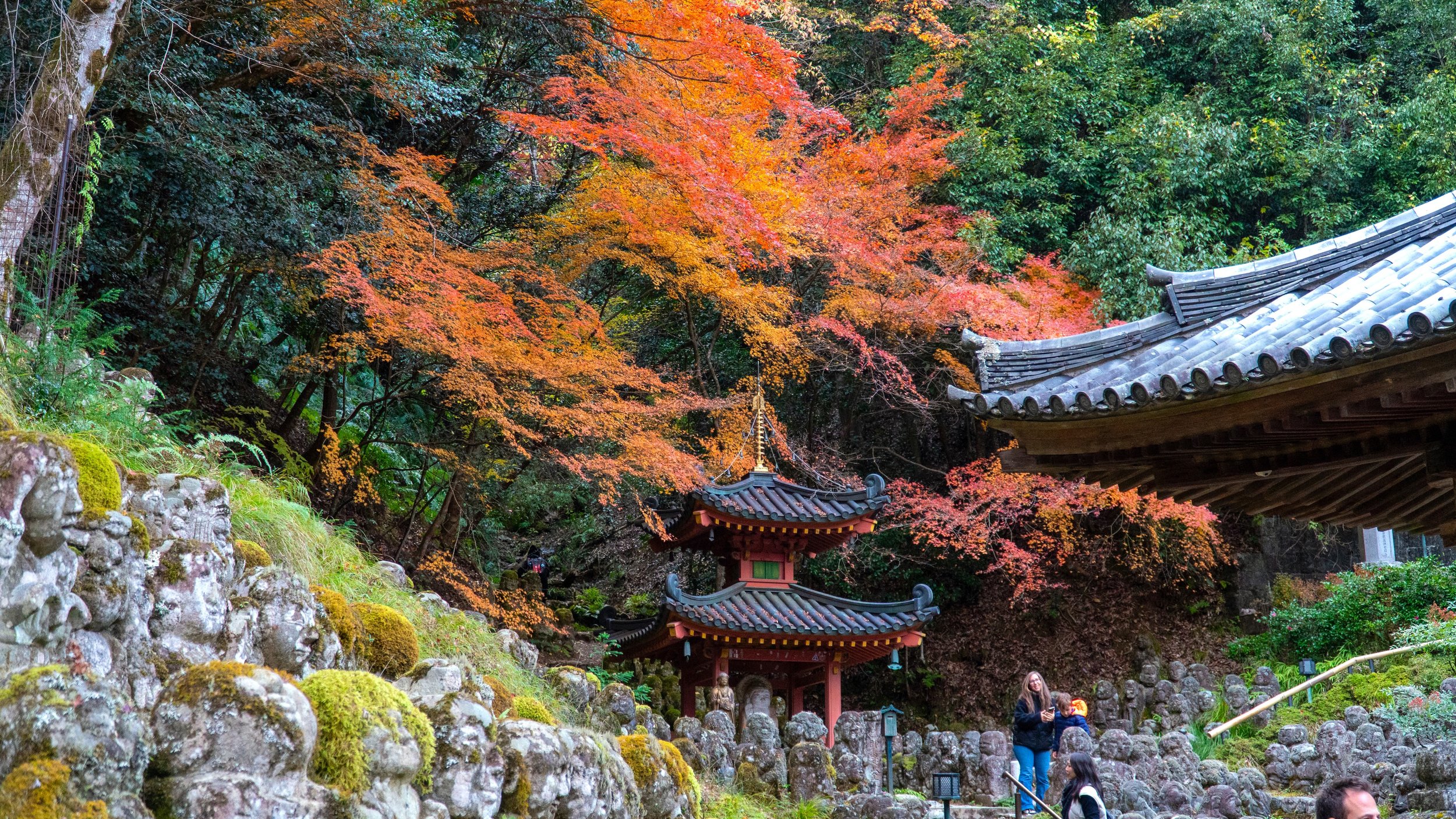
Otagi Nenbutsu-ji (愛宕念仏寺) in autumn.
Kinkaku-ji Area 金閣寺エリア
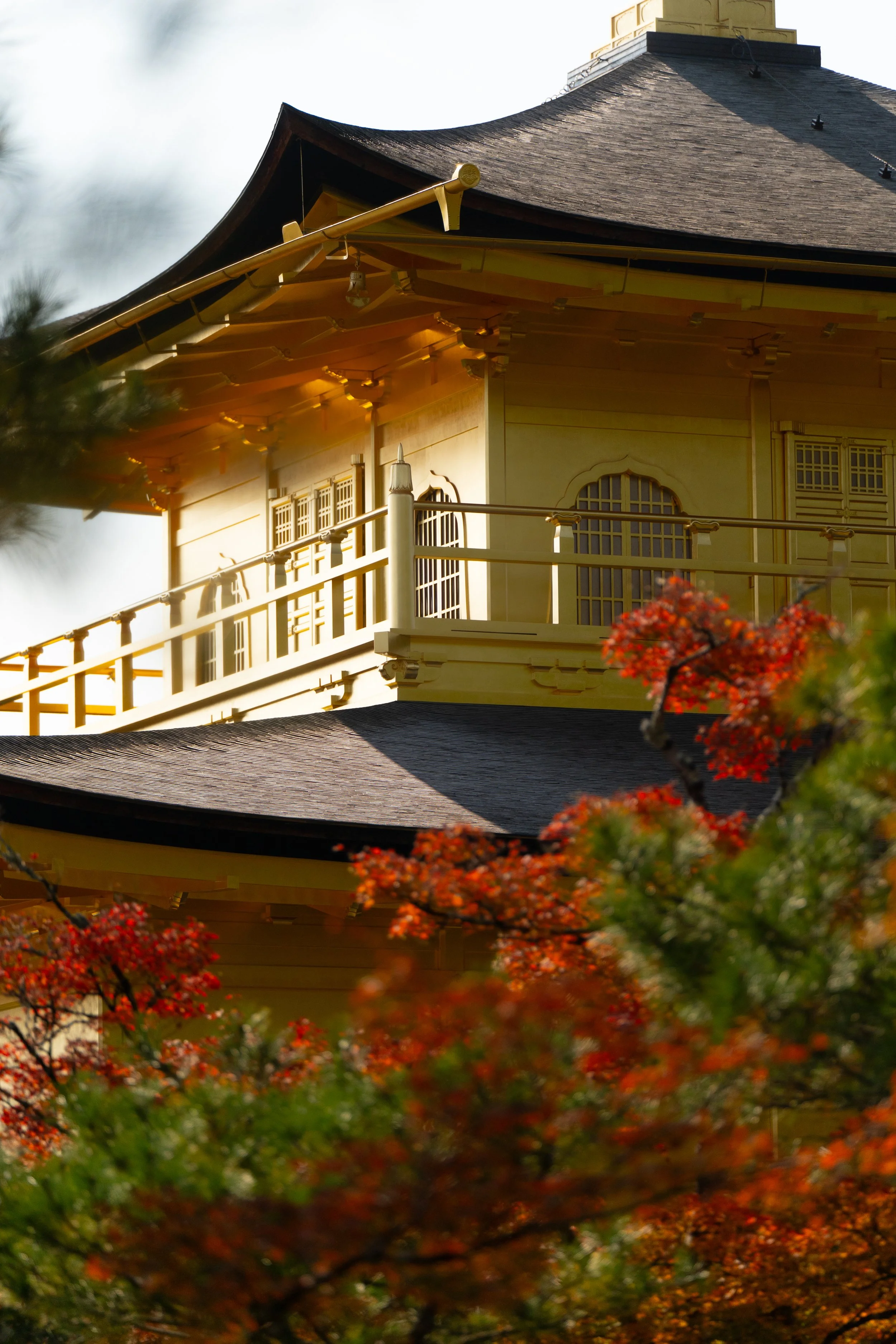
The Golden Pavilion (金閣寺) seen through maple trees along the temple’s Mirror Lake.
Kinkaku-ji 金閣寺
The main draw here is the dramatic color contrast between the shimmering gold architecture and the crimson autumn foliage. Regardless of seasons, Kinkaku-ji will always be an all-time favorite.
Ryōan-ji 龍安寺
Maple tree over the rock garden, autumn colours enveloping the Kyōyōchi Pond - both vistas are sublime.
Ninna-ji 仁和寺
Maples framing Ninna-ji’s majestic 5-story pagoda has become the Kyoto signature for a quintessential Japanese autumn.
2026 Light-up “Healing Sea of Clouds & 528Hz Sound Garden”: Oct 24 - Dec 13 except Nov 8 and 28 6:30pm - 8:30pm (last admission).
Shōden-ji 正伝寺
With raked sand, azalea hedges symbolising lion cubs, and maple trees rising over a white wall, Shōden-ji's Zen garden is like a painting, complete with "borrowed scenery" from Mt Hiei in the distance.

Garden of Shōden-ji (正伝寺) with manicured shrubs representing lion cubs crossing the river. Photo by Konosuke @kyotophograph.
Myōshin-ji Daihō-in 妙心寺 大法院
Daihō-in is a subtemple of Myōshin-ji, and is only open in the spring and autumn viewing seasons. The moss garden with a tea house is most beautiful when the maples turn fiery.
2026 autumn viewing period: Nov 10 - Dec 5 9:00am - 4:00pm

Serenity at Daihō-in (大法院). Photo by Konosuke @kyotophotograph
Takao Mountains 高雄山
The next 3 temples are near one another and they are the main temples of this mountain area. Jingo-ji is the most remote one. They are all quite hard to get to from central Kyoto. Even though this area is accessible by buses, many transfers will be needed. However, if you go by car or taxi from Ryōan-ji, which is a very popular destination, it takes only 20 minutes because the route is most direct. Unlike Ryōan-ji, these temples will not be crowded. But if you want to experience deep tranquility, go to Jōshōkō-ji, the temple truly far from the madding crowds.

Apart from being an ancient temple, Jingo-ji (神護寺) is also the birthplace of a clay-disc throwing ritual for ridding bad karma. Photo by Damien Douxchamps

Saimyō-ji (西明寺), hidden amongst the trees.

The stone-paved approach at Kōzan-ji (高山寺), a World Cultural Heritage site. Photo by Damien Douxchamps
Jingo-ji 神護寺
Jingo-ji is one of Kyoto's most dramatic and rewarding autumn venues. The temple's terraced grounds and buildings are connected by long stone stairways, and there is a lot to discover amidst fiery red maples. The mountaintop view is stunning.
Kōzan-ji 高山寺
Kozan-ji is a UNESCO World Heritage Site. In autumn its stone-paved approach is scattered with red leaves from overhanging maple branches. Sitting in Seikisui-in, a national treasure hall, one can gaze out at the garden and surrounding mountains and enjoy a quintessential Kyoto experience.
Saimyō-ji 西明寺
Saimyō-ji has a compact, picturesque setting and a delicate, refined atmosphere. You will not miss the vermillion bridge leading over a stream to the temple entrance. Framed by maple leaves, it is a highly photogenic spot.
Jōshōkō-ji 常照皇寺
This remote temple has a very old and special cherry tree sought after by photographers. It also has stunning autumn colors. It is best combined with visits to the Takao Mountain temples if you have a car. There is an admission charge to the temple but parking is available and free. From Kōzan-ji, it would be about 30 minutes by car. And you may be the only one there!

The remote but breathtakingly beautiful Jōshōkō-ji (常照皇寺). Photo by Konosuke @kyotophograph
South Kyoto 洛南
Tō-ji 東寺
Toji is a convenient and visually striking autumn venue, particularly if you want to see a World Heritage pagoda framed by maples and reflected in a pond. Its standout feature is the night illumination, which many consider more impressive than the daytime experience.
2026 light-up: Oct 31 - Dec 3 6:00pm - 9:00pm (last admission).
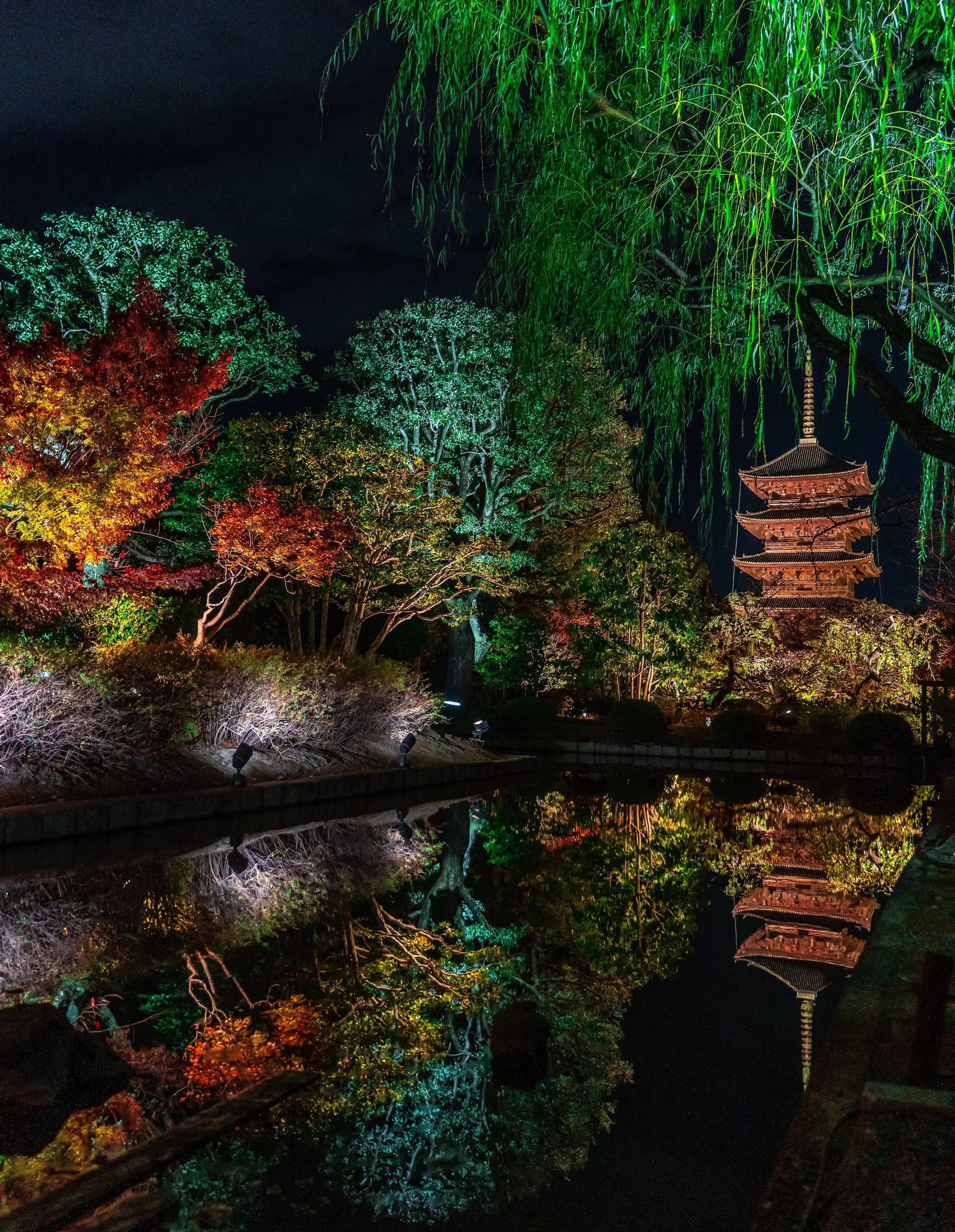
Picture perfect Tōji (東寺), with illuminated pagoda and trees clearly reflected in the pond.
Bishamondō 毘沙門堂
If it weren’t a bit out of the way - a 20-minute walk is required after getting off the nearest Yamashina Station - it would attract a lot more visitors. But there is plenty of room to walk around both inside and on the way in, and the stunning photo ops are worth braving some small crowds of local photographers.

Bishamondō (毘沙門堂) in Yamashina is worth the 20-minute walk from the nearest train station. Photo by Damien Douxchamps
Daigo-ji 醍醐寺
Daigo-ji is a magnificent and historically rich autumn venue. Its autumn appeal is deeply intertwined with the legacy of Toyotomi Hideyoshi, who planned a grand "Maple Viewing" at the temple but passed away before he could see it.
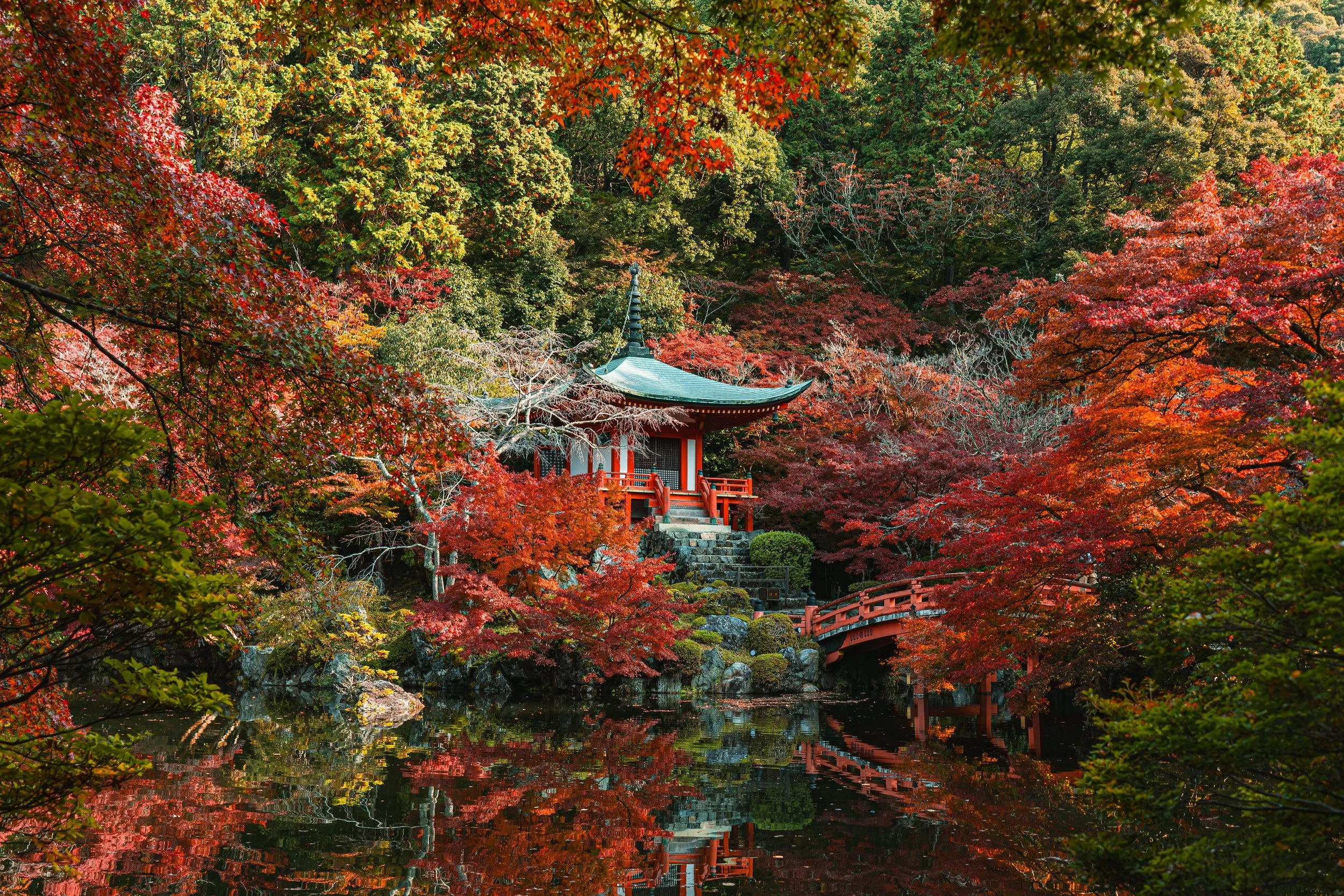
Signature view of Daigo-ji (醍醐寺), spectacular both day and night.
